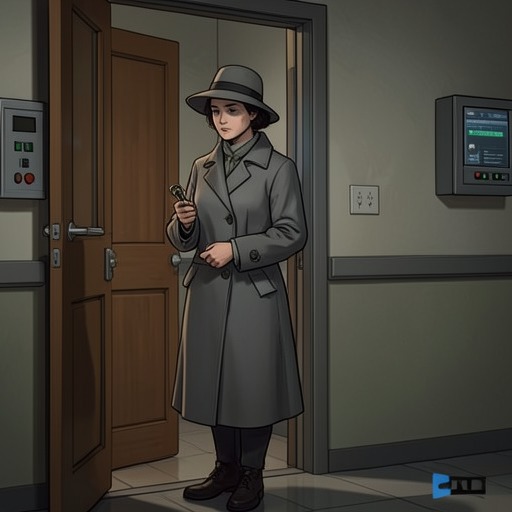
Norberto Machimbarrena
Los renglones torcidos de DiosNorberto Machimbarrena is a Basque-speaking former Spanish Navy machinist whose long institutional history turns an apparently settled diagnosis into a warning. Admitted after killing three Basque separatists, he was considered cured for decades; yet when two ETA patients arrived, he killed them both within twenty-four hours. His story makes the difference between a delusion that has disappeared and one that has merely been contained impossible to ignore.
Identity and Background
Machimbarrena is identified as a Bilbao-born mechanical petty officer and machinist in the Spanish Navy. He speaks Basque and, in the period represented in the hospital, lives in private accommodation with its own kitchen and utensils. The account also describes him as a voluntary collaborator, though the surviving passage breaks off before specifying the work he undertakes. These details place him among patients whose daily circumstances differ from life on a shared ward: his residence has domestic facilities, while his language and naval background connect him to the history of the crimes that brought him into the institution.
His admission followed a killing by knife, more than forty years before the later events, of three Basque separatists. The narrative presents this not as an ordinary political affiliation or a considered campaign, but as the consequence of a paranoid belief. Machimbarrena thought he had received an order from his superiors by mental transmission and carried it out with exacting obedience. The distinction matters: the violence was real, while the authority he believed compelled it was delusional.
The Earlier Diagnosis and Its Return
Over the decades, Machimbarrena was widely believed to have recovered. The clinical account qualifies that conclusion: his paranoia was not wholly gone, but encapsulated. The word marks a boundary between outward stability and cure. His long residence and the passage of time had made the dangerous belief seem safely enclosed, but the underlying condition remained present enough to become consequential again.
That return came after two patients identified as ETA members entered the hospital. They had been there less than twenty-four hours when Machimbarrena killed them both. The sequence echoes the earlier case: again, Basque separatists become the targets of a man acting under the force of his paranoid convictions. The recurrence does not establish that every detail of the two episodes was identical; it does show why the claim of complete recovery proved inadequate. A condition treated as dormant had again coincided with lethal violence.
The contrast between the forty-year interval and the speed of the new killings is especially stark. Years of being regarded as cured offered no guarantee against recurrence, and the new patients’ brief presence made the danger seem suddenly active. The account therefore gives Machimbarrena a double status: he is a patient whose paranoia had been judged contained and an offender whose actions demonstrate that containment was not the same as disappearance.
Life in the Hospital
Machimbarrena’s conduct is not presented only through the murders or through doctors’ descriptions of his diagnosis. At one point he is in excellent spirits while waiting, entertaining those around him by singing a beautiful song in Basque. The moment supplies a specific, ordinary gesture alongside the institutional record of violence. His language appears in both registers: it is part of his identity, and it is the language in which he sings; his history, meanwhile, ties his delusion to the imagined command to eliminate Basque separatists.
The juxtaposition does not resolve the question of his mental state, nor does it make the killings less serious. Instead, it resists reducing him to a single clinical label or a single scene of violence. The cheerful singer and the man who acted on a paranoid command belong to the same account. The narrative lets that coexistence stand without treating a moment of good humor as proof of recovery.
Role in the Clinical Debate
Machimbarrena’s case becomes a precedent in discussion of Alice Gould de Almenara. A doctor compares the two as paranoid patients, recalling that Machimbarrena had been thought cured before killing the two ETA patients. The comparison gives the clinical argument a concrete history: a diagnosis can appear quiet over many years and still have grave consequences. It also complicates any confident judgment based on a patient’s present appearance alone.
His history is invoked amid disagreement about Alice Gould de Almenara’s diagnosis and confinement. Samuel Alvar’s presentation combines acknowledgment of his own errors with contempt for other doctors, leaving colleagues uncertain about his sincerity and his description of her as homicidal. Their doubts include the fact that the alleged attempts to poison her husband appeared in an admission recommendation forged by the man who had defrauded her. In that debate, Machimbarrena’s established killings provide a contrast to disputed accusations: his violence is confirmed, but the clinical interpretation of its recurrence still requires care.
Alice Gould de Almenara also exploits the continuing investigation into the ETA killings when speaking to Melitón Deza. She falsely tells him that the director had suggested Deza informed Machimbarrena of the separatists’ presence and helped arrange their escape, causing Deza to flush with anger. This episode does not establish that Deza had any role in the murders; the account explicitly marks Alice’s claim as a lie. Instead, it shows how the case continues to circulate through the hospital, shaping suspicion and conflict beyond Machimbarrena himself.
Significance
Machimbarrena’s importance lies in the gap between a diagnosis described as encapsulated and a life understood as cured. His earlier killing, decades of presumed recovery, and rapid return to lethal violence form a pattern that challenges simple assurances of clinical resolution. At the same time, his private accommodation, Basque speech, voluntary collaboration, and song keep the account from presenting him solely as a case history. He is both a person with a daily life inside the hospital and the focus of a grave warning about what institutional confidence can miss.