Nuestra Señora de la Fuentecilla
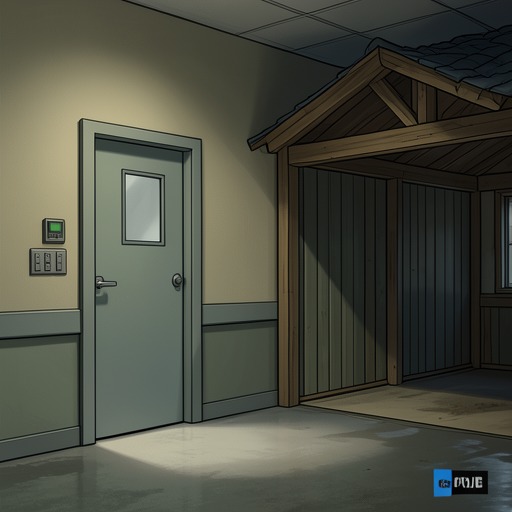
Los renglones torcidos de DiosNuestra Señora de la Fuentecilla is a psychiatric hospital organized around a striking contradiction: many patients can move through its buildings and grounds, work, and even travel to nearby villages, while others are confined in units where they require help with the most basic acts of daily life. The institution shapes Alice Gould’s attempt to investigate a murder from within and makes the difference between voluntary treatment and involuntary confinement a matter of both paperwork and freedom of exit.
Setting and Open Regime
Montserrat Castell explains to Alice Gould that the hospital adopted an open regime only a few years earlier. Patients could move with relative freedom around the building and its large park. They might gather in the bar for dominoes, brisca, or parchís, stroll in the garden, explore the wooded grounds, or attend occupational therapy.
The workshops extended that daily activity into paid work. Described as small industries, they made objects for sale, and patients received wages that varied according to their abilities and performance. The policy could also permit travel beyond the hospital: patients might take a bus to nearby villages, particularly for local celebrations featuring dancing, fireworks, and bullfights with young heifers. Montserrat stresses that this was the general rule, not a universal experience; there were many exceptions. The hospital’s openness therefore describes a qualified arrangement rather than equal liberty for everyone inside it.
Admission and the Limits of Freedom
The distinction between open movement within the hospital and the right to leave becomes especially consequential in Alice’s case. Alice insists that she entered voluntarily, identifying herself as a professional detective who had come of her own accord. The director counters that her file records an involuntary admission: E. Donadío supplied a medical certificate declaring illness and the need for hospitalization, while her husband, Heliodoro Almenara, requested her admission as a relative. The director says that voluntary admission would instead have required Alice’s own signed declaration and a certificate from Teodoro Ruipérez, who received her.
Alice reasons that the two procedures differ not only in the documents required to enter but in what follows. A voluntary patient could leave almost as simply as she had arrived; where a relative’s request and a medical recommendation supported confinement, departure was far more difficult. Later, the hospital’s account of her admission describes her as a paranoid patient who had tried three times to poison her husband. The competing descriptions—Alice’s claim of voluntary entry and the institution’s record of involuntary commitment—make the hospital’s administrative process central to her loss of control over her own movement.
Wards, Care, and Architectural Reform
The hospital’s internal divisions reveal how far its patients’ circumstances differ. The women’s dementia unit is directed by Rosellini and commonly called the Dementia Ward Known as the Lion Cage. In Alice’s experience there, women are tied to their beds by the ankles, waist, and wrists; she recognizes the patient nicknamed the Gorilla Woman among those being taken away. The wider description of the unit presents patients with profound dementia who may need staff to dress them, feed them, put them to bed, and assist with toileting. Without that care, some cannot manage these needs themselves. The open regime’s promise of movement sits beside this intensive supervision and dependence.
Physical barriers are also part of the debate over reform. César Arellano argues that critics of older hospital systems have helped bring about admirable changes, and that removing bars to lessen patients’ sense of oppressive confinement is an excellent measure. His qualification is practical: the infrastructure needed to make such reforms workable must come first. The hospital is thus presented not simply as open or closed, but as a place where humane intentions, the conditions required to carry them out, and the realities of care remain in tension.
Patients, Investigations, and Narrative Significance
The hospital also gathers people whose histories connect its wards to events beyond them. In Alice’s reconstruction of the murder of Raimundo García del Olmo’s father, she anticipates that the cousin implicated in the killing will be identified as a current resident in the dementia unit. Her account distinguishes that claimed residence from Raimundo’s knowledge of the death itself, which she expects him not to possess. The hospital’s population therefore becomes relevant not only to Alice’s confinement but to the case she is trying to solve.
That double role gives Nuestra Señora de la Fuentecilla its narrative force. It offers patients activities, wages, and forms of movement, yet its admission records can sustain confinement and its wards impose radically different degrees of dependence. Alice’s effort to establish what brought her there turns the institution’s procedures and spaces into evidence: the hospital is at once the setting of her investigation and the power that limits how freely she can pursue it.