Nuestra Señora de la Fuentecilla Psychiatric Hospital
Los renglones torcidos de DiosNuestra Señora de la Fuentecilla Psychiatric Hospital occupies a former Carthusian monastery, and the building’s layered identity makes it more than a backdrop: it is at once a place of treatment, a community with its own routines, and an institution capable of enclosing people through medical and legal procedure. Its open-regime policies promise movement and work, while its walls, specialized wards, and contested decisions expose how fragile that freedom can be.
Setting and Architecture
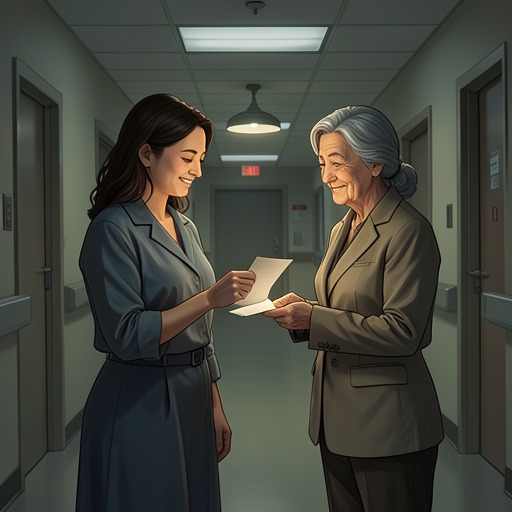
The hospital’s physical setting retains the scale and fabric of the monastery it replaced. The meeting room lies in the old Carthusian building, in what had been the monks’ chapter house. Reaching it requires passage along a remarkably low stone corridor, so narrow that Alice Gould has to retrace part of her route when people approach from the opposite direction. The imposing historical interior is not untouched or frozen in the past: a modern worktable stands at the center of the vast meeting room, making the contrast between the former religious complex and its contemporary clinical use visible in a single scene.
The grounds extend well beyond the rooms and corridors. Under the hospital’s open regime, residents can move with relative freedom through the building and park; the grounds also include a large wooded area where patients may walk or lose themselves from view. At the same time, the hospital’s outer image is one of enclosure. When Alice returns, she looks at its immense walls and complicated architecture, a mixture of styles that makes the institution seem less like a single-purpose modern facility than a structure accumulated across different eras. The gap between access to gardens and workshops within the grounds and the surrounding walls gives the hospital’s promise of openness a visible limit.
Regime, Wards, and Treatment
Montserrat Castell explains that the hospital has operated under an open regime for only a few years. Residents may spend time in the bar, play dominoes, brisca, or parchis, talk as they walk in the garden, attend occupational therapy, or work in large therapeutic workshops. Some workshops function as small industries: patients make goods that are later sold and receive wages that vary according to their abilities and performance. The regime can even permit excursions by bus to nearby towns, especially for local festivities. This is the general arrangement, however, not a guarantee applying equally to everyone; exceptions are numerous.
The hospital’s internal divisions make that qualification concrete. It includes an emergency department, recovery units, and a dementia unit known to Alicia as the Dementia Ward Known as the Lion Cage. Patients in that ward may be so profoundly impaired that they need staff to dress and feed them, put them to bed, and help maintain basic routines. Without such assistance, some wander naked, fail to eat or sleep, or cannot manage their bodily needs. The description presents care there as continuous physical labor, but also shows the severity of the patients’ dependence and the stark distance between their circumstances and the relative liberty offered elsewhere in the institution.
Clinical work combines personal supervision with technical procedures. The staff attending the doctors’ meeting include Alberto Rosellini, head of the dementia unit; Salvador Sobrino, head of the recovery units; and Dolores Bernardos, an expert in computed tomography, electroencephalography, and electroshock. The hospital’s staff therefore represent different areas of a complex operation, from intensive daily care to diagnostic and treatment technologies. The evidence also records debate about removing bars: César Arellano argues that abolishing them can be an excellent way to reduce patients’ sense of oppressive confinement, while warning that such reforms require an infrastructure capable of supporting them. The hospital’s open policy is thus presented as a practical and contested reform, not simply a matter of taking away visible barriers.
Admission and Institutional Authority
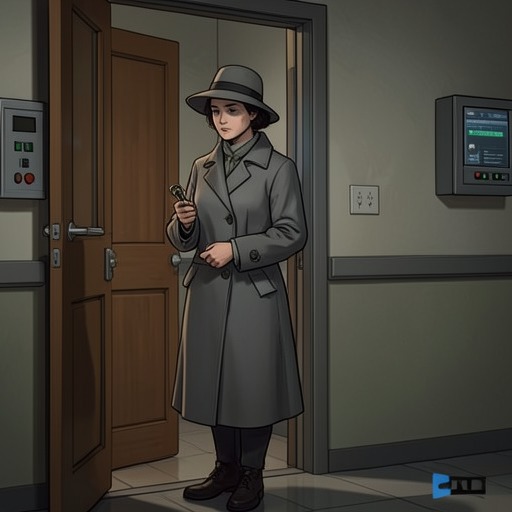
The hospital’s power over its residents is exercised not only through wards but through paperwork. When Alice insists that she is a professional detective who entered of her own will, the director distinguishes the procedure for voluntary admission from the one recorded in her file. A voluntary admission would have required her signed declaration that she wished to be treated and a certificate from Teodoro Ruipérez, who received her. Instead, her file follows the involuntary procedure: E. Donadío certified illness and the need for hospitalization, and her husband, Heliodoro Almenara, applied as her relative. The discrepancy turns the hospital into the scene of a struggle over who Alice is and whether she consented to be there. The paperwork has institutional force even while she disputes the account it establishes.
The contrast between the hospital’s stated openness and its power to detain is especially consequential in Alice’s case. Her admission appears to place her within a system whose routine language and procedures can override her own description of her circumstances. The institution does not merely contain patients physically; it classifies them, records the grounds for their presence, and gives those records consequences. Alice’s later view of the immense walls is therefore joined to a specific suspicion about the story that brought her inside: she wonders who devised the deception that secured her confinement, while judging that Heliodoro lacked the ingenuity to originate it.
Governance and Consequences
The hospital’s administration is itself subject to abrupt change. After the provisional board takes control, its first decisions include removing Alice from the Dementia Ward Known as the Lion Cage and restoring her Orange Pass Card. It also annuls the file against Melitón Deza, suspends the punishment imposed on Montserrat Castell, and releases Ignacio Urquieta. The board postpones the choice of a director—or, more precisely, the proposal of a director to the minister—until the following week. These measures alter several residents’ immediate circumstances, while leaving the permanent leadership unsettled.
Dolores Bernardos ultimately becomes the hospital’s new director. César Arellano, the first candidate, refuses to leave direct contact with patients; Bernardos is then proposed unanimously. The appointment is celebrated at Pepe el Tuerto's Roast Grill. That transition links institutional leadership to competing forms of responsibility: Arellano declines advancement rather than give up clinical contact, while Bernardos accepts the directorship. The hospital’s authority is not portrayed as fixed or impersonal; its direction depends on decisions by people whose roles and commitments can change.
As a setting, Nuestra Señora de la Fuentecilla Psychiatric Hospital holds together opposing realities without resolving them. Residents may earn wages, take part in activities, and sometimes travel beyond the grounds, yet access to that freedom is qualified by exceptions, ward placement, and administrative decisions. The former monastery’s monumental rooms and low passageways frame a modern institution whose clinical procedures and shifting governance determine who may move, who is confined, and whose account of events becomes official.