Raimundo García del Olmo
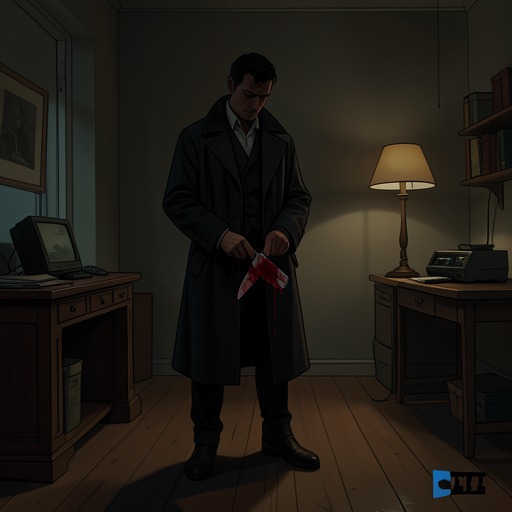
Los renglones torcidos de DiosRaimundo García del Olmo is a physician whose father was murdered in a case left unresolved by the police, and the client whose commission brings Alice Gould into the asylum to investigate criminal letters. His importance is therefore twofold: he supplies the case’s human and financial stakes, while the uncertainty surrounding the crime and even the identity of someone claiming his name makes him a point around which the novel’s investigation turns.
Identity and the Case
Raimundo is identified as a doctor and as the son of a murder victim. At the time Alice recounts the case to the hospital doctors, his father’s murder had occurred two and a half years earlier. The crime had caused the police considerable difficulty, and its investigation remained inconclusive. The account establishes the murder and the failure to solve it, but the details available here do not settle how the father died or who killed him.
The distinction between Raimundo and his father matters to the investigation: Raimundo is the surviving relative who commissions Alice, not the victim whose death she is trying to explain. He is also described as having a cousin in Orense whom he scarcely knew because they lived far apart. Alice presents the cousin as an unusual figure in her reconstruction of the case, but that kinship detail does not, by itself, establish a motive or identify a killer.
Commissioning Alice’s Investigation
Raimundo hires Alice to investigate criminal letters addressed to him. He gives her a cheque as an advance and promises an equal amount if she brings the investigation to a successful conclusion. Alice initially considers the fee unusually large, since she has never been paid so much for a job; once she confronts the asylum environment in which she must work, she understands why the compensation is not unjustified. The arrangement makes the investigation a professional commission with a defined reward, while also emphasizing the difficult conditions under which she has accepted it.
Alice’s inquiry focuses on the possible writer of the letters. She reasons that if the author is a schizophrenic resident of the province, he may be in the asylum, may have been there in the past, or may at least be known to people there. She therefore proposes approaching the asylum’s director for information about its patients. Raimundo approves this plan. His agreement extends the commission beyond examining the letters themselves: it authorizes Alice to pursue the possibility that the writer’s history is connected to the institution.
The profile Alice seeks is specific: a man around fifty, athletic in build, and able to write. It is a description of the person she hopes to find, not evidence that Raimundo himself fits the profile or wrote the letters. During her observations she notices the colored marks in Carolo Bocanegra’s oilcloth notebook and gives him the investigative nickname the False Mute. She places him on an initial list of possible authors of the criminal letters to Raimundo. That suspicion remains part of Alice’s inquiry, not a conclusion established by the evidence here.
Connections to Alice and Samuel Alvar
Raimundo is Alice’s client, but the commission also links her to Samuel Alvar. Alvar is described as Raimundo’s intimate friend and fellow physician. He is also Alice’s accomplice in entering the asylum: he alone knows for certain that she is healthy and advised her to feign paranoia. Raimundo’s case thus gives Alice a reason to enter, while Alvar’s prior knowledge and advice make the operation possible. Their roles are distinct: Raimundo authorizes the investigation; Alvar helps Alice conceal its purpose and her health.
When Alice reveals to the hospital doctors that Raimundo is the client who brought her there, the previously private arrangement becomes part of her public explanation. The doctors’ response registers the significance of the disclosure. Her statement connects the unsolved murder, the letters, and her presence among the patients, allowing the audience to understand that her apparent admission has been organized around an external investigation. Raimundo is not merely a name attached to the letters; he is the person whose unresolved case explains the risk Alice has taken.
Identity, Presence, and Narrative Function
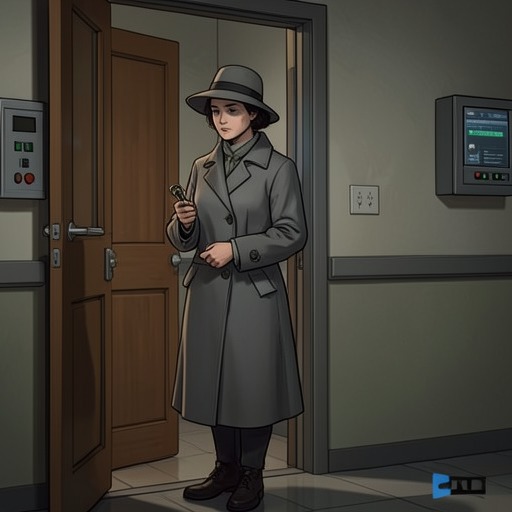
The account also stages a meeting in which the director announces that Dr. García del Olmo has come to hear Alice’s suspicions, after which a serious-looking man identifies himself as the doctor. This encounter is associated with an impostor claiming to be García del Olmo, so the declaration should not be treated as proof that the real Raimundo is present. The distinction sharpens the story’s problem of verification: a name that has so far identified a client and a murder case can be claimed by someone whose identity is in question.
Raimundo’s narrative role depends partly on his limited direct characterization. The evidence establishes his profession, his relationship to Alice’s commission, his friendship with Alvar, and the murder that makes his case urgent; it does not supply a developed account of his private temperament. Instead, his absence from the asylum’s daily life gives Alice’s observations their investigative direction. Patients’ histories, possible access to writing, and clues such as Carolo’s marked notebook acquire relevance because they may help identify the writer targeting Raimundo.
The commission also joins two mysteries without making them identical. The letters are addressed to Raimundo, while Alice searches for their author among people who may have lived in or been known to the asylum; separately, she presents the murder of his father as the unresolved crime that brought her there. The available account establishes why the investigations are connected in Alice’s work, but it does not warrant claiming that the letter writer and the murderer are the same person. Raimundo’s significance lies in this unresolved conjunction: his family loss supplies the case’s stakes, his authorization sets Alice’s search in motion, and the disputed claim to his identity makes certainty itself part of the investigation.