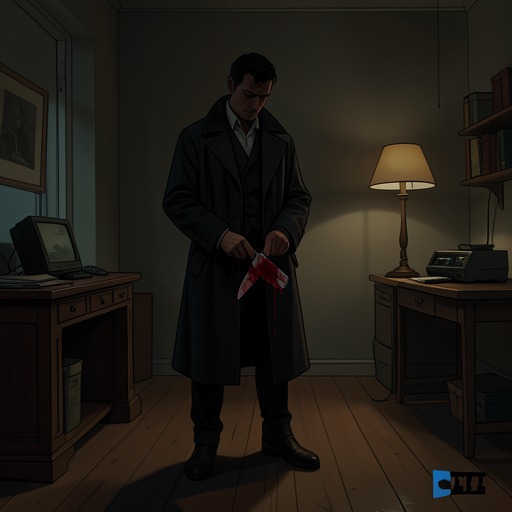
Severiano García del Olmo
Los renglones torcidos de DiosSeveriano García del Olmo is revealed as both the family member who had José Sáez García confined and the victim of the murder Alice Gould eventually solves. His death links a decades-old family rupture to a crucial detail in the asylum’s records: the man he had sent away was able to leave during the open-regime period on the day he was killed.
Family and the decision to seek confinement
Severiano was Raimundo García del Olmo’s father and José Sáez García’s paternal uncle. About forty years before the investigation, José and Raimundo were still boys, no older than fifteen. The tension between them had become unbearable, and Severiano, convinced that his Galician nephew was seriously mentally ill, requested his admission to Nuestra Señora de la Fuentecilla Psychiatric Hospital.
The separation lasted until Severiano’s death. Raimundo later confirmed that his father had arranged José’s confinement, though he did not know that José was responsible for the killing. The irony of Severiano’s decision is stark: the attempt to remove a dangerous relative from the family home did not end their connection, but gave the future murderer a place in the institutional history that would help expose him.
Murder and the asylum record
Alice’s reconstruction identifies José, known at the hospital as Hombre Elefante, as Severiano’s killer. The method was not the beating with a sandbag that had been suspected. Instead, the attack matched the killing of Remo: the assailant leapt onto the victim, crushing his thorax and rupturing his entrails.
The timing supplied a separate link. José had been admitted at Severiano’s request about forty years earlier. After the director introduced the open regime, José received permission to leave the hospital for three days; the second day coincided with the murder of the man who had arranged his confinement. The admission history and leave record thus turned a long-buried family relationship into evidence about opportunity.
Significance in Alice’s investigation
Severiano’s murder is one of the crimes Alice believes she has solved when she anticipates presenting her conclusions to the commissioner. Her recollection of earlier praise for uncovering three crimes sharpens the stakes of this new revelation: she expects to resolve not only the mystery of Severiano’s death, but also the mystery surrounding her own identity and condition. For the investigation, Severiano is therefore more than a victim recalled through Raimundo’s family history. His decision to seek José’s confinement, and the later record of José’s permitted absence, form the chain through which Alice identifies the killer and corrects the supposed murder method.