Birth Parents Record Database
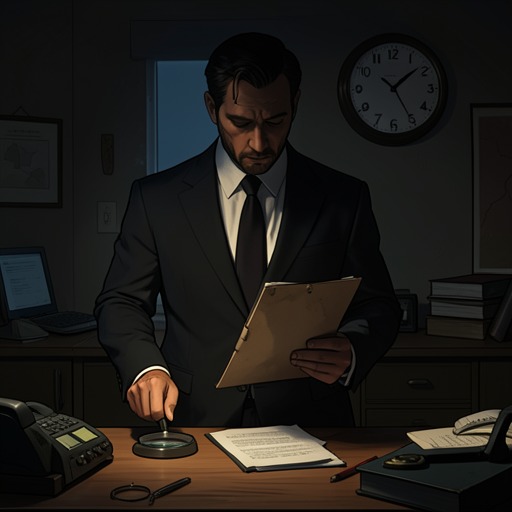
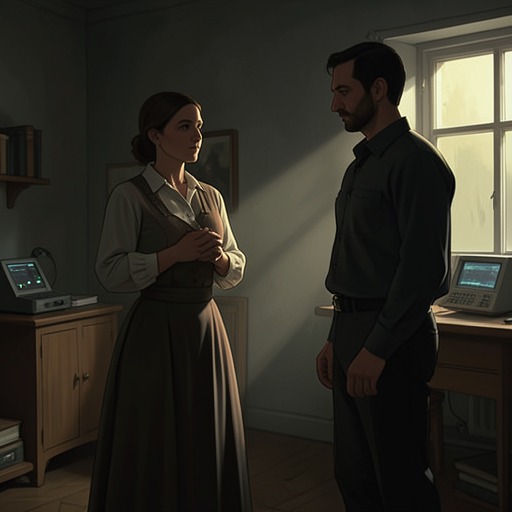
Lost and FoundThe Birth Parents Records Database is a confidential agency system containing records about people who surrendered children for adoption and the children connected to those cases. In the narrative, it is not a neutral storehouse of complete family truth: access is narrowly authorized, information is divided between related databases, and the most important discovery arrives alongside gaps, classifications, and uncertainty. By entering this system, Ransom moves from knowing only that he was adopted to identifying his birth name and the two people who can anchor his biological history: Genevieve Cartwright and Alexander Cartwright.
Definition and Institutional Context
The database belongs to the agency where Bethany works, an organization that handles adoption records and also retains information about donors, donations, and tax matters. Ransom understands that access to such material could expose Bethany to professional or legal consequences, so he promises that he will not use it for anything traceable to her, anything extremely illegal, or anything that could hurt people. His caution establishes the database as protected institutional property rather than ordinary public information.
The archive records more than a simple list of names. The agency keeps dossiers on children placed for adoption and on the adults who surrendered them, while information identifying an adopted child is separated from other files because the child was a minor at the time. That separation is central to the database's dramatic function: Ransom cannot obtain his whole history through one transparent record. He must move between systems designed for different administrative purposes, reconstructing a family connection from fragments held under different permissions.
Access and Restricted Search
Bethany agrees to provide Ransom with credentials only for the two relevant systems: the adopted-children database and the records site for parents who gave up children. She warns him not to use the login elsewhere, because misuse could lock her out and force her to explain what happened. The terms make the database part of the bargain between them. Ransom has accepted a fake-boyfriend arrangement with Bethany partly because confidential agency access may give him what public searches cannot, while Bethany retains control over the scope of what he is allowed to see.
The distinction between the two databases also reflects the structure of a closed adoption. Ransom had already tried ordinary public-record searches, but those searches could not supply the necessary information. The state had played only a limited paperwork role, the relevant records might have been destroyed after roughly twenty years, and Ransom did not even know which name to search. The agency database therefore becomes the only plausible route to the records connecting his adoptive identity with his birth family.
The Search for Ransom's Original Identity
Using Bethany's laptop and her credentials, Ransom first searches the children-served database. He is uncertain whether the record will be indexed under his adoptive name or his pre-adoption name, and he assumes that a search under the unknown original surname would be impossible. He instead enters the name he had stopped using years earlier, Patrick Nolan. After an initial indication that no result exists, the system returns one match.
The record identifies a three-year-old child whose adoptive parents are Janice and Raymond Nolan, the parents Ransom knows as his own. It states that he entered the agency's care at the age of two after being surrendered by his birth parents. The file records above-average intelligence and minor behavioral issues described as consistent with an unstable attachment to birth parents. It also contains interviews conducted by the agency with the child and his new parents, allowing Ransom to confront an official version of his own early life and his childish answers from before he went home with the Nolans.
The adopted-child record does not list his birth parents. That absence is not a minor inconvenience; it preserves the central barrier created by the closed adoption. The file gives Ransom institutional confirmation of his legal and adoptive history while withholding the names he most wants. Its silence directs him to the second database and demonstrates that archival access does not necessarily mean complete knowledge.
Genevieve and Alexander Cartwright
The first database does, however, reveal the crucial bridge: Ransom had not always been Patrick Nolan. His birth name was Patrick Cartwright. With that surname, he searches the birth-parents database and finds several Cartwrights before locating the entry attached to his birth name. The names are Genevieve Cartwright and Alexander Cartwright, the parents he has spent years trying to identify.
The discovery produces immediate relief because a missing piece of his history has finally become definite. Yet the records do not resolve the past. A subsequent search shows that Genevieve Cartwright is dead. Her obituary states that she died when Ransom was about twenty, was no longer with his birth father, and left no surviving family; her other two children had died before her in an accident at the home. The database therefore identifies his birth mother while simultaneously closing off the possibility of asking her for an account.
Alexander Cartwright is still alive and living in another state about a day's drive from where Ransom had been staying before returning to his hometown. The search also reveals that Alexander has a criminal record and had been preparing to go to jail on a plea deal for grand theft around the time Ransom was placed for adoption. Ransom does not treat that fact as a complete explanation. The adoption file's reference to unstable attachments suggests that the family circumstances were more complicated than the surviving administrative entries disclose, leaving Alexander as the one living person who might supply the missing story.
Narrative Consequences and Significance
The database changes Ransom's investigation from an abstract search into a possible journey toward a specific living parent. Before using it, he knew that his parents had adopted a child but lacked the name, date trail, and family identity needed to pursue the case. Afterward, he knows that he himself was that child, that Patrick Nolan replaced Patrick Cartwright, that Genevieve Cartwright is dead, and that Alexander Cartwright may still be reachable. The archive gives him both answers and a new decision: whether to contact a biological father whose history includes imprisonment and whose relationship with Genevieve ended before her death.
Its power comes from the tension between retrieval and omission. The database preserves a photograph, an age, adoptive parents of record, assessments, interviews, and a birth surname, but it does not provide the birth parents directly in the child's file. Access is controlled by Bethany's credentials, divided by category, and constrained by the agency's treatment of a minor's identity. The system thus reconstructs kinship through institutional fragments while also showing how institutions can conceal, separate, or lose the evidence from which kinship might be understood.
The object is consequently tied to the relationship between Ransom and Bethany. Bethany's employment gives her access that Ransom cannot obtain through public channels, and Ransom's willingness to risk the arrangement helps secure the credentials. The database is the practical mechanism behind their confidential bargain, but it also carries emotional consequences beyond the transaction. Ransom finds the answer he has pursued for years and then realizes that he has no obvious person with whom to discuss it: his adoptive parents are dead, he has no siblings, and his friends are not people he normally approaches about such matters. The archive reconnects him to biological names while exposing the loneliness that remains after the records have been opened.