Clairmont Hotel
Lost and FoundClairmont Hotel is the reunion’s improvised headquarters and the principal threshold between Bethany and Ransom’s private arrangement and its public performance. Bethany chooses it because the Sunday dance is scheduled there and because staying near the hotel should keep her close to classmates and organizers; the worsening winter weather makes that strategic choice a necessity as well as a social calculation. Within the hotel, the couple’s fake dating arrangement is exposed to constant observation, while the same enclosed setting gives their relationship room to become less artificial.
Setting and Function
Clairmont Hotel enters the story as the place where the high-school reunion’s central activities are expected to converge. Bethany points out that the big dance is supposed to take place there, making it likely that several classmates and reunion officials will be staying on site. Ransom initially suggests the move as a way for them to remain on display almost continuously, and Bethany accepts after considering that proximity would help her keep track of changes to the reunion program.
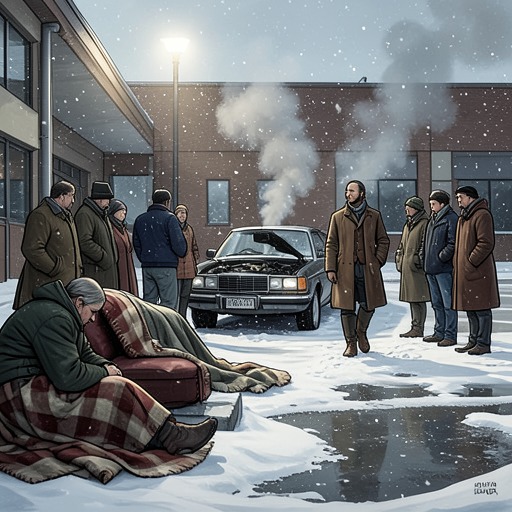
The decision is intensified by the weather. Madison announces that snow will begin earlier than expected and advises reunion attendees to return to their hotels or houses before conditions deteriorate. Bethany and Ransom therefore choose the hotel not merely for convenience but because the cold and impending storm make it undesirable to travel back and forth. Other reunion participants reach the same conclusion: roughly half a dozen people are already waiting at reception, and more arrive behind Bethany and Ransom, confirming that Clairmont is becoming the gathering point for those who want to stay close to the action.
Arrival and Accommodation
The move is negotiated cautiously. Ransom asks whether Bethany is truly willing to try the hotel plan and later checks again that she is one hundred percent certain before they enter. Bethany sees two classmates going into the building, recognizes that their visibility will increase the pressure, and nevertheless decides that the stress is manageable. At reception, the clerk asks whether they are with the reunion group and offers a couple of single-bed suites. Ransom pays by card, and the clerk assigns them room 3140.
Their public performance begins before they even reach the room. Bethany and Ransom leave the desk arm in arm, and Ransom squeezes Bethany’s waist and kisses the top of her head in the practiced manner he has used with real girlfriends. The gesture is designed for witnesses, but it also establishes the hotel as a stage on which physical familiarity must look effortless. In the elevator, with no one else present, Ransom can briefly relax; the privacy is welcome because maintaining the role for much of the evening has begun to irritate him.
The room itself offers comfort but removes emotional distance. It is spacious and contains two chairs, a small breakfast-nook table, a dresser, a closet, bed stands, an attached bathroom, toiletries, a deep bathtub, and a shower. Its defining problem is that two people who barely know each other must share one large bed. The room thus converts the abstract risk of fake dating into a physical arrangement with immediate consequences: public affection can be performed in the lobby, but private closeness cannot be avoided once the door closes.
Isolation and Intimacy
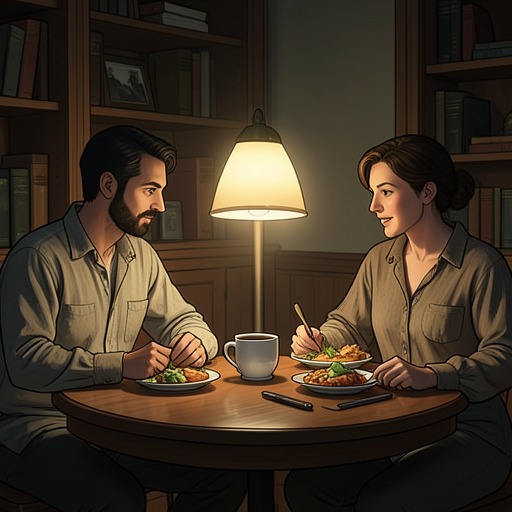
The hotel’s enclosed routine makes the arrangement feel increasingly strange and increasingly ordinary at the same time. After Ransom leaves to retrieve their belongings, Bethany watches television alone and worries about what her classmates thought of her arrival with a date. She is also unsettled by the prospect of spending several nights with someone she barely knows. When Ransom returns, organizes himself across the room’s two chairs, covers his legs with a throw, and watches television, the scene looks so normal that Bethany briefly wishes the relationship were not a sham.
The same hotel stay also gives Ransom access to Bethany’s private world. After leaving the room, he considers looking around her place for clues about her, while explicitly distinguishing that curiosity from searching her underwear drawer. Later, when Bethany allows him to use her laptop, he returns to the room, finds the computer in her luggage, enters her personal password, and opens the first database he needs. The page loads to the heading Children Served by Us. Clairmont therefore functions not only as romantic confinement but also as an opportunity structure: shared lodging, available equipment, Bethany’s password, and the absence of immediate supervision lower the barriers to his confidential investigation.
Bethany understands the danger of the arrangement. Before the hotel stay, she has already recognized the enormity of letting a stranger stay in Bethany’s parents’ house, pretending to be her boyfriend for a long weekend, and receiving access to confidential information connected to her work. At Clairmont, that earlier bargain becomes operational rather than hypothetical. The hotel’s privacy enables the exchange, while its public spaces keep the couple under continual social scrutiny.
Reunion Events and Public Stage
Clairmont’s dining areas become part of the reunion’s everyday rhythm. Bethany and Ransom arrive at breakfast close to eleven, when former classmates call out for them to sit together. The hotel is not a retreat from the reunion but a place where reunion identity is repeatedly renewed through meals, encounters, and observation. The following morning, brunch in the dining room introduces the day’s scheduled luau and prom, although the room is unusually sparse because many people are occupied with preparations.
The hotel also anchors the reunion’s sequence of events. From there, Bethany and Ransom prepare to attend the fun fair at the school, with Ransom defining his role as making sure that his fake girlfriend has genuine enjoyment. Light snow begins again while he goes downstairs and out to the car, a reminder that the apparent continuity of the weekend remains dependent on unstable weather. Clairmont holds the participants together while the storm and the reunion schedule pull them between school grounds, hotel rooms, dining spaces, and formal events.
The decisive public scene takes place in the hotel ballroom during the dance. The occasion resembles an ordinary prom but differs because alcohol is being served openly, and the DJ is playing early-2000s hits. Bethany and Ransom circulate through the room, greeting everyone and taking the photographs expected of a visible couple. Their presence attracts surprised looks directed at Bethany, making the ballroom a social testing ground in which her new public identity is measured by people who remember her from high school.
The ballroom then turns their relationship into communal entertainment. The DJ calls for space so the two can share a special dance celebrating their love. The request gives their arrangement an official-looking ceremony, even though the relationship began as a bargain involving pretend affection and confidential access. Later, an announcement from the stage reports that the roads out of town have been cleared and the airfield is operating again, promising that everyone can leave on time the next day. The hotel’s function consequently shifts from shelter during enforced uncertainty to the final venue of a reunion preparing to return its participants to ordinary life.
Narrative Significance
Clairmont Hotel is a liminal setting: it stands outside the routines of Bethany’s parents’ house and ordinary work life, yet it is not private enough to permit either character to remain unchanged. The storm gathers classmates into a temporary community, while the hotel gathers public spectacle, private negotiation, and romantic risk under one roof. Bethany enters seeking control over the reunion’s information and visibility; Ransom enters willing to perform a boyfriend or even husband in exchange for secure access to agency files. Their shared suite exposes the strain beneath that transaction, and its mundane scenes of television, luggage, meals, and rest make the false relationship feel momentarily domestic.
The hotel also concentrates the story’s central contrast between performance and reality. In the lobby, Ransom’s arm-in-arm entrance and kiss to Bethany’s head are deliberate signs for an audience. In the room, the single bed, his restless departures, her anxiety, and her fleeting wish that the relationship were genuine reveal the emotional consequences that public theater cannot contain. At the dance, the same performance is elevated into a special celebration of love, blurring the boundary between what the reunion believes it sees and what Bethany and Ransom are beginning to experience.
Finally, Clairmont’s temporary stability is defined by its ending. The weather initially threatens to extend the reunion and make the hotel an enforced refuge; the announcement that roads and the airfield are open restores the possibility of departure. Yet the stay has already altered the terms of the relationship. The hotel has served as shelter, stage, bedroom, workplace access point, dining hall, and ballroom, allowing a contractual performance to acquire emotional weight before the reunion group disperses.