Eve Waters
Lost and FoundEve Waters enters the narrative as a woman deliberately making herself smaller in order to become herself again. After leaving a cheating college sweetheart and abandoning the marriage in which she had spent years catering to Bryan, she takes an overqualified job at the Cowboys n’ Cuts Restaurant in Hope Creek. The move is both professional descent and personal escape: she has lost herself, lost the will to cook, and chosen a one-stoplight town where isolation might give her enough distance to recover. Her story begins not with triumphant reinvention but with the uneasy, practical work of surviving what came before.
Identity and Background
Eve has been in Hope Creek for a month when her story opens, long enough to know that the town’s smallness is functioning as a refuge rather than a permanent identity. She keeps to herself and works a job beneath her qualifications because the point is to escape the past and the man she left behind. Her professional identity remains that of a chef, even while her current circumstances make that expertise appear diminished. When Mrs. Beaumont questions her, Eve states plainly that she is a chef currently working at the Cowboys n’ Cuts Restaurant; the older woman immediately treats the position as evidence that Eve has fallen from a higher station.
The emotional history behind that retreat is explicit. Eve had been deceived into marrying Bryan, then spent years catering to him before catching him cheating. Rather than throwing him out, she packed every box and left. The choice marks a decisive recovery of agency, though it does not erase the cost of the marriage. Eve says that she lost herself during the relationship and even lost the will to cook, a particularly severe loss for a professional chef. Her relocation to Hope Creek therefore represents more than geographic flight: it is an attempt to make distance into a form of treatment, to turn the wreckage of marriage into the lemonade of a new life.
Life in Hope Creek
Eve’s withdrawal is framed through repetition and containment. She listens to a Beyoncé CD almost constantly after the divorce and interprets her life through the singer’s songs, including the bitter recognition that she had allowed Bryan to put a ring on it. The music gives her private upheaval a familiar vocabulary, while the town offers a setting in which she can avoid explaining herself. Her old pickup truck becomes the one object she considers dependable, even though its dented bumper records the accidents and misjudgments of high school, college, and marriage. Eve insists that the truck does not define her, revealing how urgently she is separating her present self from the accumulated evidence of her past.
That defensive independence is tested when she meets Joshua. In the immediate aftermath of their roadside encounter, Eve asks his name, introduces herself as Eve, and refuses to pretend that the circumstances are conventionally pleasant. Joshua is a farmer whose truck has run out of gas; he is carrying a small goat named Billy the Kid to a girl in Heather’s Forge for her birthday and needs to borrow Eve’s phone. Their meeting is therefore practical before it is romantic, built from inconvenience, delayed obligations, fuel, and a damaged vehicle rather than deliberate courtship.
Even so, attraction enters through the body before Eve is ready to organize it into intention. When she cracks her head on the passenger-door opening while reaching for water, Joshua catches her, places his hands on her waist, and steadies her while checking her hairline. His touch is too close and too charged for her comfort in the sweltering heat, and she catches herself noticing his muscular back before turning away. The scene makes her recovery physical: she is not merely deciding to move on from Bryan; she is discovering that her body can respond to someone new, despite the comparisons and resistance that still interrupt the response.
Billy the Kid supplies a gentler route into that contact. Joshua reappears with the tiny white goat, whose black tufty ears and protruding pink tongue immediately melt Eve’s resistance. She calls him adorable, while Joshua handles the animal under one large arm and carries its food and water tray in the other hand. The image complicates the rugged farmer’s appearance with caretaking competence, and Eve’s delight in the goat lets warmth surface without requiring her to make an emotional declaration.
Relationships and Social Friction
Joshua is the first figure in the supplied narrative to meet Eve outside the shadow of Bryan. He is physically unlike her former husband, a difference Eve notices when she compares Joshua’s calloused palm with Bryan’s. She is irritated with herself for making the comparison, but the comparison also measures the distance between the old relationship and the possibility of a new one. Joshua’s courtesy, humor, and practical dependence on Eve’s phone create an encounter in which she helps him without becoming responsible for him in the way she had been responsible for Bryan.
Their connection advances through hospitality and shared work. Joshua later remembers an evening with Eve as amazing and focuses on the carbonara she prepared, noting that he ate three-quarters of the pot himself. His response restores cooking to the center of Eve’s identity: the skill she believed marriage had taken from her is again a source of pleasure, admiration, and connection. He also finds himself picturing her freshly showered hair and imagining physical intimacy, acknowledging that it has been a long time since he has thought about a woman in that way. His attraction confirms that Eve’s return to life is visible from outside, not merely experienced as a private repair.
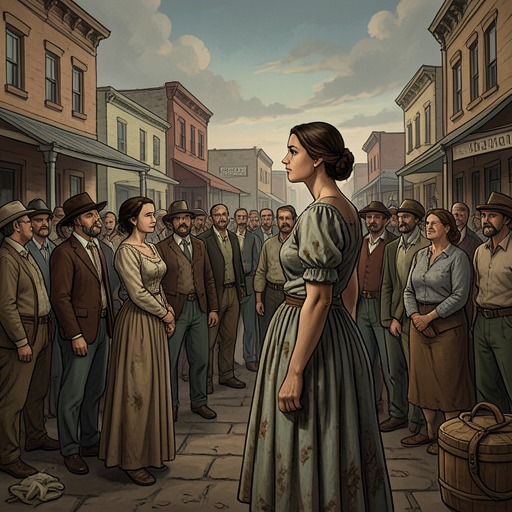
Eve’s encounter with George and Mrs. Beaumont shows how quickly Hope Creek turns a newcomer into public knowledge. George owns a ranch just outside Heather’s Forge and helps Joshua with the delayed delivery and gasoline, but he retreats when Mrs. Beaumont approaches. She questions Eve’s name, origin, relationship status, and work, reacting skeptically to the unfamiliar surname Waters and to Eve’s claim that she is alone. The scene places Eve’s post-divorce independence under the scrutiny of a community that treats solitude as an invitation to investigate. Eve remains direct, identifying herself fully as Eve Waters and naming her occupation, even as Mrs. Beaumont dismisses the Cowboys n’ Cuts Restaurant as a step down.
The contrast between Eve’s private rebuilding and public suspicion echoes another social world in the narrative. At the high school reunion, classmates speculate that Bethany hired Ransom from a modeling agency to pretend to be her boyfriend because Bethany supposedly “suck[s] at life.” Eve is not the direct subject of that rumor, but the parallel matters: both women are judged through appearances, romantic status, and perceived failure. The reunion’s false performances and Hope Creek’s intrusive questioning belong to the same social order, one that assumes a woman’s life must be legible through a partner, a prestigious job, or an acceptable public story.
Change and Emerging Direction
Eve’s initial transformation is modest but concrete. She has not yet erased Bryan’s influence, and the recurring Beyoncé CD shows that the divorce remains emotionally present. Nevertheless, leaving was an active decision, and Hope Creek gives that decision a setting in which she can stop performing the marriage’s version of herself. Her work at the Cowboys n’ Cuts Restaurant may look like regression to Mrs. Beaumont, but for Eve it is part of a deliberate retreat from an identity that had become inseparable from catering to her husband.
Joshua and Billy the Kid interrupt that retreat without forcing Eve to abandon it. The roadside collision makes her visible to another person; the water, the goat, the phone call, and the shared problem of reaching Heather’s Forge establish practical reciprocity before romance. Eve can be helpful while remaining independent, attracted while remaining wary, and professionally diminished in the town’s eyes while still possessing the skill that makes Joshua remember the evening so vividly.
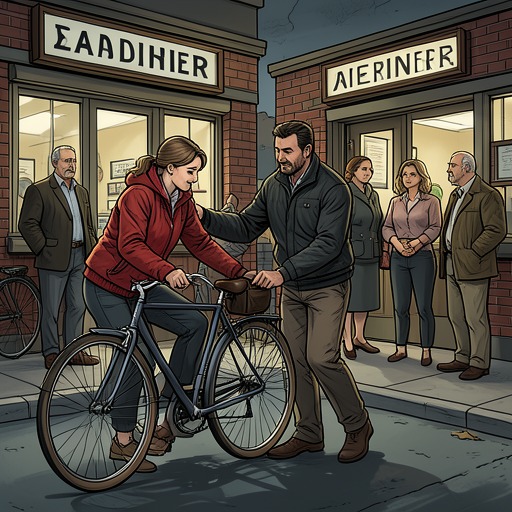
The next morning, Eve drives back toward Hope Creek and stops in front of the Cowboys n’ Cuts Restaurant. Joshua parks beside her and thanks her for the previous day. She answers that he would have done the same under the circumstances, a response that defines their early bond as mutual decency rather than rescue. The image of the two trucks arriving together leaves Eve at the threshold of a new phase: she has not returned to the marriage she escaped, and she has not yet declared a new life, but the isolation that protected her for a month is beginning to open.
Narrative Role and Significance
Eve’s storyline extends the book’s concern with the difference between performed success and lived well-being. Bethany’s classmates read romantic presentation as proof of competence or failure, while Eve has rejected the outward markers of a successful marriage after discovering the betrayal beneath them. Her overqualified job, battered truck, and single status look like decline from the outside; internally, they are instruments of survival and reconstruction. The narrative thus treats apparent downward movement as a possible route back to agency.
She also gives the story a culinary form of emotional renewal. Marriage made cooking feel like service to Bryan, and the divorce initially seems to have severed Eve from the kitchen as well as from her husband. In Hope Creek, cooking becomes available again as pleasure: the carbonara is delicious, Joshua eats most of the pot, and his memory of the meal joins professional ability to erotic awakening. Eve’s future is not secured by a grand declaration in the supplied scenes. It is suggested through restored appetite, reciprocal attention, and the possibility that a life chosen after betrayal can contain both work and desire without requiring her to disappear inside someone else’s needs.