Goat
Lost and FoundGoat, specifically the baby goat named Billy the Kid, is the nonhuman catalyst of the roadside encounter between Joshua and Eve. Joshua must deliver the kid to its new owner, and that practical obligation transforms an otherwise inconvenient meeting into a shared thirty-minute journey toward Heather’s Forge. Billy’s presence supplies the scene’s comedy, vulnerability, and physical intimacy, while also opening the first path between Joshua’s life in Hope Creek and Eve’s uncertain arrival in the area.
Identity and Appearance
Billy is not a human child but a baby goat, a clarification that briefly produces confusion before becoming the scene’s central joke. The animal is small and white, with tufty black ears and a pink tongue protruding from one side of its mouth. Its appearance immediately affects Eve, who finds it irresistibly cute and describes her heart as melting at the sight of it. The description gives Billy a distinct physical presence rather than treating the animal as an interchangeable farm commodity.
Billy is also characterized through sound and movement. It bleats when decisions are made, struggles in Joshua’s arms, shimmies in his lap, and ultimately relaxes against George’s chest when returned to its new owner. These actions make the kid an active participant in the sequence: Billy does not speak, but its noises and bodily behavior repeatedly alter the humans’ mood, attention, and conduct.
Delivery and the Road to Heather’s Forge
Joshua is carrying Billy because he has to bring the kid to its new owner. The delivery is sufficiently important that he needs to continue down the road despite the complications surrounding his truck and the roadside collision. He has enough water for Billy but not for himself, a small detail that establishes the animal as his immediate responsibility and shows that he has planned around its needs.
Joshua brings Billy around to the truck under one large arm while carrying the goat’s food and water tray in his other hand. He explains that he has just let the kid out to relieve itself and expects the trip to be manageable all the way to Heather’s Forge. He warns Eve that Billy was not named after the famous outlaw for nothing, but she insists that both of them can ride in her cab because Heather’s Forge is only thirty minutes away. Billy bleats in apparent approval of the arrangement.
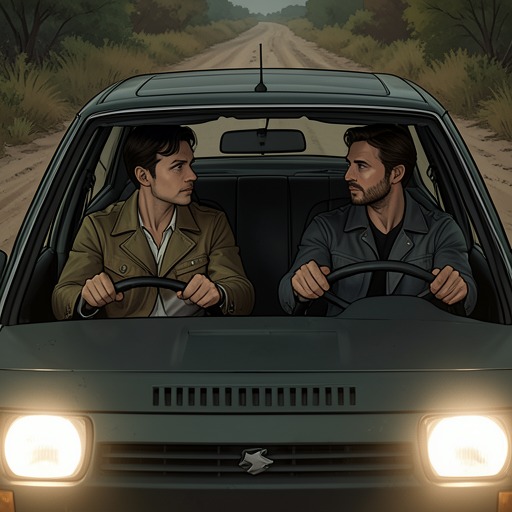
The warning proves accurate halfway through the drive. Billy releases an overpowering odor that fills the cab, forcing Eve to roll down the window into the baked Texas air. The heat does little to dispel the smell, and her gagging turns the delivery into an episode of physical comedy. Joshua has already tried to warn her, so he answers her distress with laughter and a reminder that she had been warned. Eve accepts the consequences of her decision and jokes that Billy may be cute enough to lessen the sting in her nostrils.
Relationship to Joshua and George
Billy reveals Joshua as a caretaker whose obligations are concrete and animal-centered. He carries the kid, supplies food and water, monitors whether it has done its business, and worries that it might soil his leg during the drive. His concern is practical rather than sentimental, but the attention he gives Billy makes clear that the goat’s welfare matters to him.
The animal also connects Joshua to the local community. At the end of the trip, George meets them in front of the church and takes Billy from Joshua. George tickles the goat under its chin, and Billy relaxes against the new owner’s chest. George is known for his ease with animals; his ranch has some of the happiest creatures in the county, and he has turned that affinity into a petting zoo for local children. Billy therefore enters a broader network of rural care, moving from Joshua’s temporary custody into George’s established environment.
Joshua tells George that Billy has received enough to eat and drink despite the trouble on the way, and asks George to tell Jenn happy birthday. The delivery is consequently tied to a specific social purpose: Billy is being brought to Jenn as part of a birthday occasion. George’s question about the goat’s food and water confirms that the animal’s treatment is part of the handoff, not an incidental detail.
Function in Eve and Joshua’s First Meeting
Billy makes Eve’s first encounter with Joshua both risky and disarming. After the truck-related incident, she initially wonders whether the handsome farmer might be dangerous, yet the sight of the tiny goat redirects her attention from suspicion to affection. Her willingness to let Joshua and Billy into her vehicle is partly prompted by attraction to Joshua, but Billy provides the innocent, practical justification that allows the interaction to continue.
During the drive, Billy creates a shared experience that neither character can control. Its smell defeats the pleasantness of the air-conditioning and brings the two strangers into comic cooperation, while its movements keep Joshua physically occupied and prevent the conversation from becoming a conventional romantic introduction. The goat’s body is therefore both disruptive and connective: it causes discomfort, but the discomfort produces laughter and mutual ease.
When Joshua and Eve arrive at Heather’s Forge, the animal’s transfer exposes the romantic charge that has accumulated during the journey. George sees Joshua with Billy, then notices Eve emerging from the Ford and interprets Joshua’s reference to having encountered trouble in a suggestive way. Billy is not merely present at the meeting; the delivery creates the circumstances through which Eve becomes visible within Joshua’s social world.
Narrative Significance
Billy the Kid functions as a comic threshold figure between separate lives. The goat travels from Joshua’s truck into Eve’s cab and finally into George’s arms, and each change of vehicle marks a change in social relation: Joshua’s private errand becomes Eve’s spontaneous assistance, then a community handoff. The animal’s movement organizes the scene’s geography from the roadside to Heather’s Forge and its emotional movement from uncertainty to playful familiarity.
Billy also keeps the encounter grounded in material life. Water, food, bodily functions, heat, sweat, and smell interrupt idealized attraction. Eve may be struck by Joshua’s appearance, but the goat’s needs and unruly behavior prevent the meeting from becoming pure fantasy. In that sense, Billy makes the beginning of the relationship more credible: intimacy emerges not from a polished romantic setting but from shared inconvenience, responsibility, and laughter.
The goat’s role remains limited to this delivery sequence, yet its effect is substantial. Billy gives Joshua an immediate task, gives Eve a reason to help, gives George a reason to appear, and gives the developing attraction a memorable comic form. The kid is simultaneously a cared-for animal, a birthday delivery, a source of disruption, and the small living presence that carries two strangers into one another’s orbit.