National Weather Service
Lost and FoundThe National Weather Service is the institutional authority whose forecast turns the high-school reunion from a controlled social performance into a weather-bound collective crisis. Its warning of heavy snow and extremely low temperatures changes the timetable, traps attendees in town, and indirectly drives Bethany and Ransom toward the Clairmont Hotel, where the pressure of maintaining their fake relationship intensifies.
Warning and Institutional Role
The National Weather Service enters the narrative through the class president’s announcement at the end of the reunion dinner. She reports that the airport has issued a weather advisory and cautions that the group may need to alter the weekend schedule and remain for an additional day or two. The warning is not presented as abstract meteorological information: it immediately becomes a question of whether the reunion can continue, whether people can leave, and how much longer the attendees must remain together.
Madison provides the practical consequences of the forecast. Extremely low temperatures could make flying dangerous, while thick snow might block the roads leading out of town even if local streets could be cleared. The airport itself is expected to become snowed in. The National Weather Service therefore represents more than weather prediction; its report establishes the limits within which the town, the airport, the reunion organizers, and the attendees must operate.
Effects on the Reunion
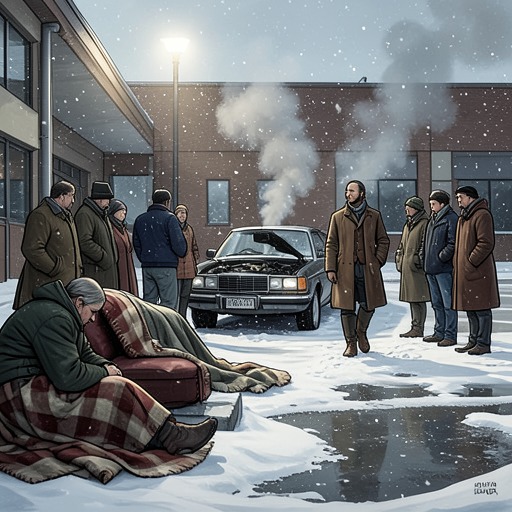
The forecast produces immediate collective frustration. Groans and grumbles spread through the cafeteria as the attendees realize that the reunion’s carefully arranged events may be disrupted and that the entire group could be required to stay together longer than planned. Some events are moved indoors, and the attendees are told to return to their hotels or other lodgings before the snow begins earlier than expected.
For Bethany, the warning is initially less alarming than it is for people dependent on flights or outbound roads. She drove into town and believes she could work from home if necessary. Even so, the storm changes her strategic calculation. Remaining close to her classmates will help her keep track of altered plans and preserve the appearance of a successful social life, while the worsening cold makes moving around town increasingly unattractive.
Lodging and Social Pressure
The weather warning is a direct cause of Bethany and Ransom’s decision to relocate to the Clairmont Hotel. Bethany reasons that staying at a hotel near the center of reunion activity will make it easier to learn what is happening as the organizers revise the schedule. It will also place them near classmates and people responsible for the event, increasing the visibility of their supposed relationship.
The storm creates a contradiction in that choice. Bethany and Ransom want proximity to the reunion’s social action, but the same concentration of classmates increases the risk that others will inspect their behavior. Bethany recognizes that people may visit her and become suspicious if they discover the couple sharing a room with two beds, so the Clairmont’s relative position and the uncertainty over where classmates are staying become part of the cover story. The cold removes the convenience of avoiding scrutiny elsewhere: remaining at the center of events becomes preferable to traveling through dangerous weather.
At the hotel, the weather-bound arrangement places Bethany and Ransom in room 3140, a spacious room with one large bed rather than separate sleeping spaces. Ransom initially offers to sleep on the floor, but the room’s physical closeness contributes to the awkward intimacy and sustained role-playing that shape their stay. The storm does not itself create their attraction, but it removes ordinary exits and extends the circumstances in which attraction can develop.
Resolution and Narrative Significance
The National Weather Service’s warning initially makes the reunion seem likely to continue beyond its planned endpoint. Later, during the dance at the Clairmont Hotel, the class receives word that the roads out have been cleared and that the airfield is operating again, allowing everyone to leave on schedule the following day. The practical danger has passed, but the announcement has an emotional reversal: Bethany cheers with the others while feeling sad because departure now means the end of her temporary life with Ransom.
This contrast gives the weather warning its larger narrative significance. The storm first suspends ordinary schedules and forces the reunion group into a provisional community, allowing Bethany and Ransom’s fake-couple arrangement to become more intimate and convincing. Once the roads and airfield reopen, the temporary world begins to dissolve. Institutional weather information thus governs not only transportation and event planning but also the duration of the social fiction Bethany wants to preserve.