
The City’s Cholera and the Lovers’ Metaphor
Love in the Time of CholeraThis flow traces the connection between actual epidemic danger and the story’s language of romantic sickness.
increasing Bearing strength in each event
 decreasing
Bearing strength in each eventdecreasingDisease in the Streets

Disease in the Streets
Epidemic memory
A major cholera epidemic kills large numbers of residents, including Juvenal Urbino’s father.
A city exposed
Overcrowding and poor sanitation turn disease into a collective consequence of inequality and neglect.
The Physician’s Warning

The Physician’s Warning
Science challenges custom
Juvenal Urbino studies cholera and warns that contaminated water and open sewers could produce another epidemic.
Reform demanded
His warnings turn private medical knowledge into a public argument for infrastructure and prevention.
A Love Diagnosis
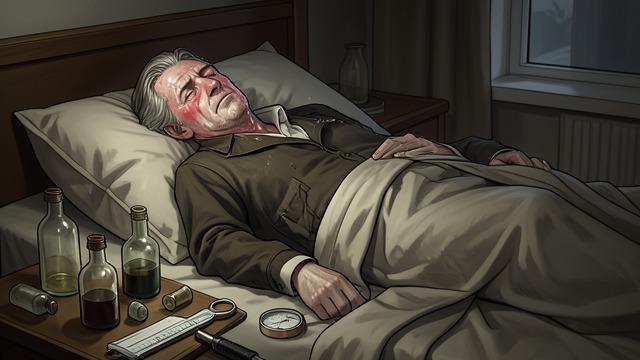
A Love Diagnosis
The body speaks
Florentino Ariza experiences nausea, weakness, and sleeplessness while waiting for Fermina Daza’s response.
Passion resembles disease
His family doctor describes the symptoms as resembling cholera, bringing bodily suffering into the novel’s language of love.
Public Crisis, Private Desire
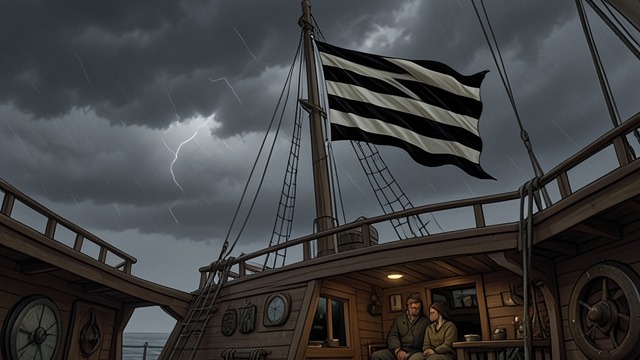
Public Crisis, Private Desire
The flag raised
The ship uses a cholera flag to evade normal travel arrangements and keep Fermina Daza and Florentino Ariza aboard.
Metaphor becomes strategy
The lovers turn a public health protocol into a protective fiction, blurring genuine risk and romantic escape.
A Disease That Outlasts Its Name
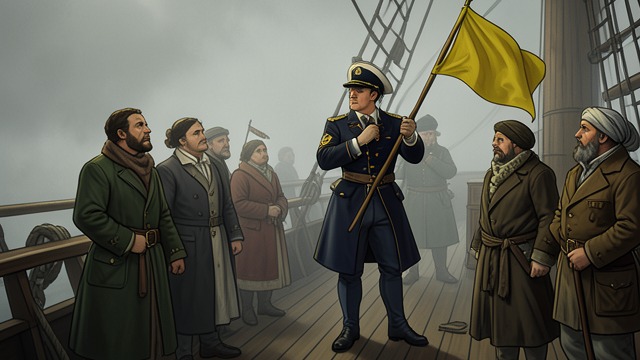
A Disease That Outlasts Its Name
Risk concealed
The Captain tells health officials that everyone aboard has cholera so the ship can avoid ordinary inspection.
Meaning unsettled
Disease remains both real danger and metaphor, while the lovers’ chosen life depends on a deception borrowed from epidemic history.
Before Juvenal’s return from Europe
Soon after Juvenal returns
During Florentino’s first wait for Fermina’s reply
During the later voyage aboard New Fidelity
Near the voyage’s final return
