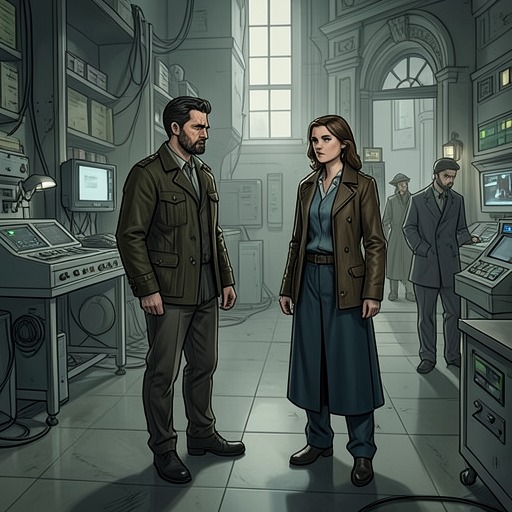
Hospital of Misericordia
Love in the Time of CholeraThe Hospital of Misericordia is a central medical institution in the city’s response to disease and in Juvenal Urbino’s professional life. It serves both as a place of instruction, where his students bring him a patient whose symptoms raise the alarm of cholera, and as the setting for his own clinical work and temporary residence.
Medical training and clinical work
Urbino’s connection to the hospital includes teaching as well as practice. In less than a year after returning to the city, his students there asked for his help with a charity patient whose body had turned an unusual blue. Urbino recognized cholera from the doorway, turning the case into an urgent practical lesson in identifying a feared disease. The patient had arrived from Curaçao on a schooner and had come to the clinic independently, circumstances that informed Urbino’s judgment about the risk of further transmission.
At the hospital, Urbino’s authority rests on both specialized learning and action. After his father died in an earlier cholera epidemic, he studied the disease in depth and worked with the epidemiologist Adrien Proust. When the suspected case appeared, he alerted his colleagues and the authorities, who warned neighboring ports so the schooner could be found and quarantined. His response contrasts with the military commander’s wish to impose martial law and use cannon fire as a supposed treatment: Urbino restrains that proposal and relies instead on medical vigilance and quarantine.
Cholera surveillance and public health
The patient died after four days, but no further case appeared in the following weeks. When reports later suggested that children in different parts of the city had died of cholera, medical supervision widened: the family of a five-year-old girl was separated and individually quarantined, and the neighborhood was placed under strict observation. One child in the family contracted the disease and recovered. Eleven more cases were reported over the next three months, followed by an alarming outbreak in the fifth month; by the end of the year, the danger of an epidemic was believed to have passed.
These episodes show the hospital operating within a wider system of surveillance that links clinical recognition to port warnings, quarantine, and neighborhood monitoring. The institution is not presented as acting alone: Urbino mobilizes colleagues and public authorities, while the hospital’s students bring cases to him for assessment. The chain from a patient’s arrival to the containment of a possible outbreak gives the hospital a role in the city’s collective defense against disease.
Institutional reach and everyday life
The hospital’s influence extends beyond treatment. After a domestic outbreak of rabies among animals, Urbino ordered the survivors killed and their bodies burned, then requested Hospital of Misericordia services to disinfect the house thoroughly. Its work therefore reaches into private homes when a health danger requires organized cleaning and containment.
The hospital also becomes a temporary home during the marital conflict between Urbino and Fermina Daza. After a dispute over whether there had been soap in the bathroom, he moved to the interns’ quarters on a professional pretext and returned home only to change clothes before evening house calls. The couple’s estrangement lasted three months; their attempts to settle the quarrel repeatedly revived older resentments. In this episode, the hospital’s quarters are not merely institutional accommodation: they mark the distance between the spouses while allowing Urbino to continue his work.
Significance
Across these appearances, the Hospital of Misericordia connects medical knowledge with civic responsibility and domestic life. Its students participate in the recognition of cholera, its colleagues and clinical facilities support Urbino’s response, and its services are called upon during a household health emergency. At the same time, its interns’ quarters provide refuge during a rupture in Urbino’s marriage. The hospital thus stands at the intersection of professional duty, public health, and private circumstance.