Love in old age
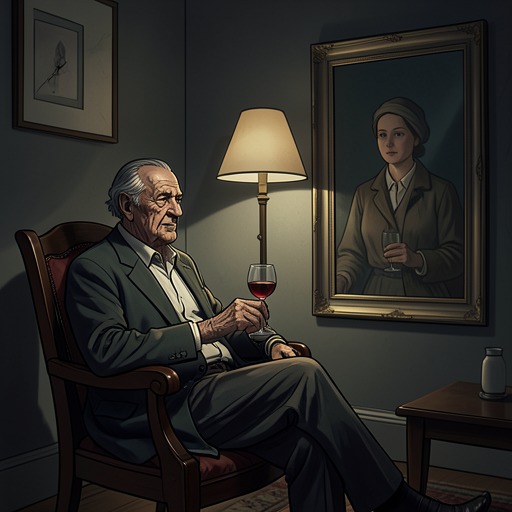
Love in the Time of CholeraLove in old age is a form of intimacy the novel makes both socially contentious and emotionally distinct: it emerges after bereavement, when the past cannot be recovered and the future is visibly limited. Fermina Daza and Florentino Ariza’s late-life bond is measured against their youth and against her long marriage to Juvenal Urbino, but it is not simply a revival of either. Its possibility depends on companionship, a changed understanding of memory, and the willingness to make room for love after loss.
From youth to old age
The social rules surrounding love change sharply with age. When Fermina Daza is young, her father’s authority and the Academy’s discipline regulate her courtship: after Sister Franca de la Luz discovers a love letter, Fermina refuses to identify her sweetheart, is expelled, and her father finds the letters she has hidden. Her youth is thus marked by secrecy and family control. Later, on the eve of her wedding to Juvenal Urbino, her fear centers on marriage and its consequences, even as the public opposition to the match gradually subsides. Love at that stage is entangled with reputation, gender expectations, and the irrevocability of marriage.
The standards governing old age are no less restrictive. Florentino Ariza’s lifelong persistence is out of step with a society that expects men to dress and behave according to age and confines women to narrow categories of marriage and spinsterhood. Fermina’s daughter Ofelia gives the prejudice against late-life romance its bluntest expression, declaring, “Love is ridiculous at our age,” and that at the older couple’s age it is “revolting.” Fermina answers not by treating their companionship as a family embarrassment but by expelling Ofelia from her home. Her response makes the conflict concrete: the question is not only whether an old person can love, but who has the authority to define that love as shameful.
Bereavement and the return of an old attachment
After Juvenal Urbino’s death, Fermina’s grief does not proceed as a clean passage from marriage to a new romance. She resolves to continue living and initially tries to push Florentino from her thoughts, interpreting his renewed declaration as a possible threat. Yet the effort to forget him only brings him back to mind. Her memories of their youth are inseparable from changed places and lost time: the park has been remade, her childhood home has fallen into ruin, and the young man she remembers seems difficult to reconcile with the old one who has reappeared.
Their first quiet meeting after decades apart gives this change its measure. On a terrace, with cemetery flowers still in the house, Fermina and Florentino have enough time to look at one another without the urgency of their youth. They recognize themselves as two old people with little in common beyond a past that seems to belong to the young people they once were. Their conversation circles around river travel, a subject neither has much experience of, and the distance between the lives they led becomes part of the encounter. The scene does not erase the past; it makes clear that any renewed bond must be formed by people who have changed.
Companionship and family resistance
Florentino’s companionship becomes part of Fermina’s widowhood, and her son Dr. Urbino Daza recognizes its value. He asks Florentino to continue visiting his mother, describing their company as good for her in the solitude of widowhood and convenient for the family. Florentino, who is four years older than Fermina, responds with wry confidence. The exchange shows how the same relationship can be understood differently: her son regards it as companionship between lonely older people, while Florentino sees the possibility of a future formal proposal.
Ofelia rejects that benign interpretation and treats the friendship as a danger to the family’s reputation. Fermina’s defense of Florentino marks a change in her own position. Rather than submitting to her daughter’s judgment, she asserts her right to choose whom she sees and orders Ofelia to leave. Late-life love therefore becomes a test of autonomy as well as affection: Fermina’s renewed attachment matters partly because she will not allow others to dismiss it on the grounds of age.
A changed understanding of love
The intimacy between Fermina and Florentino develops through conversation and shared presence, not through a simple restoration of their youthful courtship. In a private encounter, they hold hands and recognize the difference between the old bodies they had imagined and the hands they actually touch. Fermina speaks of Juvenal in the present tense, and Florentino understands that she has begun to face what to do with the love left behind after her husband’s death. Her feelings remain complex: she remembers a marriage containing difficulties, arguments, and unresolved anger, yet cannot reduce its many years to a simple verdict about whether it was love.
By the time their river journey nears its end, Fermina and Florentino’s relationship has moved beyond the uncertainty of a belated courtship. They are described as having passed the trials of passion and hope into a quieter intimacy, one that can exist in silence and is strengthened rather than invalidated by their proximity to death. The novel does not present old age as a return to lost youth. It gives late-life love its own measure: a bond made possible by surviving time, acknowledging the dead, and choosing companionship without pretending that either person is unchanged.