Magdalena River
Love in the Time of CholeraThe Magdalena River links the novel’s private history of love and separation to the public history of commerce, conflict, disease, and ecological loss. Florentino Ariza first travels along it as a young man trying to escape the pain of Fermina Daza’s rejection, and returns decades later with Fermina aboard the New Fidelity. Between those passages, the river changes from a formidable, living wilderness into a damaged waterway whose diminished landscape reflects the costs of the very navigation that once made it a route of progress.
A commercial artery and a first journey
The river’s importance is established through the River Company of the Caribbean, founded by the shipowner Pius V Loayza and his brothers to give new impetus to steam navigation. One of the company’s vessels bears Pius V Loayza’s name. Its wooden, two-story construction accommodates engines, crew quarters, passenger cabins, dining spaces, and open areas where travelers hang their hammocks; its stern paddle wheel drives it through changing depths. The boat’s design makes the river a working corridor, joining the company’s commercial ambitions to the practical demands of navigation.
Florentino’s first voyage begins after the end of his courtship with Fermina. He leaves for a telegraph post in the mountain wastelands, carrying clothes, illustrated novels, poetry books, and the bedroll his mother insists he take. He has never traveled before, and only gradually notices the boat around him. Passing Calamar, he glimpses its great paddle wheel from the stern and recognizes the strange machinery beneath his feet. The river is at first high enough to carry the boat without difficulty, and its moving darkness becomes a setting for his memories: in the breeze and the vessel’s sounds he imagines Fermina’s voice, while dawn over pasture and swamp briefly seems to promise that he can endure forgetting.
Obstacles, war, and epidemic
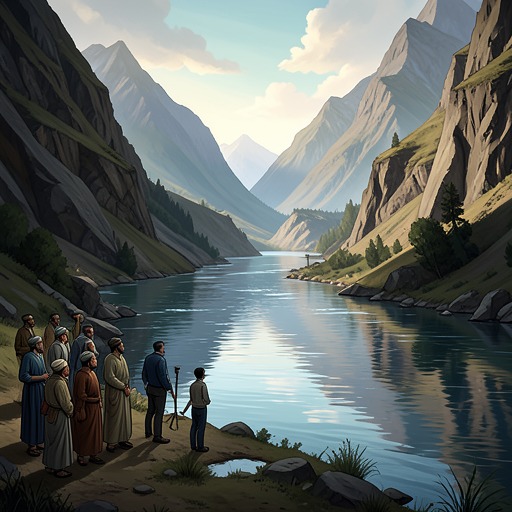
That ease does not last. After three favorable days, sandbanks and rapids make navigation harder; the river narrows through dense trees, with scattered huts and piles of boiler wood marking human settlement. Heat, insects, and the smell of provisions make nights difficult, while passengers walk the decks to escape their cabins. The river journey is also exposed to political violence. During an intermittent civil war between Liberals and Conservatives, the captain confiscates weapons after passengers divide into opposing camps and forbids the customary shooting of alligators from the banks. He even enforces the restriction against a British minister traveling with guns for hunting.
Disease further confines the travelers. Above Tenerife, the boat passes a vessel flying a yellow plague flag. Information comes from another boat: the flagged vessel carries two people sick with cholera, and the epidemic is spreading along the river ahead. The captain bars passengers from disembarking, including at uninhabited stops for wood. For the remaining six-day passage they live under restrictions resembling those of prisoners. Against this collective confinement, Florentino keeps to himself, watching alligators, herons, and manatees with their young. He sees three human corpses pass in the water, but cannot know whether the dead were victims of cholera or war. The uncertainty lets the river’s dangers enter his private memory: even an event unrelated to Fermina becomes another thing that reminds him of her.
At night he reads familiar illustrated novels by the dining room’s carbide lamp, recasting their lovers as himself and Fermina, or writes letters whose fragments he scatters on the current. The water thus serves at once as a physical route and an imagined channel toward the woman he has left behind. Yet the first journey does not take him permanently away. He abandons the telegraph post and secures passage home. At Niño Perdido Cove, before leaving by mail sloop, he throws his bedroll into the water and watches it disappear. The gesture marks his decision not to leave Fermina’s city again.
A changed river on the return voyage
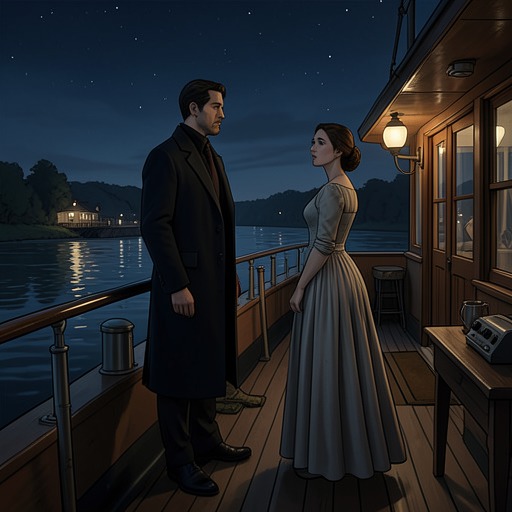
Decades later, Fermina and Florentino travel together aboard the New Fidelity. Fermina first sees Florentino on the bridge in unfamiliar, newly bought light-colored clothes, a change from the dark clothing he had worn throughout his life. Their mutual embarrassment at behaving like sweethearts is eased when Captain Samaritano explains the ship’s controls. The river before them is slow and clear, but Fermina sees what looks like a delta of sand islands. The captain gives the narrowing landscape its blunt measure: it is all the river they have left.
Captain Samaritano explains that fifty years of uncontrolled deforestation have consumed the great forests. The riverboats’ boilers burned the colossal trees that had crowded the banks on Florentino’s first voyage. Other losses follow from hunting and extraction: hunters killed the alligators for their skins, parrots and monkeys disappeared with the foliage, and sport hunters exterminated the manatees. The captain had opposed the shooting of manatees despite the law prohibiting it. When a hunter killed a mother, he took the orphaned calf aboard to care for it and left the hunter behind; he served six months in prison after diplomatic protests and nearly lost his navigator’s license. The calf lived for years in a rare-animal zoo, but it was the last manatee seen along the river.
The later journey makes that history visible in the boat’s immediate difficulties. As the New Fidelity moves upstream, forests have become stripped flatlands and the old villages lie in ruins. The passengers encounter floating corpses, which the captain says they have been ordered to describe as accidental drowning victims. Wood supplies are so scarce that the vessel runs out of fuel and remains stranded for almost a week while the crew searches for trees among the ashes. Woodcutters have abandoned their routes, driven away by powerful local interests, concealed cholera, and wars that governments seek to hide. Florentino, who had received warnings about the river’s decline while rising in the River Company of the Caribbean, had dismissed them with confidence in future oil-powered boats. By the time he understands the scale of the damage, he sees no remedy except to bring in a new river.
Ecological loss and the river’s final image
The contrast between the two voyages is not simply between youthful hardship and old age. The first journey’s discomfort unfolds amid dense trees and abundant animal life; the later one repeats the heat, delays, and floating dead, but without the sounds and creatures that once filled the landscape. The old account of a canoe-and-mule passage lasting as long as fifty days had seemed obsolete during the first decades of steam navigation. Now the devastation has made the journey miserable again, after the alligators, butterflies, manatees, parrots, monkeys, and villages have vanished. The captain’s joke that travelers will one day cross the dry riverbed in automobiles sharpens the implication: technological progress has not preserved the waterway on which it depended.
Near the journey’s end, the New Fidelity leaves the bay with its boilers quiet and passes through channels crowded with taruya, or river lotus. Fish killed by dynamite float on their sides as birds circle above them. The river remains navigable, and the Caribbean wind reaches the ship, but its changed estuary offers no restoration of the world remembered from Florentino’s first passage. The Magdalena River is therefore both the route that carries the lovers together and a record of irreversible loss. Its altered course and emptied banks turn the novel’s return journey into an encounter with the consequences of commerce, hunting, and neglect.