Marriage as a daily reconstruction
Love in the Time of CholeraMarriage as a daily reconstruction names the work required to keep a marriage alive after its vows and early expectations have given way to shared routine. Juvenal Urbino’s formulation is that marriage ends each night after lovemaking and must be rebuilt before breakfast. His and Fermina Daza’s life puts the principle into practice: they begin without love, struggle with their differences, and gradually create an enduring intimacy through the habits and compromises of living together.
The Idea in Their Marriage
Juvenal Urbino explains the difficulty of marriage by emphasizing how much it asks of two people who may have little in common. He and Fermina come from opposing social classes, have different characters and upbringings, and marry without love. He regards marriage as an improbable arrangement that can persist only if love is made into a bond, rather than assumed to exist from the start. His maxim turns that uncertainty into a daily task: the relationship has to be made again in the ordinary hours that follow each night.
That account does not make their marriage a simple success story. Their life together includes arguments, resentment, and a period when Fermina follows the conventions of her new social world even as she questions them. The couple’s early tenderness is also vulnerable to family tensions and the accumulated pressures of domestic life. The idea of reconstruction matters precisely because affection does not prevent these strains; it describes how the couple learns to continue in their presence.
Domestic Work and Accommodation
A birthday request from Fermina makes the unequal distribution of domestic knowledge visible. She asks Juvenal to manage the household for one day. He begins with confidence, serving breakfast and arranging a luncheon, but forgets what she will eat, cannot find what he needs, confuses the servants’ duties, and lets the house fall into disorder. By eleven, with the guests due, Fermina has resumed command. The episode makes the daily labor behind their shared life concrete: Juvenal’s professional competence does not mean he understands the household work on which their routine depends.
The lesson belongs to both of them, not only to Juvenal. Their marriage asks each to recognize the limits of the other’s understanding and to accommodate a life they cannot manage in identical ways. Over the years, they arrive at the same conclusion by different paths: they cannot live together, or love, in any other way. The novel links that insight to a hard-won recognition that nothing in the world is more difficult than love.
A Bond Made Over Time
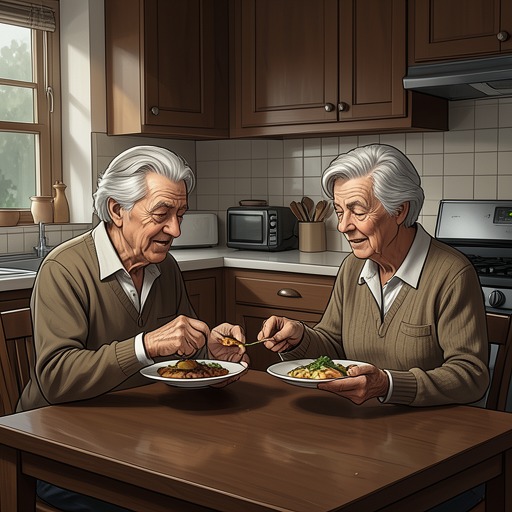
The work of reconstruction produces change without erasing conflict. After thirty years of marriage, Fermina and Juvenal feel like a single being divided between two people. They sometimes anticipate what the other will say, even in public, and they have learned to live through daily incomprehension, sudden anger, reciprocal unkindness, and periods of shared happiness. Intimacy here is not perfect agreement; it is the familiarity built by surviving these recurring changes together.
Their later years bring a particularly deepened attachment. Juvenal is ten years older and enters old age before Fermina, who recognizes that he is weaker than she is and clings to him when he needs her most. Their love becomes calmer and more conscious, marked by gratitude for what they have overcome. They feel they have reached the other shore: not a life without further hardship, but one in which adversity no longer cancels the meaning of their shared history.
Significance and Ending
The maxim about rebuilding marriage each morning gives a practical shape to the novel’s contrast between romantic expectation and enduring partnership. Fermina’s spectacular wedding takes place after a courtship in which she rejected Florentino Ariza; the marriage is initially a commitment between people who have not yet found love in each other. Its lasting significance therefore rests not on a perfect beginning but on the relationship the spouses make over time.
At the end of Fermina and Florentino’s river voyage, the image of an old married couple offers a related but distinct culmination. The pair feel they have moved beyond the hardships of conjugal life and the deceptions of hope, and their love seems more solid as it approaches death. Their experience echoes the daily-reconstruction idea without making it a guarantee of happiness: love persists through time because it is lived and renewed, not because its difficulties have disappeared.