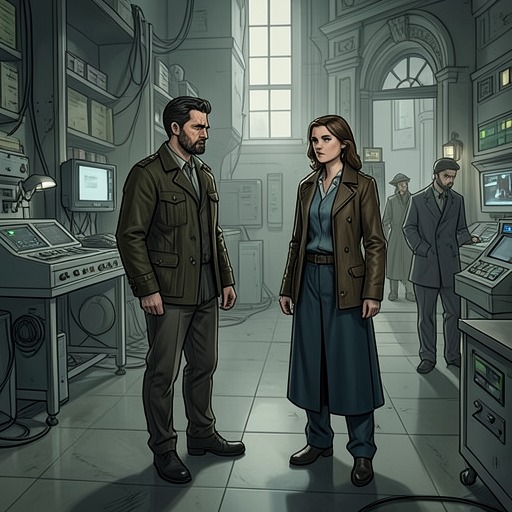
Miss Barbara Lynch
Love in the Time of CholeraMiss Barbara Lynch is a divorced theology doctor whose brief relationship with Juvenal Urbino tests the stability of his marriage to Fermina Daza. Introduced through Urbino’s medical practice, she becomes the focus of a passion he had once believed himself immune to; when Fermina’s quiet response makes the affair impossible to ignore, he ends it and returns to his marriage.
Identity and Background
The only child of Reverend Jonathan B. Lynch, a Black Protestant minister who traveled by mule through settlements in the salt marshes, Miss Lynch had herself been married to one of her father’s former students. The marriage lasted two unhappy years and ended in divorce. At twenty-seven, approaching her twenty-eighth birthday in December, she said she had no wish to marry again. She spoke Spanish with occasional roughness in her syntax, which the narration presents as part of her charm.
Meeting Juvenal Urbino
Urbino first noticed Miss Lynch four months before the crisis in his household, when she came to the clinic at Hospital of Misericordia. Although he did not normally attend clinic patients, he arranged to be present at her examination, discreetly memorized her name and address, and later drove past her home in Mala Crianza Salt Marsh. A chance pause there led to coffee and a conversation about herself, which became his consuming interest in the months that followed.
Miss Lynch had sought medical attention for what she called “twisted colons.” Urbino promised to examine her again, telling her that his profession tried to have the rich pay for the poor. During the later examination, his professional judgment gave way to personal desire. Miss Lynch recognized the change and observed, “I thought this not permitted by your ethics.” The scene places the physician’s conduct, rather than any independent plan attributed to her, at the center of the ethical breach.
The Affair and Its Exposure
Urbino’s passion collided with the habits of a marriage that had endured more than thirty years. He had previously dismissed a friend’s warning that he might one day face a passion capable of endangering that marriage. Now the secret relationship gave him insomnia and other distress, which he initially recounted to Fermina as if they were ailments of old age. Fermina found the notation about Miss Lynch in his medical records and noticed the name, but at first dismissed her as someone unlikely to interest her husband.
The affair became undeniable when Fermina confronted Urbino. She said little, lowered her glasses, and went on darning socks. Her restraint made the change in their domestic life unmistakable to him: he understood that the long uncertainty was over and that Fermina knew. After looking at her as she had asked, he lowered his eyes and did not explain himself in that moment. Fermina finished her sewing, gave instructions for supper, and went to the bedroom.
Renunciation and Narrative Significance
Urbino decided not to keep his five o’clock appointment with Miss Lynch. He abandoned the future he had promised her, including the idea of a discreet house where they could meet, and sent her an emerald tiara in a small box wrapped in pharmacy paper. The coachman delivered it without a message. Urbino never saw her again, not even by chance. Instead, at the appointed hour, he went to confession; the following Sunday he took Communion.
That night, after ending the relationship, Urbino told Fermina about the symptoms of secret love while disguising their cause as the miseries of aging. She listened without looking at him and sorted his clothes into the laundry basket. Though she did not find the odor she had been seeking, the exchange marks the affair’s aftermath as part of the couple’s intimate life rather than a separate romantic story. Miss Lynch’s limited but decisive role reveals the vulnerability beneath Urbino’s confidence in his moral character and turns his infidelity into a test of the marriage’s endurance.