Old age
Love in the Time of CholeraOld age in the novel is a lived bodily condition, a set of social rules, and a pressure on love’s timetable. It is first feared as dependence and humiliation, then experienced through the changed capacities and memories of particular bodies; in the marriage of Fermina Daza and Juvenal Urbino and the late relationship between Fermina and Florentino Ariza, it also becomes a stage in which intimacy can outlast youth and approach death without returning to its old form.
Aging as bodily experience
Florentino Ariza reads age through movement. Since youth he has watched elderly couples help one another across streets, treating their faltering steps as lessons in the laws of aging. At the film screening of Cabiria, Fermina appears to him profoundly changed: her hair has turned gray, her eyes have lost much of their light, and she wears a modest mantilla and house slippers. Juvenal takes her arm at the theater exit, and she misjudges a step. The small stumble brings into view what Florentino has long observed in other couples: the moment when one partner must guide the other through the ordinary hazards of the street.
His attention is not directed chiefly toward death but toward the prospect of becoming dependent. He imagines the aging husband eventually losing his balance and dignity, while his wife leads him by the arm and quietly warns him about steps or obstacles. Florentino recognizes himself in that imagined future. Only when he sees Fermina stumble does he understand that he, rather than she, may die first; the realization makes his own age and mortality immediate. He decides that the day he needs a woman’s arm to cross the street will be the day he must renounce his hope of Fermina.
Social rules of age
The novel sets individual aging against a culture in which age is prescribed through clothing and respectability. At fifty-six, Florentino considers his years well lived because they have been years of love, yet public convention makes continued youthfulness seem ridiculous and continued grief over an old rejection shameful. A walking stick can be accepted after thirty, while men dress like their grandfathers and adopt spectacles to look respectable. Age is thus not only a matter of years or physical change; it is also a social performance that asks people to look older before their bodies require it.
The rules are particularly restrictive for women. The socially recognized age for marriage ends at twenty-two; women who pass it are classified as spinsters, while wives, mothers, widows, and grandmothers are treated as a separate group, measuring their remaining time rather than simply counting the years they have lived. Fermina’s wedding to Juvenal shows how strongly this system shapes a life course: the marriage is presented as irrevocable, and the wedding’s public splendor contrasts with her private dread of the honeymoon. Later, the categories of wife and widow continue to frame how others understand her, even as her relationship with Florentino makes old age a setting for renewed companionship.
Florentino’s own appearance complicates the distinction between youth and age. He has looked old since childhood: his mother, Tránsito Ariza, remade discarded clothes from his father into oversized garments, and his myopia glasses and coarse hair further obscured his age. His early appearance was shaped by poverty and circumstance, while the society around him treats age as a matter of social dignity. The contrast helps explain why his later defiance of age conventions is neither merely a change in dress nor a simple claim to remain young: his life has never fitted neatly into the outward timetable expected of him.
Marriage and mutual care
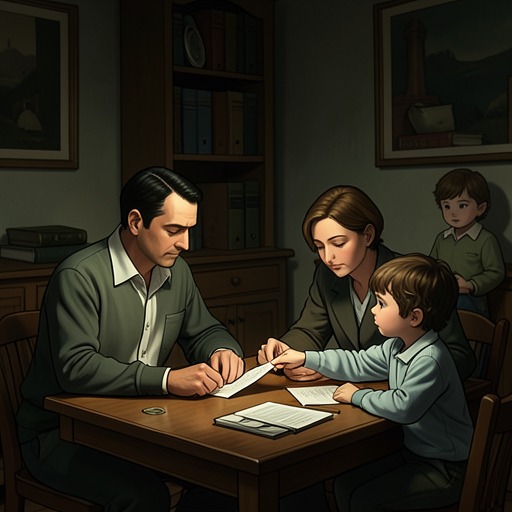
For Fermina and Juvenal, aging unfolds within a marriage built through time rather than preserved in youthful intensity. After thirty years together, they have become like a single divided being, often anticipating one another’s thoughts and sometimes speaking each other’s thoughts aloud in public. Their shared life has included incomprehension, anger, reciprocal cruelty, and moments of extraordinary happiness. The novel describes their most settled love as unhurried and without excess, grounded in their awareness of what they have survived together.
Their partnership also changes with age. Juvenal is ten years older than Fermina and reaches the mists of old age before she does; the narrative presents him as more vulnerable in this passage, despite the social expectation that men retain authority. Fermina clings to him when he needs her most. Their closeness does not erase difficulty but reflects a long accumulation of daily accommodation and mutual knowledge. By the time they feel they have reached the other shore, adversity has not disappeared; it has lost its power to undo the bond they have made.
Late-life love and the approach of death
When Fermina and Florentino meet again with time to look at one another, they recognize that they are two old people, conscious of death and separated from the young selves to whom their shared past belongs. Their memories do not simply restore youth: the past seems to belong to two vanished young people who could have been their grandchildren. This recognition makes the renewed relationship inseparable from the difference between recollection and present life. They have to meet one another as they are now, not as the figures preserved in memory.
In their later companionship, age brings practical and social questions into the open. Fermina’s son, Dr. Urbino Daza, argues that society would progress faster without the burden of old people and imagines marginal cities for those no longer able to care for themselves. He regards seventy as a medically appropriate age limit and sees nursing homes as a temporary answer, where old people might live among others who share their habits and sorrows. His proposals expose a generational view of aging as a burden to be managed. Yet he also asks Florentino to continue giving Fermina companionship in her widowhood, acknowledging the value of that relationship even while speaking of old age in terms of limitation.
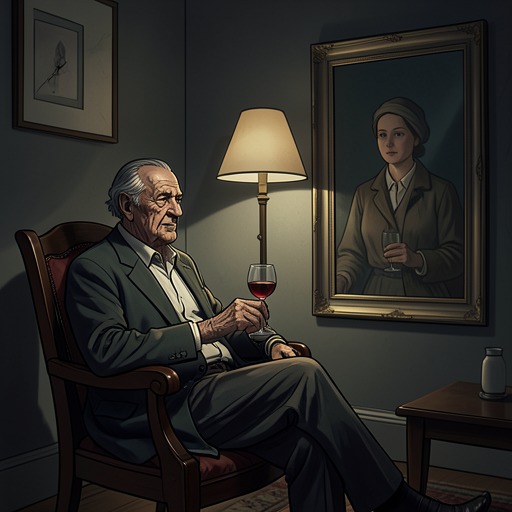
The late love between Fermina and Florentino is neither a return to their youthful courtship nor a denial of mortality. On the river voyage, they experience themselves as an old married couple, beyond the traps of passion and the disappointments of hope. Their intimacy is described as more solid the closer it comes to death. Aging therefore changes love’s measure: it does not restore what time has taken, but it can move attachment beyond youthful expectation toward shared presence, familiarity, and care.