Parrots
Love in the Time of CholeraParrots in the novel move between household companions and emblems of a vanishing natural world. Their uncanny speech makes them part of human routines and affections, but the bird Juvenal Urbino loves also sets in motion the accident that kills him; later, the absence of parrots along the Magdalena River registers the wider devastation of the landscape.
The household parrot
When Juvenal Urbino returns home before ten one morning, he finds the servants in an uproar: the parrot has escaped to the highest branches of the mango tree after being taken from its cage for a wing-clipping. The bird has lived in the house for more than twenty years, though no one knows how old it was before that. Deplumed and seemingly maniacal, it does not speak on command. Instead, it speaks unexpectedly, with a clarity and rationality the narration contrasts with those of human beings.
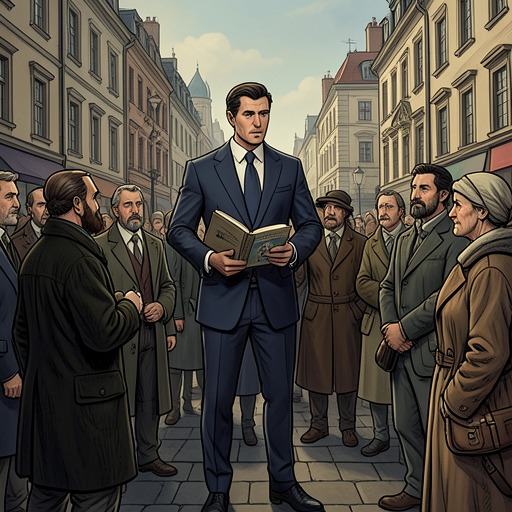
The parrot’s abilities are the product of Juvenal’s sustained attention. After his siesta he teaches it French, then the Latin accompaniment to the Mass and passages from the Gospel according to Saint Matthew; arithmetic proves beyond it. He also plays songs by Yvette Guilbert and Aristide Bruant until the parrot learns them by heart, singing in a woman’s voice for Guilbert and a tenor’s for Bruant, then imitating the servant girls’ laughter. Visitors come to see it, and the President of the Republic once visits to confirm the bird’s reputation. Its repertoire is not merely a party trick: it records the daily patience of Juvenal’s teaching and the affection that gives the lessons their purpose.
Speech, escape, and danger
Fermina Daza initially gives up hope of keeping an animal in the house after Juvenal resists her wish to buy a dog. Following a robbery, he reinforces the house with double padlocks, iron bars, and a strongbox, and begins sleeping with a revolver under his pillow; still he will not accept a dog, even to guard their belongings. He lays down a condition for any animal the household might have: “Nothing that does not speak will come into this house,” he says, not realizing how consequential the rule will become.
Months later, Fermina buys a royal Paramaribo parrot from Curaçao for twelve centavos. It knows sailors’ blasphemies, delivered in a remarkably human voice, and Juvenal comes to enjoy its antics. Its older-sounding phrases, which it could not have learned in the household, and its convincing mastiff bark and cries of “stop thief” frighten away intruders attempting to enter through the attic skylight. Juvenal then takes responsibility for the bird, ordering a perch beneath the mango tree, with water, ripe bananas, and a trapeze. In cold weather it sleeps indoors in a cage under a blanket; otherwise, after its wings are clipped, it can wander around the house with its ungainly gait.
The freedom of those early years gives way to confinement after the parrot performs acrobatics on the kitchen beams and falls into a pot of stew. The cook rescues it with a ladle, scalded and without feathers but alive. Thereafter it stays caged by day and comes out only in the cool of four o’clock for lessons on the terrace. The morning it escapes, its wings have grown too long: the servants have been unable to lure it down for three hours. From the branches it shouts “long live the Liberal Party,” a politically reckless cry, while answering Juvenal in Spanish, French, and Latin without budging.
Juvenal’s death
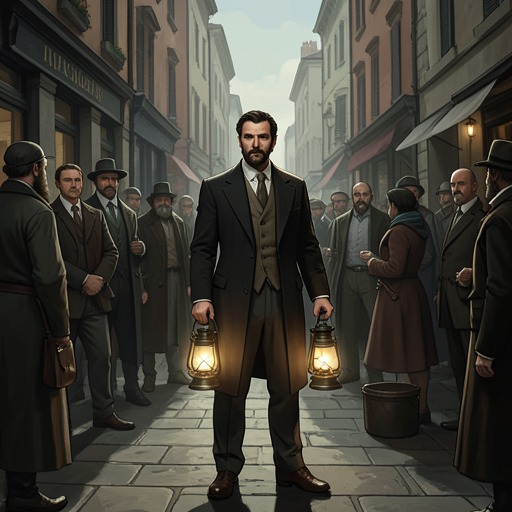
Rather than force the bird down, Juvenal calls the city fire department, a service he had helped develop from a volunteer force into a professional corps equipped with a water truck and hoses. Its broader emergency work includes forcing locks, killing poisonous snakes, and training in first aid, so rescuing a parrot from a tree seems a reasonable request. The appeal to civic authority, however, cannot make the bird obedient or turn the rescue into a safe operation.
Later that day, after reading and resting in his rocking chair, Juvenal hears the bird say “Royal parrot” and sees it on a low branch. He brings a ladder and climbs after it, repeating the words of its song. When he reaches for the parrot, it moves farther along the branch. He catches it around the neck with a triumphant “ça y est,” but the ladder slips. At seven minutes after four on Pentecost Sunday, he dies without Communion, without time to repent or say goodbye.
Fermina, in the kitchen tasting the soup for supper, hears the servant Digna Pardo’s scream and runs toward the mango tree. Juvenal is on his back in the mud, still resisting death for a final minute. He recognizes his wife and tells her, “Only God knows how much I loved you.” The bird’s capture is therefore also the occasion of a last exchange between the couple: the parrot’s familiar presence draws Juvenal into the fatal climb, and his final words turn the scene from an absurd domestic mishap into a moment of marital farewell.
A species disappearing from the river
On the later voyage aboard New Fidelity, parrots appear in a different register: not as a single, trained companion but as part of the animal life that has vanished from the Magdalena. Captain Samaritano explains that decades of uncontrolled deforestation, driven in part by the riverboats’ wood-burning boilers, have destroyed the forests. As the foliage disappears, the parrots’ cries and the monkeys’ noise disappear with it; alligators have been exterminated by hunters, and manatees have been killed despite laws against shooting them.
The loss is made more stark by the contrast between the river remembered and the river encountered. Florentino Ariza is surprised by the change; what had once seemed a great waterway has become a narrow, muddy passage through stripped land. During the voyage the boat runs out of fuel, and the crew searches ash-covered bogs for scattered trees while the passengers wait. The silence where parrots once shrieked belongs to the same damaged landscape as the vanished forests and animals. Parrots thus connect two scales of human dependence and harm: one bird becomes part of the intimate life of a household, while the species’ disappearance along the river exposes the cost of treating the natural world as inexhaustible.