Pius V Loayza
Love in the Time of CholeraPius V Loayza is Florentino Ariza’s absent father: a river-company employee and secret poet whose concealed relationship with Tránsito Ariza produced a son he supported privately but scarcely acknowledged. His legacy reaches Florentino through a notebook of love poems, a final rejection, and the belated discovery that father and son shared both handwriting and a way of turning love into language.
Identity and family background
Pius V was one of several illegitimate sons born to the same mother, a cook, by different fathers. The brothers carried her surname and the names of popes selected from the calendar of saints’ days; his brother Leo XII was the exception, named for the pope in office at his birth. Their family was connected to river navigation: Pius entered the business because his older brother had worked closely with the German commodore Johann B. Elbers, described as the father of river navigation. Pius himself, however, was remembered as a man without a commercial vocation.
The accounts of Pius come through people who knew him and remembered him differently. Tránsito described him as a great man who lacked a calling for commerce. Leo XII, speaking to Florentino during moments of sentimental leisure, pictured him as more dreamer than businessman. Their recollections make Pius a figure assembled from affection, family knowledge, and secrecy rather than from a sustained presence in his son’s life.
A clandestine relationship and its consequences
According to Leo XII’s account, Pius used the offices for pleasures other than work and arranged Sunday absences from home by claiming that he had to meet or dispatch a boat. He had an old boiler installed in the warehouse patio; its steam whistle could be sounded with navigation signals if his wife grew suspicious. Leo concluded that Florentino had been conceived on a desk in an unlocked office on a hot Sunday afternoon, while Pius’s wife heard from her house the signals of a boat that never sailed. By the time she learned the truth, Pius was dead. She survived him for many years, embittered by her childlessness and praying for the damnation of his illegitimate son.
Pius did not openly recognize Florentino. The boy’s baptismal certificate, recorded at the parish church of St. Tiburtius, identified him only as the natural son of Tránsito, herself described as an unwed natural daughter; his father’s name was absent. That status barred Florentino from the seminary, although it also exempted him from military service during the bloodiest period of the wars because he was the only son of an unmarried woman. Pius nevertheless met some of his needs in secret.
The son he supported but rejected
As a schoolboy, Florentino waited across from the River Company of the Caribbean offices each Friday. Pius would enter without looking at him, then leave hours later after making sure that no one, not even his coachman, saw him. He gave Florentino money for the week’s expenses, but the two did not speak: Pius made no effort to speak, and Florentino was terrified of him. After one unusually long wait, Pius handed over the coins and told his son, “Take them and do not come back again.” It was the last time Florentino saw him.
Pius died of an untreated colic without leaving anything in writing or making provisions for his only child. His younger brother Leo XII continued bringing money to Tránsito and cared for her after Pius’s death, taking on responsibilities Pius had left unresolved. The contrast between secret financial support and the final command to stay away defines the father-son relationship: Pius provided for Florentino at a distance, but did not offer him an acknowledged place in his life.
Poems, resemblance, and legacy
Florentino kept the notebook in which Pius had written love poems, some inspired by Tránsito. Its pages bore drawings of broken hearts. The notebook unsettled him not only because it revealed a poetic inheritance, but because Pius’s handwriting was identical to his own. Florentino had chosen his handwriting from a manual, believing it simply the style he liked best; the resemblance made the apparent choice look like an inheritance discovered after the fact. In the notebook he also found a sentence he had thought he composed himself: “The only regret I will have in dying is if it is not for love.” Pius had written it before Florentino was born.
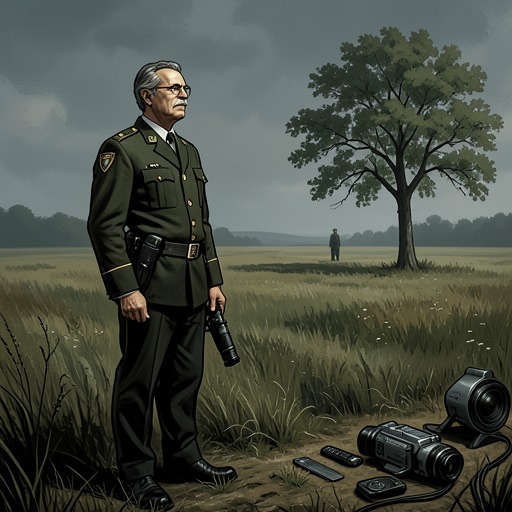
Florentino had seen only two photographs of his father. In one, Pius appeared as a young man in an overcoat, with the young Leo XII beside him in a ship captain’s hat; in the other, he stood among soldiers in one of the country’s many wars, holding the longest rifle. He was a Liberal and a Mason, like his brothers, yet wanted his son to enter the seminary. Florentino did not recognize himself in the photographs or in the competing images preserved by his mother and uncle. Many years later, while combing his hair before a mirror, he finally saw the resemblance and understood that aging had made him look like his father.
Pius’s importance to the narrative lies in the way an incomplete inheritance becomes legible over time. His business life and clandestine conduct leave Florentino with both a model and a contradiction: a man remembered as a poor fit for commerce who nonetheless worked in the river business, and a father whose love poems survived even though direct tenderness did not. The notebook’s words and handwriting connect them across the silence of their brief encounters, while the final rejection prevents that connection from becoming a reconciliation.