River Company of the Caribbean
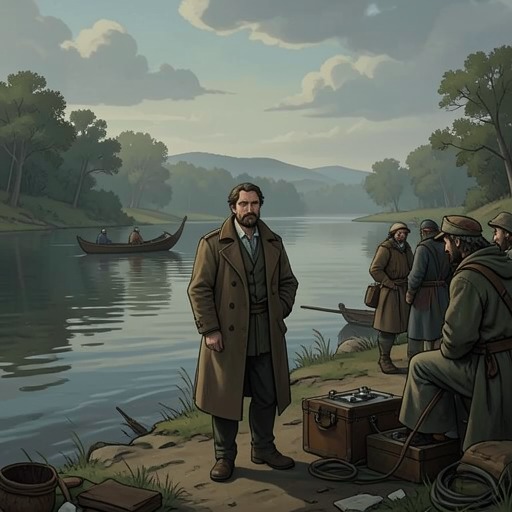
Love in the Time of CholeraThe River Company of the Caribbean is a steam-navigation company founded by Pius V Loayza and his brothers, whose reach extends from the riverboats themselves to the offices, jobs, and communication networks that support their operation. It gives Florentino Ariza a career after his father’s death, provides him with a route back to the city he has left, and eventually makes him its president and general manager. The company’s history also charts a decline: the river that sustains its business is transformed by the fuel its boats consume and the wider destruction of its forests and wildlife.
Foundation and Riverboat Operations
Pius V Loayza was one of three brothers who founded the company and helped give new impetus to steam navigation on the Magdalena River. The business operated a fleet of wooden riverboats designed to negotiate the river’s changing depths. One vessel, renamed Pius V Loayza in honor of the founder, had a broad, level iron hull and a maximum draft of five feet. Its two-story wooden superstructure arranged engines, galleys, and crew hammocks below, passenger cabins and a common dining room on the middle deck, and the bridge and officers’ quarters above. A large stern paddle wheel, rather than side wheels, drove the boat through the water.
The company’s vessels were not merely means of transport but recognizable moving workplaces and social spaces. Notable passengers could be invited to dine and play cards with the officers, while ordinary passengers shared the boat’s cabins and river-facing spaces. The company’s older vessels had been built in Cincinnati on the model of boats that traveled the Ohio and Mississippi. Later, their remains accumulated behind the company’s headquarters, where dismantled boats and vessels still capable of being launched stood among weeds and foliage. The yard made the fleet’s past visible as material salvage and abandonment.
Offices, Employment, and Communication
The company’s beginnings are entwined with Florentino Ariza’s status as Pius V’s unrecognized son. Pius supported him secretly, but did not acknowledge him legally, and Florentino’s baptismal certificate recorded only his mother, Tránsito Ariza. After his father died when he was ten, Florentino had to leave school and entered the Postal Agency, where he sorted letters and learned telegraphy from Lotario Thugut. The company’s family connections would later give him a path from that early work into river transport and management.
The company’s headquarters stood across from the river dock in a long wooden building with a sloping tin roof and a balcony at the front. Its wire-mesh windows looked out toward the boats as if they were pictures on a wall. The building’s sections reflected a hierarchy of work: the Administrative Section occupied the upper floor; the Passenger Section handled waiting passengers, tickets, and baggage; and the General Section collected problems other departments did not resolve. On the grounds, warehouses and a closed sewer pipe held the debris of decades of river navigation, from early boats to relatively recent vessels.
The General Section’s ambiguous duties became the occasion for Leona Cassiani’s rise. After Florentino brought her to the company, she began in a low-level position there, working with care for three years. When Uncle Leo XII examined the department, Leona submitted a memorandum arguing that the General Section did not have a coherent function: it merely absorbed minor problems other sections wished to discard. She recommended returning those problems to the departments that had generated them. Uncle Leo XII adopted her proposal, abolished the section, and created a position for her as his personal assistant. In the following years she gained control of much of the company’s work and helped guide Florentino’s advancement, even as he failed to recognize how often he followed her direction.
The company’s river and communication networks could also carry private news. When Fermina Daza was sent away, Florentino learned her itinerary through a chain of telegraph operators and maintained communications with her from Valledupar, where she stayed for three months, through the end of her journey in Riohacha a year and a half later. The episode shows how a commercial communications system could be repurposed to sustain contact across distance, while the company’s ships likewise connected the city to distant settlements.
Florentino Ariza’s Career and Leadership
Florentino’s return to the company followed a failed departure. He had left for a telegraph post in Villa de Leyva, then returned by river after deciding that he would not remain away from the city of Fermina Daza. His uncle, Leo XII, initially rebuked him for abandoning the position, but gave him work at the company. He began at the bottom, with the prospect of promotion through faithful service. For thirty years he accepted difficult and sometimes humiliating assignments without being discouraged by poor pay, and he learned the company’s operations in detail. His diligence and tactical determination turned an apparently vulnerable man into a capable and formidable manager.
Florentino never achieved the particular distinction he most wanted: he could not write even one business letter that his uncle considered acceptable. Yet his progress through the company’s many posts demonstrated a different kind of competence. He studied the organization’s interlocking operations, performed his duties skillfully, and advanced despite opposition from hidden enemies. Leona’s judgment and influence reinforced that rise, while the company’s offices also afforded him a degree of discretion, including the practical privilege of using them at night and on Sundays or holidays.
As Florentino’s position improved, Fermina Daza encountered him more often in public and heard businesspeople discuss his cautious but steady ascent. She gradually saw him as a changed man: his manner had improved, age had altered his appearance, and he carried his baldness with dignity, though he retained his old-fashioned dark clothes. His increasing status at the company thus made his presence more visible to her, without erasing the history that lay behind it.
When Leo XII reached ninety-two, he recognized Florentino as his sole heir and retired. Six months later, the board unanimously appointed Florentino president and general manager. At the handover, Leo described the appointment as finding a successor worthy of the enterprise. The transition placed the company’s leadership in the hands of the founder’s previously unrecognized son, joining its commercial inheritance to the long career Florentino had built through persistence.
Monopoly, Decline, and the River’s Cost
The company held a riverboat monopoly granted by the National Congress for ninety-nine years and a day. Florentino believed that the worsening setbacks in river navigation could be addressed only by voluntarily surrendering that privilege. Leo XII opposed him, seeing the monopoly as the hard-won result of a historic struggle by the founding brothers against powerful competitors. The disagreement set Florentino’s practical concern about the company’s future against his uncle’s attachment to the victories that had established it.
Leo eventually agreed to renounce the privilege, but only on the condition that the change not take effect before his death. It was his final business decision. He then withdrew from company affairs, and Florentino took over after Leo’s retirement and death. The shift signaled that the company’s inherited rights, once guarded as the achievement of its founders, could no longer be treated as a sufficient answer to its difficulties.
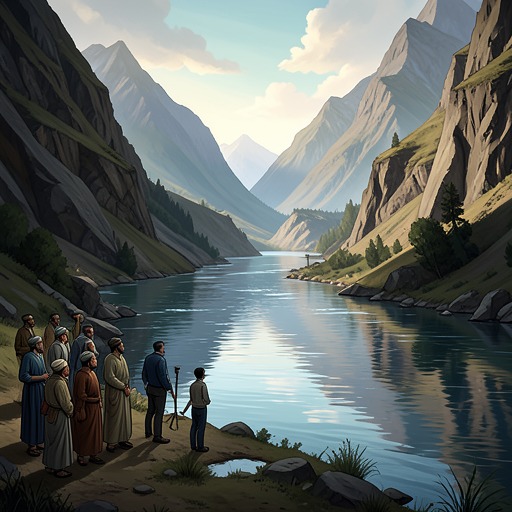
Those difficulties were tied to the river’s physical transformation. On a later voyage, Captain Samaritano explained that fifty years of uncontrolled deforestation had changed the Magdalena: riverboat boilers had consumed forests of colossal trees, while commercial hunting and habitat loss had driven alligators, parrots, monkeys, and manatees from the river. The company’s operations were part of a larger system of extraction that helped damage the environment on which navigation depended. The river that Florentino had first encountered as a newcomer no longer matched the remembered landscape; its altered waters and diminished wildlife made both the company’s history and the limits of its future legible.