School of Fine Arts
Love in the Time of CholeraThe School of Fine Arts links cultivated social ceremony to public memory in the city. Its musicians help give a distinguished luncheon its formal polish, while its artists take part in shaping the image of Juvenal Urbino after his death. The institution’s changing relationship to that image—from memorial bust and funeral portrait to a painting ultimately burned by students—makes it a measure of how civic honor and artistic values change over time.
Cultural and civic functions
At the silver-anniversary luncheon for Dr. Lácides Olivella, the School of Fine Arts provided a string quartet as a surprise for the honoree’s venerable teacher, who was to preside. The quartet’s place in an elaborate program of contradances and national waltzes gave the institution a role in elite public ceremony. The celebration was staged at the Olivellas’ country house on Pentecost Sunday, with tables for 122 guests beneath Indian laurels; the musicians represented a more formal artistic distinction within an event designed to display family status and achievement.
The School also appears in the city’s professional and social networks. A young cellist who had just returned from France performed in the quartet at the luncheon. Afterward, he identified the final piece as a string quartet by Gabriel Fauré, a composer unfamiliar to Urbino despite his attentiveness to European trends. The episode places the School’s performers within a local cultural life that drew on international music while remaining constrained by the limits of what even a celebrated, well-traveled listener knew.
Participation in Urbino’s memorialization
After Juvenal Urbino’s death, a group from the School of Fine Arts made a death mask intended to serve as the mold for a life-size bust. The plan was abandoned because the mask faithfully reproduced the terror on Urbino’s face, and those involved considered that likeness indecent. The episode sets artistic fidelity against the decorum expected of public commemoration: the most accurate record of his final expression could not be used to memorialize him in the form his admirers had planned.
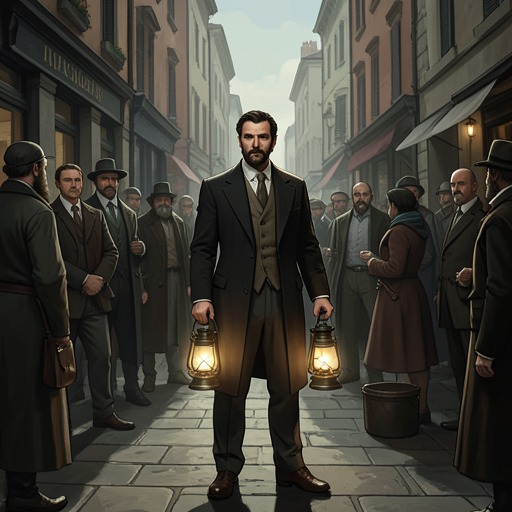
A different kind of image took the place of the unrealized bust. A renowned artist painted Urbino on the ladder at the fatal moment when he reached for the parrot, but dressed him in a bowler hat and black frock coat copied from a rotogravure from the cholera years, rather than in the collarless shirt and green-striped suspenders he had actually worn. The painting passed through The Golden Wire and then onto the walls of public and private institutions honoring Urbino as their patron. After a second funeral, it was hung at the School of Fine Arts, where its public display made the institution part of the city’s official remembrance.
A changing artistic judgment
The School’s possession of the painting did not secure its place as a lasting monument. Many years later, art students pulled it down and burned it in the Plaza of the University, treating the canvas as a symbol of an aesthetic and a historical period they despised. The same institution that had hosted the portrait after Urbino’s second funeral thus became the setting for its rejection by a later generation.
That reversal gives the School a significance beyond ceremony or artistic training. The abandoned bust, the altered portrait, and the students’ destruction of the canvas show three different ways of handling the past: refusing a likeness judged too disturbing, modifying the historical record to fit a dignified public image, and repudiating that image as the work of a discredited era. The School of Fine Arts preserves no single, stable verdict on Urbino; its role in these episodes instead exposes the contest over how the city chooses to remember him.