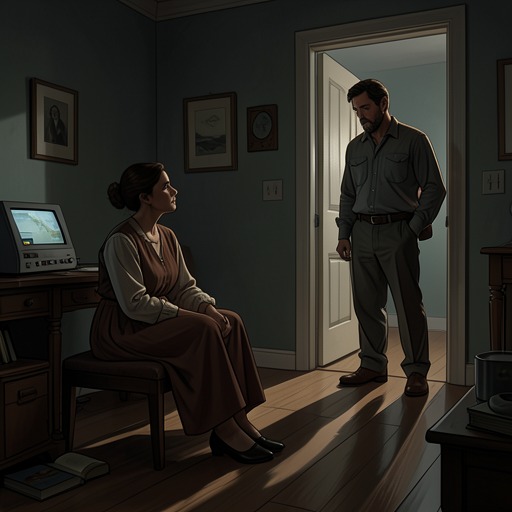
The Lighthouse
Love in the Time of CholeraThe Lighthouse is a secluded meeting place where Florentino Ariza carries on secret affairs and later remembers them as flashes of light cast across the sea. Its isolation offers lovers discretion; its tower, poised above the city and the dark waters, also gives the place a breadth of view that makes private encounters part of a larger landscape. In one Carnival episode, it is the promised destination of a night of apparent happiness, but the woman Florentino hopes to take there is seized before they can leave.
Setting and Use
The Lighthouse repeatedly serves as a refuge for lovers who fear recognition. Its keeper welcomes Florentino with a guileless expression that helps assure the frightened women of his discretion. At the foot of the tower stands a house near cliffs where waves break with a sound like thunder; there, love seems more intense because it resembles a shipwreck. Florentino prefers the tower itself, especially late at night, when the city, fishing boats, and distant swamps are visible.
The setting joins concealment to exposure. Inside the lighthouse, the lovers can hide from the social world, while from above Florentino can survey the city and the lights at sea. The revolving beam becomes a figure for the afterlife of these encounters: in old age, when his affairs are settled, he imagines that something of those earlier loves goes out to sailors with every turn of the light.
A Carnival Night Interrupted
During Carnival, Florentino takes a woman dancing at the Plaza of the Customhouse. Her wild, charming revelry recalls for him the innocent disorder of adolescence, before love had wounded him. Yet he doubts that their easy happiness can last. Before the festivities turn sour after the costume prizes are awarded, he suggests that they go to the lighthouse to watch the sunrise. She agrees, but asks to wait until the prizes have been given out; Florentino later believes that this delay saved his life.
As the pair is about to leave, guards and a nurse from Divine Shepherdess Asylum seize her. She had escaped that afternoon, decapitated one guard, and seriously wounded two others with a machete taken from a gardener. She had wanted to go dancing, and the authorities had not thought to search the streets for her. The lighthouse remains unreached: the night’s apparent romantic freedom gives way to a public, bloody capture, which the Carnival crowd mistakes for a performance.
Memory and Narrative Significance
The lighthouse gathers Florentino’s secret loves into a recurring image rather than a single completed romance. In old age he looks back on the place with nostalgia, imagining the tower’s light carrying traces of those encounters outward to the sailors. The image preserves the loves as brief, intermittent flashes: private experiences that do not last, yet return in memory with each sweep of the beam.
The interrupted Carnival excursion gives the refuge a sharper contrast. Florentino’s hope of watching dawn with his companion is overtaken by the reality of her confinement and violence; the planned escape from the crowd becomes an arrest before a cheering crowd. The Lighthouse thus marks both the shelter Florentino seeks for clandestine intimacy and the limit of his control over the encounters he tries to shape.