
Who Gets Believed
Luckiest Girl AliveThe novel examines how gender, status, physical injury, and public narrative shape whose account of violence receives sympathy and whose is doubted.
increasing Bearing strength in each event
 decreasing
Bearing strength in each eventdecreasingA Victim Before the Attack
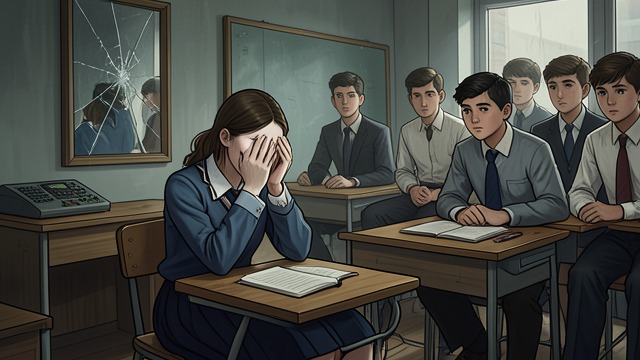
A Victim Before the Attack
Reputation Replaces Evidence
TifAni FaNelli's sexual reputation becomes a frame through which classmates interpret her behavior. Her injuries and fear are not enough to make the group ask what happened.
Blame Moves Inward
She begins to wonder whether her choices make the harm her fault. The judgment of others becomes a judgment she repeats to herself.
Survival Looks Suspicious

Survival Looks Suspicious
Evidence Under Suspicion
TifAni FaNelli's fingerprints, notes, and friendship with Arthur lead investigators to question her role. Her account is judged against Dean Barton's competing story.
No Easy Credibility
The police can find no basis to charge her, yet uncertainty becomes a public accusation. Being alive does not make her automatically believable.
The Lucky Survivor

The Lucky Survivor
A Cruel Description
Detective Vencino calls TifAni FaNelli the luckiest girl alive after the deaths and injuries at Bradley. The phrase turns survival into a reason she should feel grateful rather than harmed.
The Burden of Comparison
Her own pain appears small beside visible death and disability. The comparison discourages her from claiming the complexity of her experience.
A Publicly Legible Victim

A Publicly Legible Victim
Visible Injury
Dean Barton's paralysis becomes central to his public story, helping him build a career as an inspirational speaker. His physical condition attracts sympathy even as his past remains concealed.
Hidden Harm
TifAni FaNelli appears outwardly successful, making her trauma less legible to others. Her appearance becomes an obstacle to the compassion she wants.
A Voice on Record

A Voice on Record
Speaking Clearly
TifAni FaNelli presses Dean Barton to say plainly that he and the others raped her. His recorded admission challenges a public narrative built around his injury and her supposed complicity.
Sympathy Reconsidered
The film creates an opportunity for recognition but cannot dictate what audiences believe. TifAni FaNelli's agency lies in speaking, not in controlling every response.
The weeks after Dean Barton's party
The first week after November 12, 2001
During the interrogation after the attack
During the fourteen years after the attack
During Friends of the Five filming
