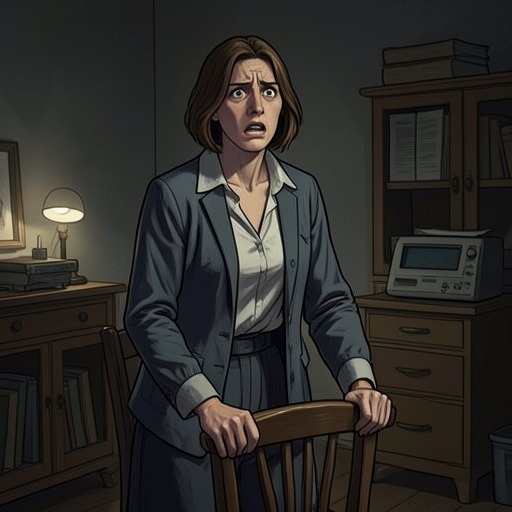
Ani’s health anxiety
Luckiest Girl AliveAni’s health anxiety is a recurring state of bodily fear that she describes as a “spin,” an experience she traces to roughly fourteen years earlier. It is not, in her account, quite a panic attack: it is a lingering sense of danger in which ordinary medical attention can become a source of alarm. The anxiety reaches beyond fear of illness to shape how she imagines pregnancy, childbirth, and the possibility of losing control over her body.
The Shape of the Anxiety
Ani describes herself as a hypochondriac and says that medical appointments can set off fears that a doctor might detect a cancerous lump. Even a clinician’s touch can prompt her to wonder whether something is wrong. The fear persists because she believes she once escaped a serious danger, though she does not specify what happened; she interprets that past escape as a reason her vigilance is justified. Her account presents the anxiety not as a single episode but as a recurring expectation that threat may be present before anyone can confirm or dismiss it.
The image of a ride gradually slowing captures the particular quality of the state: rather than describing a sudden crisis, Ani conveys a prolonged, unsettling loss of steadiness. The metaphor links her physical sensation to the way fear expands across time, leaving her anticipating that it may not pass. The account does not identify a medical diagnosis or explain the original event that gave rise to the feeling.
Pregnancy and Medical Vulnerability
The prospect of becoming pregnant intensifies Ani’s anxiety. She says she does not think she could be pregnant because the worry would overwhelm her, and the idea of giving birth sends her into the same destabilized state. Her concern is not simply a stated dislike of children: she connects pregnancy to appointments, examinations, and uncertainty about what might be happening in her body. She also tells Luke Harrison that she does not think she could manage pregnancy, making the fear part of the couple’s conversation about their possible future.
Her political disagreement with Luke Harrison provides a related but distinct context. When she challenges his 2012 vote for Mitt Romney, she objects to a position that could restrict abortion access for rape and incest victims and women whose lives were at risk, and could shut down Planned Parenthood. The exchange establishes her opposition to policies that limit reproductive choices; it does not establish that her personal health anxiety is the reason for that position. Together, the scenes place her private fear of pregnancy alongside a public argument about who should retain control over reproductive decisions.
Disclosure and Misunderstanding
Ani has told Luke Harrison about the spin and tried to explain why pregnancy feels impossible to her. He responds affectionately, interpreting her concern as evidence that she would care deeply about a baby. Ani smiles and lets that interpretation stand. The moment shows that she has disclosed the fear but has not made its full meaning understood: Luke hears tenderness and future care, while she is trying to describe a level of worry that makes pregnancy frightening to contemplate.
That small difference matters to their relationship. Ani does not openly correct him in the exchange, and her outward agreement allows the conversation to settle into his more reassuring interpretation. The scene therefore makes her anxiety visible through both what she tells him and what remains unspoken. Her fear is present within the relationship, but it is softened into a version he can receive more easily.
Narrative Significance
The retrospective account gives the anxiety a clear place in Ani’s present thinking without supplying a complete explanation for its origins. Its recurrence across medical care, pregnancy, and conversations with Luke Harrison shows how one fear can shape both private expectations and decisions about a shared future. The contrast between Ani’s internal alarm and Luke’s affectionate response also marks a limit in their communication: reassurance does not answer the fear she is trying to describe.