Beth
Luckiest Girl AliveBeth, known to her classmates as The Shark, is a Bradley student whose quiet acts of welcome and concern give TifAni FaNelli a foothold in school before the Bradley shooting places Beth among the students in danger. She is first presented through other people’s labels and a distinctive feature—the unusual spacing of her eyes—but the narrative also looks beyond those labels to her friendship, her practical kindness, and the relationships that shape her place in the story.
Identity and Introduction
When TifAni follows Arthur to a lunch table near an old fireplace, she finds Beth sitting with Sarah and Teddy. Arthur introduces the new student as someone who has had a difficult start and asks the others to be kind. Beth answers with a bright greeting, making her the first person at the table to welcome TifAni directly. The scene establishes both the group’s social setting and Beth’s immediate openness to a newcomer.
The nickname The Shark circulates behind Beth’s back. TifAni notices Beth’s unusual eyes, but the retrospective narration shifts the emphasis away from the school’s nickname: the feature other students might treat as a reason to mark Beth as different is one her future husband will eventually love most. That glimpse of Beth’s later life is brief, but it gives the reader a perspective beyond Bradley’s adolescent judgments. The name classmates use does not contain the whole person, or define how she will be seen by someone close to her.
At the same time, Beth’s real name can recede even for people who know her. During the shooting, TifAni initially does not understand whom Teddy means when he speaks of Ben’s affection for Beth, because she has heard Beth called The Shark for so long that the nickname has displaced her given name in memory. The moment shows how thoroughly the school’s label has become part of the group’s everyday language.
Friendship and Everyday Support
Beth’s welcome is not limited to a greeting. She gives TifAni useful advice about avoiding physical education: students can meet the requirement by playing a sport instead. TifAni dislikes the weekly gym class and takes the suggestion seriously, choosing cross-country. The exchange is small beside the later crisis, but it shows Beth helping a new classmate navigate the school’s routines rather than leaving her to work them out alone.
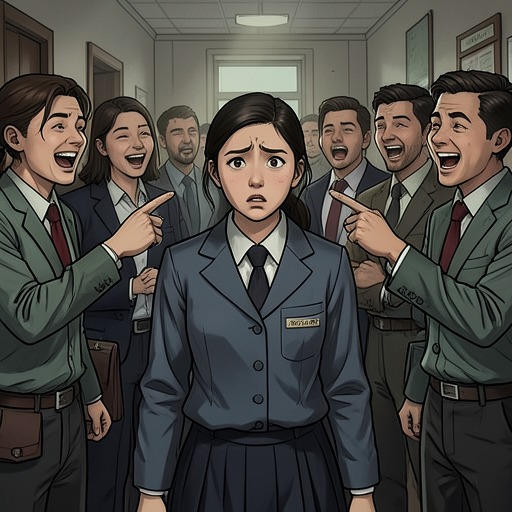
Beth’s support becomes more personal after TifAni is subjected to gossip and social scrutiny. On Monday morning, TifAni arrives at homeroom anxious about how other students will treat her. Beth rises from her desk and embraces her before she can sit down, then quietly checks whether she is all right and offers to listen if she needs to talk. The rest of the room carries on as though it has not noticed, but Beth makes her concern explicit. TifAni answers with a forced assurance that she is fine; Beth’s offer remains there without demanding that TifAni disclose more than she is ready to share.
These moments establish a pattern of practical, direct care. Beth does not make a public spectacle of TifAni’s distress or insist that she explain herself. She offers a way around an unwanted school routine, then later makes space for conversation when TifAni appears under pressure. The gestures are modest, but they give Beth a distinct role in TifAni’s early experience of Bradley: she is among the students who make the school group feel less hostile.
Relationships and School Life
Beth belongs to a close lunch-table circle that includes Arthur, Sarah, and Teddy. Their shared history predates TifAni’s arrival, and the group’s everyday familiarity provides her a place within the school’s social landscape. Beth’s bond with Teddy also becomes relevant during the shooting, when he argues that Arthur will not hurt the students sheltering with Beth. Teddy later explains that Ben and he were never friends and that Ben loved Beth. The statement places Beth within the emotional history associated with Ben, though the evidence does not describe the nature or extent of her own relationship with him.
Beth’s connection to Arthur is also marked by his decision to spare her. When he finds her among the students in hiding, he orders her to leave and tells her that he likes her. The scene does not establish that Beth shares his feelings; her response is to cry and then move cautiously past him. His words and action distinguish her from the people he continues to threaten, but they do not make her situation simple or safe. She has to leave while the crisis is still unfolding.
Her relationship with TifAni persists even in that moment. Before running, Beth turns toward TifAni and apologizes. Arthur reacts angrily to the apology, but Beth continues toward the middle-school parking lot and escapes. The gesture recalls her earlier concern in homeroom: even under immediate pressure, she is attentive to TifAni’s presence and to what has happened between them.
The Shooting and Its Aftermath
During the Bradley shooting, Beth is among the students sheltering beneath the oak table with Peyton, Liam, and Ansilee Chase. Teddy opens the door and joins the group. The room brings students of different ages and social positions together in a shared danger, turning the school’s ordinary distinctions into a bond formed by their need to survive. Beth is not merely described as part of the group: Teddy identifies her as the person he believes may protect them from harm.
That belief is tested when the students discuss whether the armed person outside might be Ben. Beth says she has not seen Ben in a long time and insists that the person they are facing is not Ben. Her certainty separates the remembered boy from the violence in front of them, even as the others struggle to understand what is happening. The exchange adds Beth’s own perspective to a conversation otherwise shaped by Teddy’s and Liam’s assumptions.
Arthur eventually reaches the hiding place and directs Beth toward the quad. He repeats that he likes her and urges her to go. Beth hesitates, then passes him and runs toward the middle-school parking lot. TifAni hears Beth scream when she realizes she is still alive. Her escape is a clear survival outcome, but it does not resolve the danger for those who remain. Beth’s route out of the room marks one narrow release within a larger catastrophe.
Narrative Role
Beth’s importance rests on the contrast between ordinary attentiveness and extraordinary danger. At school, she welcomes TifAni, offers advice, and checks on her after other students’ behavior has made her feel exposed. During the shooting, the same social connections that had made the lunch table a place of belonging become part of the students’ attempt to assess who might be protected. Beth’s place in the group is thus shown through specific acts and relationships rather than through an extended account of her private life.
The narrative also complicates the nickname The Shark by setting it against Beth’s name, her care for TifAni, and the glimpse of a future husband who will cherish the feature that makes her conspicuous to classmates. In the shooting, she is both the person Teddy thinks Arthur may spare and a frightened student who has to make her way out while others remain behind. Her story does not erase the limits of what is known about her; instead, it makes her brief moments of welcome, concern, and survival carry the weight of a life seen only in fragments.