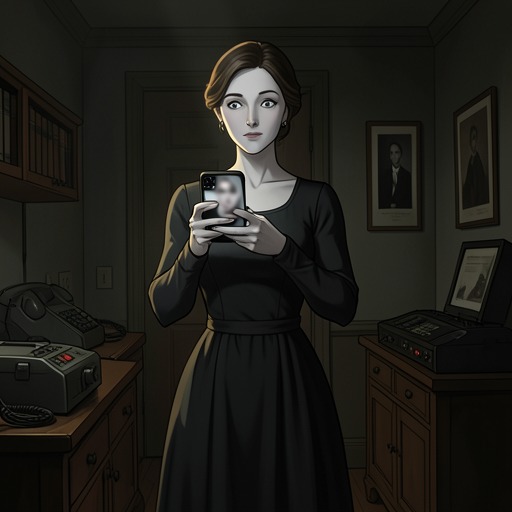
Dean’s assault on TifAni at Olivia’s house
Luckiest Girl AliveDean’s assault on TifAni at Olivia Kaplan’s house is a turning point in which her effort to manage an unwanted advance gives way to a struggle to escape, followed by an unexpected interruption and her first sustained disclosure of what happened. The sequence is shaped by diminishing control: the group disperses without TifAni noticing, Dean is left beside her, and her attempts to redirect him do not stop his actions. Her flight carries the event beyond the house, into a public place where Andrew Larson recognizes her and becomes the person to whom she tells the story.
Setting and Isolation
Earlier in the evening, TifAni had been smoking a joint with Liam and the others. After Liam went inside, she realized that Olivia Kaplan had also disappeared. She looked toward the house, but the kitchen was empty. When she said she was cold and wanted to go inside, Dean instead drew her toward him. At that point, she understood that he was the only person still with her. The group’s departure is not something she had consciously tracked; her attention is on her impaired state and on trying to orient herself. That unnoticed change in the scene leaves her isolated with Dean.
Her words and actions convey resistance without making the situation safe. TifAni lowered her head to avoid Dean’s approaching mouth and said she was cold. Even as she gave in to the kiss, her hands continued to push against his chest before she moved them around his neck. When Dean began undoing her trousers, she tried to end the kiss calmly. She proposed going inside, but the suggestion was a way to redirect what was happening, not an invitation to continue it. The gap between the appearance of accommodation and the resistance still evident in her actions is central to the scene: her effort to manage Dean does not amount to freely choosing what follows.
Escalation and Interruption
The attempt to redirect Dean fails. He responds to her proposal by seizing the button of her trousers, and TifAni falls backward. When she cries out, Dean tells her to be quiet and slaps her. The narrative presents that moment as the point at which her controlled, tactical responses give way to a scream and an instinctive effort to survive. This is not simply a change in the physical situation; it is a change in what she can do. She is no longer trying to preserve the appearance of a flirtation or to find a socially manageable way out. She is trying to get away.
The interruption comes from the house. Lights come on, Olivia’s father shouts, and Olivia Kaplan rushes outside and orders TifAni to leave and not return. Dean has TifAni’s trousers lowered when this happens. TifAni runs toward the gate, but her hands shake over the latch. Dean pushes past her and releases the hook. He then holds the gate open, allowing her to escape as well. That action does not undo the assault or make his earlier conduct less coercive; it is a brief, striking contradiction within the escape itself. The other boys head toward a vehicle parked on the street, and TifAni turns away from it, choosing a direction that takes her away from the group.
Flight and Search for Help
TifAni does not know where she is going. She continues along unfamiliar roads, repeatedly believing that a turn will take her toward the main road. When a car approaches, she tries to ask its driver for directions. The driver reacts with fear and speeds away, leaving TifAni without help. The episode underscores how difficult it is for her to make herself understood or to be recognized as someone in need: her appearance prompts alarm rather than assistance.
Eventually, a road opens onto a line of streetlamps and a Wawa. TifAni runs there, enters, and asks whether Montgomery Avenue is farther ahead. The cashier notices that she is slurring her words and asks whether she is all right. TifAni says she tripped. When the cashier reaches for the phone, apparently intending to call the police, she remains unable to explain what happened. Her brief denial preserves the silence she has carried out of the house, even as the cashier’s concern offers a possible route to help.
Disclosure and Immediate Aftermath
Andrew Larson arrives at Wawa and calls TifAni by name. He guides her outside, clears the takeout bags from the passenger seat, and urges her into his car. Being found breaks down her effort to keep the incident hidden: she begins telling him what happened and cannot stop. The movement from a public counter to Andrew Larson’s car marks a change in the event’s direction. Until then, TifAni has been trying to escape and to conceal what has happened; with someone she knows present, she can begin to disclose it.
Andrew Larson gives her a blanket, water, and an ice pack for her face, and wants to take her to a hospital. TifAni becomes so distressed at that suggestion that he agrees to bring her to his apartment instead. The account emphasizes the practical sequence of care: he gets her away from the public setting, offers immediate comfort, and helps her calm down and sober up. TifAni does not then question his ability to handle the situation. In retrospect, she understands that his apparent confidence was not simply the natural authority of an older adult: Andrew Larson was twenty-four, while she was fourteen. That later recognition complicates the memory of his help without changing what he did in the moment.
The event therefore ends not with a resolution of the harm but with a break in TifAni’s isolation. Olivia Kaplan and her father interrupt the assault, TifAni gets away from the house, and Andrew Larson gives her a setting in which she can speak. The transition from attempted concealment to disclosure is the immediate consequence of being found; the fear, disorientation, and need for help remain part of the aftermath.