Kathleen Finnerman
Luckiest Girl AliveKathleen Finnerman is Arthur Finnerman’s mother and one of the people left to live between private memory and public judgment after the attack on The Bradley School. Her correspondence with TifAni FaNelli begins in shared grief: Kathleen apologizes for what TifAni had to do, while TifAni tries to assure her that she does not blame her. Years later, when they meet again, Kathleen’s family photographs make a tender case for the child she remembers, even as the investigation and TifAni’s recollections point toward a far more disturbing account of Arthur.
Identity and Background
Kathleen appears in the aftermath as an older, isolated woman whose physical frailty and health difficulties compound the burden of loss. Her first substantial contact with TifAni comes in the spring of TifAni’s freshman year of college, when the immediate shock has begun to settle into a life divided into before and after the attack. Kathleen writes that she is sorry for what TifAni had to do and reproaches herself for not recognizing the rage and hatred in her own son. Her regret is not presented as proof that she could have foreseen the attack; it is the anguished self-questioning of a mother trying to account for what happened within her family.
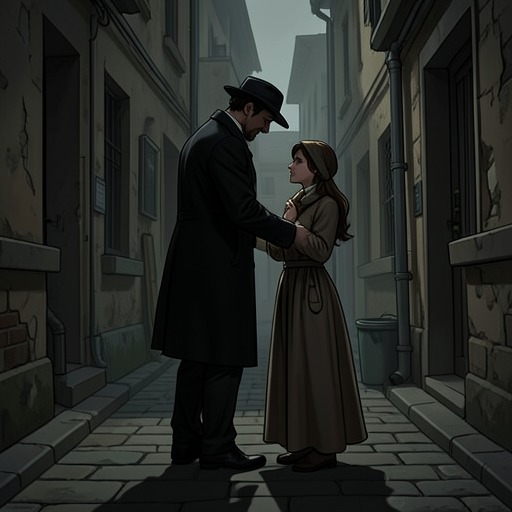
TifAni’s mother forbids a reply, but TifAni writes back anyway. She tells Kathleen that she would never blame her, that she does not hate Arthur, and that she sometimes misses him. Rather than face each other, TifAni slips the folded note under Kathleen’s door when Kathleen’s car is absent. The exchange establishes the limits as well as the force of their connection: both reach toward the other, but neither is ready for a direct encounter.
Correspondence and Uneasy Reunion
After TifAni graduates from college, Kathleen sends occasional cards. She responds to milestones such as TifAni’s engagement and shares an article TifAni wrote for The Women’s Magazine about whether Facebook makes people sad. Kathleen encloses a New York Times article on the same subject, points out that TifAni’s piece appeared earlier, and praises her for anticipating the later coverage. The exchange takes on the easy, cheerful tone of old friends. TifAni recognizes that this familiarity is misleading: they are not friends, and they have not seen each other since before the shooting.
Their eventual reunion takes place among traces of the past. Photo albums and old newspapers cover Kathleen’s coffee table, and a mug partly obscures a newspaper headline about whether the gunmen acted alone. When Kathleen moves it, the missing word becomes visible again. The small alteration gives the printed record an unsettling physical presence: even the archive in the room can seem to shift between competing versions of what happened. TifAni greets Kathleen, but when she moves as if to embrace her, Kathleen waves the hug away and insists that she is all right. The gesture conveys the distance between them without canceling the fact that they have chosen to meet.
The Family Album and Arthur’s Memory
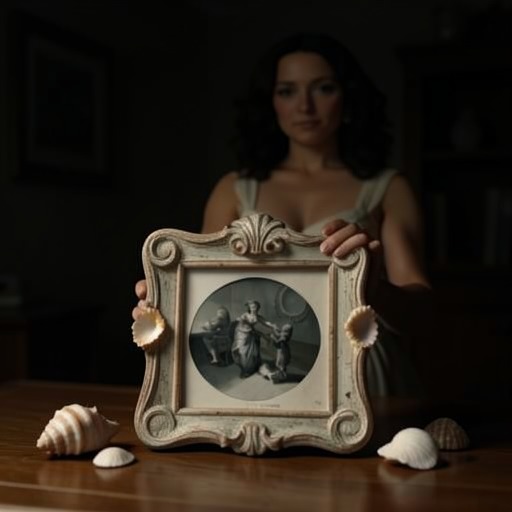
Kathleen opens a white photo album and shows TifAni an image of Arthur at about three years old, crying after a seagull swooped down and knocked the ice cream from his cone during a visit to Avalon. She also shows a photograph of Arthur curled beside Cassie, the family’s yellow Labrador, whom Kathleen says he loved and who slept in his bed. These ordinary childhood scenes matter to Kathleen because they preserve a version of her son that cannot be reduced to the attack or its aftermath.
When TifAni reaches toward the page, Kathleen draws the album back to herself and becomes tearful. She recalls Arthur’s grief when Cassie died and treats it as evidence that he had emotions, against the description of him as a psychopath. Her insistence is understandable as an act of mourning, but the novel leaves the conflict unresolved: a child’s capacity for attachment does not erase what he later did. The album offers genuine memories of affection, yet it cannot settle the question of how those memories coexist with violence.
Private Grief and the Public Account
The public effort to explain the attack focuses on the partnership between Arthur and Ben Hunter. Psychologists examine their journals, academic records, and interviews with people who knew them, and conclude that Arthur led the pair. The explanation stands in tension with the broad media narrative that the two were bullied for being strange, overweight, or gay. TifAni’s account complicates that framing: the rumor that Arthur and Ben had a sexual relationship was false, and it intensified the conflict rather than explaining the attack. She describes Arthur’s motives as extending beyond revenge against particular tormentors, while the investigation’s conclusions identify him as the driving force.
Kathleen is not shown mastering this full public account. Instead, her response is rooted in the evidence she can bear to hold: the letters, the remembered child, the dog, and the photographs. TifAni, meanwhile, acknowledges that she may have provoked Arthur shortly before the attack and wonders whether he might have been preparing to tell her about his plan or involve her. That uncertainty belongs to TifAni’s retrospective account, not to Kathleen’s knowledge. Their filmed reunion therefore brings different kinds of evidence into the same room without making them equivalent. Kathleen preserves a son through family memory; TifAni carries the consequences of what he became. The distance between those truths gives Kathleen’s role its significance: she is neither a simple defender nor a detached observer, but a bereaved mother whose love cannot make the public record disappear.