Liam
Luckiest Girl AliveLiam’s brief place in TifAni FaNelli’s life moves from the quiet relief of finding a partner in Chemistry to a painful experience she later understands through the language of sexual assault. He is also one of the students remembered after the Bradley School attack. His story links the possibility of adolescent intimacy with harm, death, and TifAni’s difficult effort to remember him without excusing what he did.
First Encounters and School Life
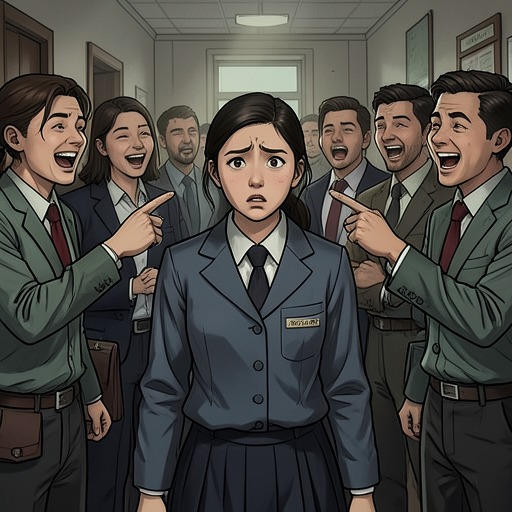
After lunch, a Chemistry experiment leaves TifAni without a partner. The students beside her have already chosen one another, and as the other pairs move toward the back of the room, she notices Liam as the other person left over. He has light brown hair and blue eyes; a nod and raised eyebrows serve as a silent request to work together. TifAni nods back, and they go to the laboratory stations. The encounter is ordinary in its circumstances, but it gives their relationship a beginning shaped by mutual recognition: neither has been chosen first, and neither needs to make the situation more embarrassing for the other.
Liam’s first reassurance is also a flirtatious compliment. When TifAni is conscious of being left unpaired, he answers with a half smile and tells her that she is too pretty to be the last one picked. The remark joins attraction to the social unease of school, where being noticed and being selected carry weight. TifAni imagines Liam as someone who had been popular at his previous school, even though at Bradley he, like her, remains temporarily outside the established group.
His place in that unsettled social world has a particular explanation. Lacrosse is a spring sport, so Liam has no team to join at the time, and he lacks the team-based boyhood camaraderie that might have helped him settle into a popular crowd. TifAni thinks he plainly belongs among the popular students and describes the other boys as circling him, waiting to decide whether he is prey or a playmate. This observation makes his social position seem provisional rather than fixed: he appears to possess the qualities that might win acceptance, but has not yet been absorbed into the group.
Attraction and Harm
TifAni sees her growing flirtation with Liam as something that might develop into a relationship. At the same time, she hopes that running will change her body, believing that losing what she calls baby fat can only help whatever the two of them are building. Her expectations expose how attraction and self-scrutiny overlap in her account: she treats physical change as a possible advantage in an uncertain bond. The narrative does not establish that Liam asks her to change. The pressure described here belongs to TifAni’s own hopes and to the social standards through which she evaluates herself.
The memory of a later encounter sharply alters the early flirtation’s significance. TifAni recalls waking in pain and finding Liam close to her; she describes him as also appearing to be in pain. In this recollection, the relationship is no longer simply a story of mutual attraction. The event becomes part of the traumatic history associated with Liam, and the book’s wider account identifies the experience as sexual assault. The contrast matters: the earlier compliment and budding attachment do not make the later harm less real, nor does the harm erase the fact that TifAni had once felt drawn to him.
Another remembered exchange connects the encounter to fear of pregnancy. Liam holds TifAni by the shoulders and tells her that her chance of becoming pregnant is twenty-three percent. The figure is specific, but it offers no resolution to the emotional meaning of the moment. His attempt to reassure her sits beside the larger account of injury and trauma; it cannot turn the encounter into a harmless episode or settle TifAni’s understanding of what happened. The novel allows attraction, fear, and recognition of wrongdoing to remain in tension rather than reducing their history to a single uncomplicated feeling.
Death and Memorial
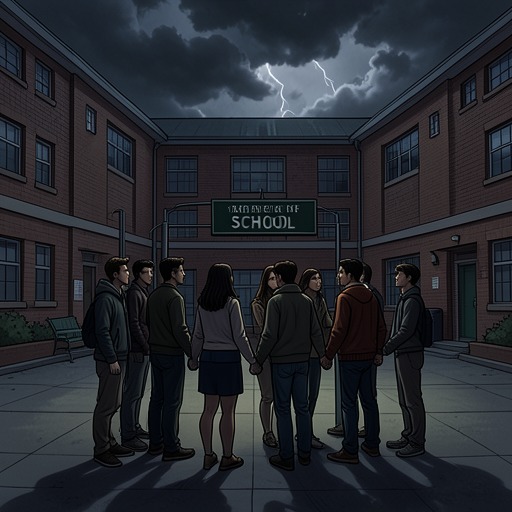
Liam’s name later appears in a list of students that includes Ansilee, Olivia, Theodore, Peyton, and Ben. TifAni notes that Theodore is Teddy’s full name, a small correction embedded in a much larger reckoning with the people connected to the attack. A televised report describes seven deaths, including the two shooters and five victims, and reports that a bomb placed in a backpack near the table favored by the most popular students killed one person. The attack also leaves nine students hospitalized with severe injuries. Liam’s name in the later remembrance and the subsequent service for him place his death among the attack’s consequences.
The service takes place in a Quaker meeting house, not at the church TifAni remembers attending at Mount St. Theresa’s. The distinction reflects Liam’s religious affiliation and gives his memorial a setting particular to him. The gathering is so full that attendees are made to stand outside the meeting house and press their ears to the air-conditioning vents to hear. Yet the crowd does not mean that everyone knew him well: TifAni observes that half the students there had spoken no more than a few words to him since he began at Bradley that September. Public mourning gathers people around his death even when their personal connections to him were slight.
Memory and Moral Complexity
TifAni feels a special bond with Liam despite recognizing that what he did was wrong. She says that she found something like forgiveness for him in her freshman year of college, during a sexual-assault seminar required of incoming students. That sequence does not present forgiveness as proof that the harm was minor, or as a reason to withdraw its name. Instead, the seminar marks a later point at which TifAni can hold the wrong and her complicated attachment to Liam in view at once. Her account distinguishes understanding her own response from absolving his actions.
At the memorial, Liam’s mother tells those present that the meeting house may be where they mark his time with them, but it need not be the only place where they think about him. Holding a vase close to her chest, she urges them to remember him anywhere. Liam’s father comforts his grieving son. These gestures move the remembrance beyond the formal service: the family’s grief belongs to the gathering, but memory is not confined to its location. For TifAni, Liam remains bound to both the intimate past and the public catastrophe that ended his life. The narrative’s refusal to make those histories cancel each other is central to his significance.