The Five
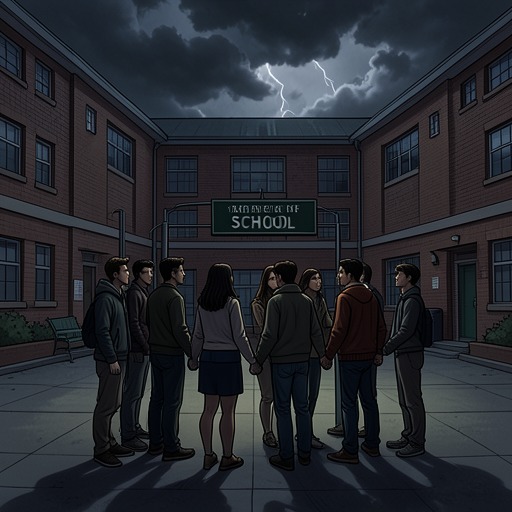
Luckiest Girl AliveThe Five is the collective subject of a documentary about the Bradley tragedy, yet the group’s significance rests not only on the event itself but on the competing stories built around it. TifAni FaNelli’s testimony, Dean Barton’s accusation, and the school and media response show how the tragedy’s public meaning turns on who is treated as a victim, who is blamed, and whose version is accepted.
Identity and Public Meaning
The available account does not provide a complete roster or define the group’s membership. Instead, The Five emerges through the documentary’s stated subject and through the aftermath of the Bradley tragedy, where individual experiences and public judgments are gathered into a collective story. The book-club questions explicitly ask what role TifAni played in the tragedy and how it shaped her adult life, but the evidence presented here does not settle that role beyond the accusations and testimony described in the narrative.
That uncertainty matters. In the aftermath, there was not enough evidence to charge TifAni with a crime, yet public opinion continued to judge her. Notes, yearbook writings, and her fingerprints on the gun were used against her; Anita Perkins also interpreted TifAni’s limited outward emotion and wish to return to school as evidence of callousness. The same circumstances that left the legal question unresolved became material for a public story about her character.
The Documentary and TifAni’s Testimony
The documentary gives the tragedy a new frame by asking TifAni to narrate her experience directly. Before filming, Aaron asks her to state her name and age, including how old she was on November 12, 2001. The interview takes place in a black studio above a Starbucks in Media, Pennsylvania. Aaron asks for the account from beginning to end in one take, saying that its emotional continuity matters and that he may intervene if she digresses. The setup turns her recollection into both testimony and a filmed performance, shaped by the director’s questions and expectations for a continuous narrative.
The production also plans location footage around Bradley, where Aaron wants TifAni to identify places of interest. The contrast between the controlled studio interview and the return to the school grounds makes place part of the account: the documentary seeks not only her words but the locations through which she connects her life before and after the tragedy. Its structure promises her space to tell the story, while leaving the director and editors with power over how that testimony will be assembled and presented.
Conflicting Accounts and Institutional Judgment
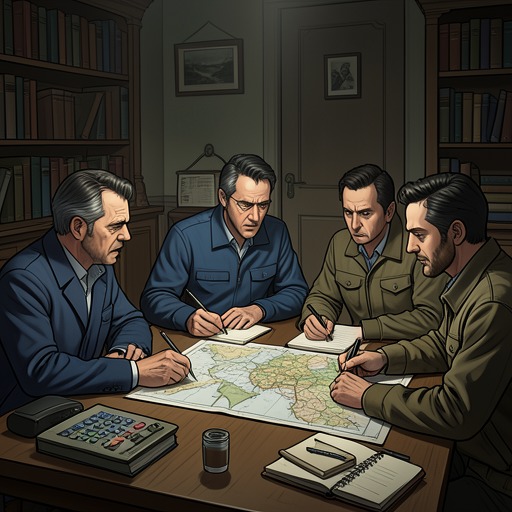
During questioning, Detective Dixon makes clear that the interview is not about Arthur Finnerman but about Dean. When the detectives ask whether she and Dean had been friends, TifAni gives a qualified answer. Later, she confirms that Dean, Liam, and Peyton assaulted her at Dean’s house and that Dean assaulted her again at Olivia Kaplan’s house. Detective Vencino challenges why she would have tried to save Dean from Arthur; TifAni answers that she was trying to save herself. The exchange places her actions inside a dispute over motive, while the detectives’ questions reveal how readily her account is measured against assumptions about friendship and loyalty.
The school’s response extends that contest into institutional life. When TifAni’s mother says she plans to send her back, Headmaster Mah says he is unsure the return is right for TifAni and for the school. TifAni nevertheless finds some stability in knowing her place at Bradley and in having a routine that includes lunch with the Shark. The dispute over her return is therefore not simply about access to school: it concerns whether she can resume ordinary life within the institution where the tragedy and its aftermath have defined her.
Dean’s account carries particular public weight. He claims Arthur gave TifAni the gun and told her to kill him as they had planned, a claim TifAni says is false. The narrative notes that the popular, athletic Dean, now paralyzed from the waist down, was widely treated as credible. Media attention and public anger focused on the fact that not everyone thought responsible had been brought to justice; strangers left flowers at Dean’s home and sent TifAni hostile letters. The group’s collective tragedy thus became a forum for assigning blame, with TifAni exposed to suspicion despite the absence of charges.
Recorded Speech and the Limits of Control
The documentary’s recording process produces a reversal. During TifAni’s confrontation with Dean, he directs the crew to stop filming. Aaron initially stands stunned, and the cameraman waits for his instruction. The interruption exposes a gap between the documentary’s intended account and the painful specifics TifAni raises: Aaron appears not to have known the full extent of what Dean had to answer for.
Later, Aaron tells TifAni that he reviewed the footage and that both she and Dean had microphones on. The recording captured their conversation, including Dean using the word rape. TifAni had wanted that record in case she chose to tell the story publicly, and she asks whether it can support her account. Aaron acknowledges that the material is a significant journalistic discovery, but also speaks to her as a friend and warns that public reaction may be severe. The microphones, initially part of a planned interview, preserve evidence beyond the scene the production expected to film; they give TifAni a potential corroborating record without guaranteeing how viewers will respond.
Aftermath and Significance
The consequences of the tragedy do not end with the school or the investigation. Dean is sent to a boarding school in Switzerland near a hospital specializing in experimental spinal-cord treatment. He never walks again, but later writes a bestselling book and becomes a respected motivational speaker. His public image as an inspirational figure stands in sharp contrast to TifAni’s account and to her experience of being blamed. The contrast shows how the same aftermath can produce very different forms of public recognition.
The Five therefore functions as more than a label for the documentary’s subject: it marks a struggle over collective memory. TifAni’s recorded testimony offers a way to revise the account, but her voice enters a landscape already shaped by school decisions, police questioning, media attention, and Dean’s public standing. The documentary may widen the record; it cannot make the competing stories, or the unequal credibility granted to them, disappear.