TifAni FaNelli’s trauma and hypervigilance
Luckiest Girl AliveTifAni FaNelli’s trauma and hypervigilance persist long after the assaults that precede them, shaping how she sleeps, interprets danger, and understands responsibility. Her account connects an immediate crisis of fear and sleeplessness with a longer aftermath: memories return in disturbing forms, while public suspicion and survivor guilt make safety difficult to separate from blame.
Origins and Early Aftermath
TifAni’s trauma follows sexual assaults involving Dean, Liam, and Peyton at Dean’s house, and a further assault by Dean at Olivia’s house. When Detective Dixon asks her to recount what happened, she confirms that these are the events she is describing. Detective Vencino then challenges why she would have tried to save Dean from Arthur. Her answer is that she was trying to save herself. The exchange makes visible a conflict that follows her beyond the original assaults: others interpret her choices through their assumptions about friendship and credibility, while she understands them as attempts to survive.
Andrew Larson offers a sharply different response when TifAni tells him what happened. He rejects her attempt to describe Dean as merely trying and tells her that what Dean did was not her fault. The reassurance matters against the doubt she has encountered, including hesitation in her mother’s reaction and the belief that her own actions or drinking made her responsible. TifAni worries that her parents will never forgive her for ruining things; Andrew promises that they will. His response does not erase the trauma, but it gives her an account of responsibility that does not turn the assault into her fault.
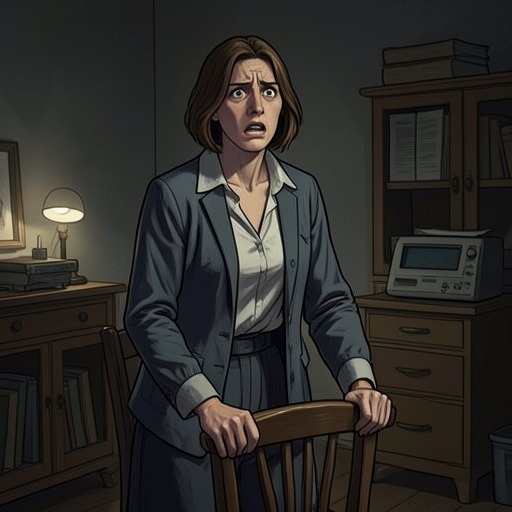
The night at Andrew Larson’s home shows how quickly that trauma enters the body and the ordinary conditions of safety. After he gives her his bed, TifAni wakes screaming from a bad dream. She cannot recall hearing herself scream, but Andrew rushes in and helps her orient to the room. Once he starts to leave, she asks him to stay because she cannot bear to be alone and fears that her heart may stop; she wants someone nearby who could call for help. Andrew sleeps on the floor beside the bed. TifAni remains awake, listening to his breathing, and later recognizes that this night anticipated a lifetime of sleeplessness.
Vigilance, Sleep, and the Search for Safety
Her fear is not limited to the remembered scene. In New York City, she lies awake beside Luke Harrison in a room lit by the city beyond the window. The artificial light and the awareness of people still awake outside reassure her: she associates the presence of others with the possibility of help if something bad happens. That comfort is also evidence of vigilance. Darkness and solitude are not neutral conditions for her; she seeks signs that the world remains inhabited and assistance might be available.
This need for reassurance sits beside her difficulty speaking openly about the past. When Luke asks whether she got what she wanted from speaking with Andrew Larson, TifAni chooses a careful, limited answer: it had been good to talk to him. The contrast between her guarded reply and her earlier request not to be left alone shows that disclosure does not automatically make her feel secure. She can need another person’s presence while still controlling how much of her experience she reveals.
Memory, Guilt, and the Bradley Attack
The trauma also returns through association. During the Bradley attack, TifAni is with Peyton as the group waits for the police. She has eased his head into her lap, and the circumstance brings back a memory of the last time he was between her legs. The recollection disrupts the immediate emergency by joining the present danger to the earlier assault. She looks at Peyton before leaving and experiences the decision to go while he is still alive as an overwhelming source of guilt. Her memory binds an act of attempted care to the fact that she could not remain with him.
That guilt persists in the aftermath. The coroner determines that Peyton died from smoke inhalation rather than his gunshot wound; the sprinklers in the old cafeteria had failed, and the fire spread into the Brenner Baulkin Room. TifAni believes that timely medical attention could have allowed him to live a relatively normal life, and she says she will never stop hating herself for leaving him. The narrative places this self-accusation beside the circumstances of the attack and its institutional failures, showing how survivor guilt can attach itself to a choice made under immediate threat even when many factors shaped the outcome.
Public Scrutiny and Contested Accounts
After the attack, private trauma is compounded by a public prosecution of TifAni’s character. Although there is not enough evidence to charge her with a crime, her notes, yearbook writings, and fingerprints on the gun become grounds for suspicion. Anita Perkins’s assessment that TifAni showed little emotion about dead classmates and seemed eager to return to school feeds a judgment about what a proper survivor should feel. Dean’s claim that Arthur gave TifAni the gun and instructed her to kill him further damages her credibility, despite TifAni’s account that Arthur never said this.
The school’s response adds another layer of exclusion. Headmaster Mah questions whether returning to Bradley is right for TifAni and even whether it is right for the school. TifAni’s mother and Dan Rosenberg press for her return, while public attention and hostile messages treat her as responsible for the attack. The contrast between the absence of criminal charges and the intensity of public condemnation underscores that formal innocence does not protect her from being judged by a community eager for a simple account of responsibility.
The public explanation of the shooting also intersects with her trauma. At a required college sexual-assault seminar, TifAni hears a discussion that reduces the question of rape to whether a person was too drunk to consent. She recalls finding a measure of forgiveness for Liam during her freshman year, but the seminar’s exchange exposes how readily listeners can turn consent into a debate about a victim’s choices. Later, the investigation of Arthur and Ben relies on their journals and other evidence to identify Arthur as the leader, while revising the familiar media story that the shooters acted because they were bullied. TifAni recognizes herself in the account of Arthur’s accomplice: she wonders whether she set Arthur off during their last encounter and whether he might have been preparing to involve her in his plan. That uncertainty remains a troubling possibility, not a confirmed knowledge of what Arthur intended to tell her.
Continuing Effects
TifAni’s hypervigilance is presented through recurring needs and reactions rather than as a single episode that ends when immediate danger passes. She fears being alone after a nightmare, values ambient light and the knowledge that other people are awake, and carries memories into situations that demand urgent action. Her account also shows how trauma is intensified when others question what happened or treat a survivor’s emotional response as evidence against her. The resulting burden is both inward and social: she struggles with fear and guilt while public narratives repeatedly contest her credibility and assign her responsibility.