
Mussolini’s Political Reinvention
M: Son of the CenturyThis thread follows Mussolini’s continual shifts of identity and alliance as he turns instability into a route to authority.
increasing Bearing strength in each event
 decreasing
Bearing strength in each eventdecreasingSocialist Exile
A Rupture over War
From Editor to Outcast
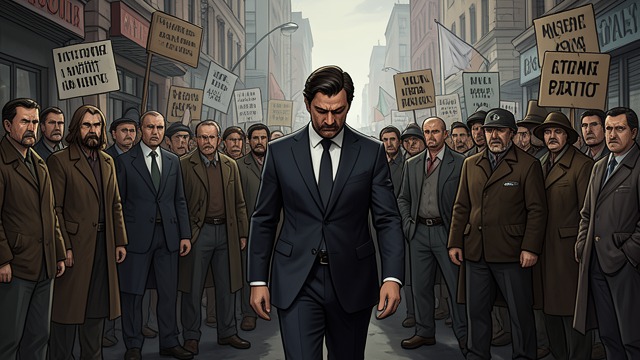
Mussolini moves from advocating absolute neutrality to supporting intervention in the war, resigning from Avanti! and founding Il Popolo d’Italia. The Socialist Party expels him, and former comrades condemn him as a traitor.
A New Political Audience
The break costs him his old constituency but opens a path among interventionists and veterans. His political identity begins to be defined less by doctrine than by his ability to identify and mobilize new allies.
A Flexible Platform
Ideology as Instrument
An Unsettled Movement
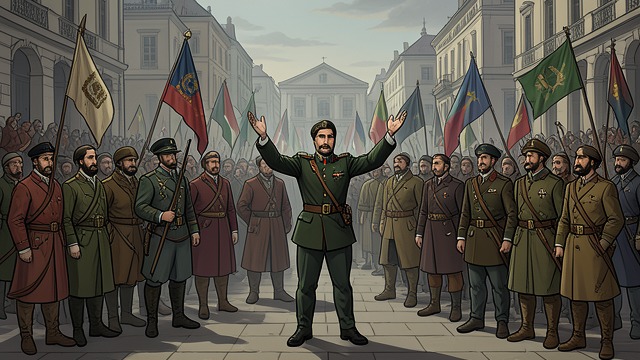
The Fasci advance a program containing social reforms, anti-elite claims, nationalism, and an armed nation. Mussolini refuses to settle the movement’s identity, describing it as dynamic and oriented toward action.
Keeping Doors Open
He courts left-wing interventionists while approaching D’Annunzio and the veterans. The resulting contradictions frustrate advisers, but they allow Mussolini to avoid exclusion from any promising political camp.
The Electoral Defeat

A Public Humiliation
No Seat for the Founder
The fascist ticket performs disastrously, and Mussolini receives too few votes to enter parliament. Socialist crowds stage a mock funeral for him and his allies, transforming political defeat into public ridicule.
Waiting for Another Opening
Mussolini does not abandon politics. He interprets the socialist victory as temporary and prepares to exploit the gap between revolutionary promises and the party’s unwillingness to seize power.
Alliance with Giolitti
Entering the National Bloc
A Parliamentary Route
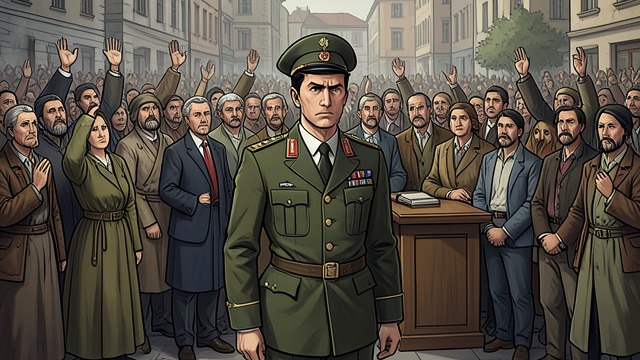
Mussolini accepts an electoral alliance with liberal and conservative forces despite the movement’s anti-parliamentary origins. He assures the squads that participation will not mean surrendering their wider aims.
Compromise without Reconciliation
The alliance grants fascists a route into parliament but does not reconcile the party’s politicians with its provincial commanders. Mussolini turns compromise into a temporary tactic, leaving the deeper conflict unresolved.
Responsibility Claimed
A Threat Becomes a Declaration
The Chamber Waits
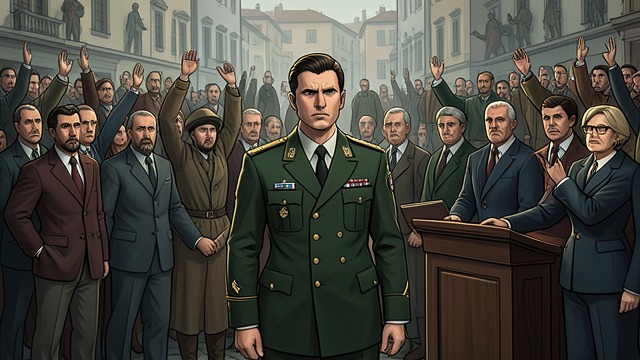
Mussolini faces parliament amid demands that he answer for Matteotti’s murder. No opponent uses the law to force a formal prosecution, and the silence gives him room to seize the initiative.
The Leader Assumes the Crisis
He declares responsibility for the political, moral, and historical consequences of fascism, while presenting himself as the force capable of resolving the disorder. The speech marks a decisive move from precarious coalition rule toward open dictatorship.
November 1914
June–October 1919
November 1919
Spring 1921
January 3, 1925
