
The Individual and the Crowd
M: Son of the CenturyThis flow explores the novel’s tension between individual will, mass politics, and the leaders who claim to interpret the people.
increasing Bearing strength in each event
 decreasing
Bearing strength in each eventdecreasingThe Veteran as Material
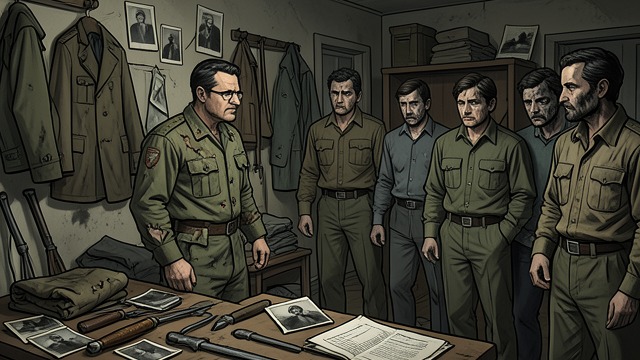
Survivors Gather
A Room of Remnants
The first fascists include demobilized soldiers, Arditi, former socialists, and men excluded from ordinary life. Their varied experiences make them difficult to classify as a coherent political group.
A Leader Reads the Crowd
Mussolini imagines that this human wreckage can be shaped into history. The movement begins with the promise that neglected individuals can become a collective force.
D’Annunzio Summons a People
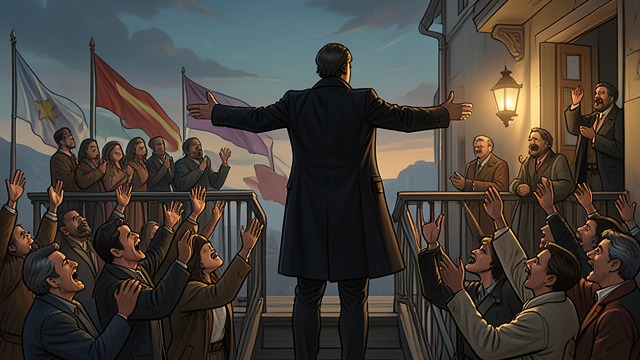
The Crowd Performs Itself
Direct Address
D’Annunzio speaks from balconies and asks audiences to answer him directly. People become participants in his political theatre rather than passive listeners.
Unity through Ritual
Flags, songs, and repeated affirmations create the impression of a single people with one will. The spectacle is powerful, but it can conceal how fragile and divided that apparent unity remains.
The Socialist Masses

Collective Capacity
Workers Organize
Strikes and factory occupations show workers acting collectively and managing production. The movement’s strength is not merely a crowd’s size but the organizations and practices it has built.
Leadership Hesitates
Socialist leaders repeatedly defer a decisive confrontation. The gulf between mass energy and political direction becomes one of the central weaknesses exploited by fascists.
The Leader as Interpreter
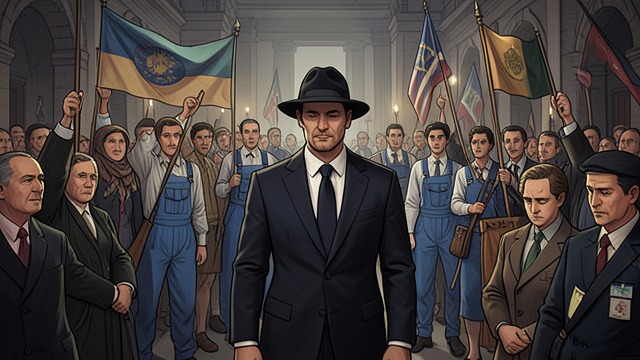
Mussolini Claims the Masses
A Single Voice
Mussolini argues that crowds need an interpreter and that leadership must guide them. He combines promises to serve the people with assertions that they must be disciplined when they are wrong.
Participation and Control
Mass politics remains central to fascist performance, but popular participation is increasingly organized around loyalty to a leader. The crowd is invited into history while denied independent authority.
The Spectators of Parliament

The Public Watches
Political Theatre
Parliament continues to sit as Mussolini threatens it, humiliates it, and uses it to validate his power. Deputies and spectators become an audience to confrontations whose outcome is increasingly predetermined.
Silence Becomes Consent
The failure of individuals to stand against the Leader has consequences beyond a single speech. Public institutions survive in form while the people and their representatives are trained to watch rather than intervene.
March 1919
1919
July 1919–September 1920
1921–1922
November 1922–January 1925
