
The March on Rome and Seizure of Government
M: Son of the CenturyThis flow traces how a militarily fragile insurrection becomes a political instrument that brings Mussolini to the premiership.
increasing Bearing strength in each event
 decreasing
Bearing strength in each eventdecreasingThreat Becomes a Plan
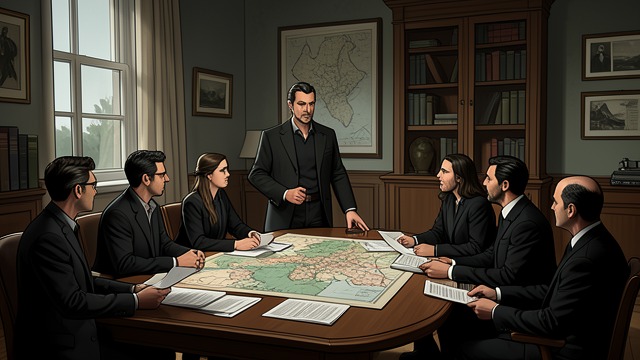
Preparing the Insurrection
The Milan Meeting
Mussolini gathers generals and fascist commanders to discuss an armed move against the state. Several warn that the militia is inadequately trained and equipped, but Mussolini insists that delay could close the opportunity.
Bluff and Force
The plan combines occupation, mobilization, and pressure on the government. Its political value depends not only on military success but on persuading the king and politicians that resistance would bring civil war.
Naples Demonstration

A Public Ultimatum
The Theatre and the Piazza
Mussolini tells a crowded audience in Naples that fascism wants to become the state. Later, in the piazza, he declares that the government must either hand over power or face a march on Rome.
The Crowd as Pressure
The spectacle presents armed organization as a national force, even though its military capacity is uncertain. The announcement makes the threat visible and raises the political cost of ignoring it.
The Crisis Accelerates
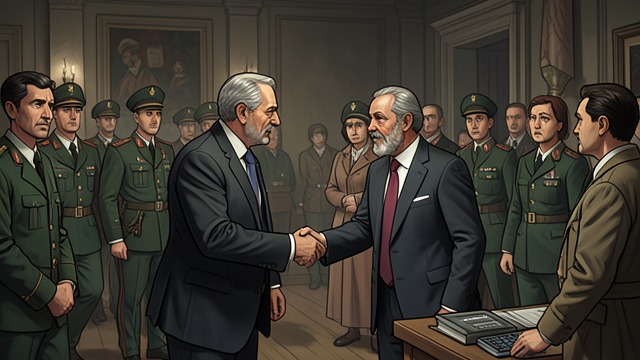
Negotiation and Mobilization
Competing Solutions
Mussolini continues bargaining with established politicians while the fascist command prepares to mobilize. The government considers resistance, but its decisions arrive late and are undermined by uncertainty about the king’s support.
The March Begins
Fascist actions in provincial cities expose the gap between the insurrection’s plan and its execution. The movement’s leaders nevertheless use the growing disorder to insist that no alternative government can command the country.
The State of Siege Is Withdrawn
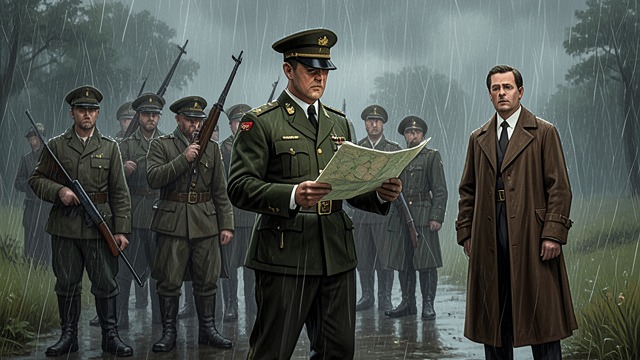
A Turning Point at the Quirinal
The Army Awaits Orders
The government prepares a state of siege, and the army is capable of defending Rome. Fascist columns outside the capital are poorly supplied and outmatched, making the operation vulnerable to a determined response.
The King Refuses the Decree
Vittorio Emanuele III does not sign the measure. Its withdrawal removes the immediate threat to Mussolini and leaves the political crisis open for him to exploit.
Appointment as Prime Minister

Power without a Military Victory
The Journey to Rome
Mussolini travels to Rome after receiving the king’s invitation to form a government. The fascists are allowed a ceremonial march, but the transfer of power occurs through royal appointment rather than a successful battle for the capital.
A New Political Reality
The armed threat has helped make the appointment possible, while the state’s institutions remain in place. The new government begins with Mussolini at its center and a public unsure whether it has witnessed revolution, political bluff, or both.
October 16, 1922
October 24, 1922
October 26–27, 1922
October 28, 1922
October 30, 1922
