1919 Italian General Election
M: Son of the CenturyThe 1919 Italian General Election was a decisive electoral defeat for Benito Mussolini’s Fascists and a triumphant result for the Socialists. On 16 November, the Fascist list failed to win a single seat in the Milan district, while the Socialist Party secured 156 seats nationally. The contrast between an organized, martial campaign and its meager vote revealed how little the Fascists could yet command through elections—and how sharply their political fortunes differed from the force they sought to project.
Background and Political Repositioning
In the months before the vote, Mussolini tried to hold together his movement’s old socialist associations while seeking new allies. At a Milan conference on 17 July, he took a hard line against the threatened general strike, although only a small number of cities were represented. At the same time, he looked beyond the movement: Michele Bianchi had reached an agreement with Milan’s prefect to make the Fascists available for maintaining public order. The prefect also disclosed a confidential government circular urging Fascist cooperation against revolutionary attempts, including violent repression under official command. The liberal state was thus opening a route for Fascist participation even as the movement remained electorally untested.
Mussolini also revived the prospect of a pre-electoral committee with factions of left-wing interventionism. At a gathering in the Liceo Beccaria, former socialists who had supported Italy’s entry into the war and radicals of the patriotic left heard him argue for social and economic reorganization centered on workers’ welfare but independent of Bolshevism. A joint November candidacy seemed possible for a moment. The Fascists ultimately entered the race on their own ticket, a choice that made the election a direct test of their independent support.
The Fascist Ticket and Campaign
The list was assembled rapidly. Of its nineteen candidates, eighteen had served at the front; the group included volunteers, decorated veterans, wounded men, and disabled veterans. Among the prominent names were Filippo Tommaso Marinetti and Arturo Toscanini. Toscanini learned that he had been nominated while standing apart from an assembly in a school gymnasium. Marinetti persuaded him to accept, and he contributed 30,000 lire to the list.
The platform retained the movement’s earlier reforming program: abolition of the Senate, tax reform, a levy on great wealth, confiscation of ecclesiastical property, support for wounded and disabled veterans, and an armed nation. Its electoral symbol was a French-made Thévenot grenade, a weapon issued to the Arditi by the Italian army. The combination was revealing: the Fascists presented a program that still carried a social-reformist inheritance, but framed the ballot itself through the imagery of combat.
The campaign’s public gathering was prepared with precautions against possible attacks. Benito Mussolini summoned former republicans and anarchists from Romagna as an honor guard, among them Leandro Arpinati. Gabriele D’Annunzio sent sixty legionnaires and authorized the recruitment of additional men using funds raised for Fiume. Groups also arrived from nearby cities. Albino Volpi and other Arditi packed iron bars and grenades; organizers instructed participants to keep silent if asked to identify people who caused disruption, and told the uninvolved public to leave quickly by Via Morone if clashes occurred. The rally was to be brief and would proceed even in the rain. These preparations underscored the tension between campaigning for votes and anticipating confrontation in the streets.
Results in Milan and Ferrara
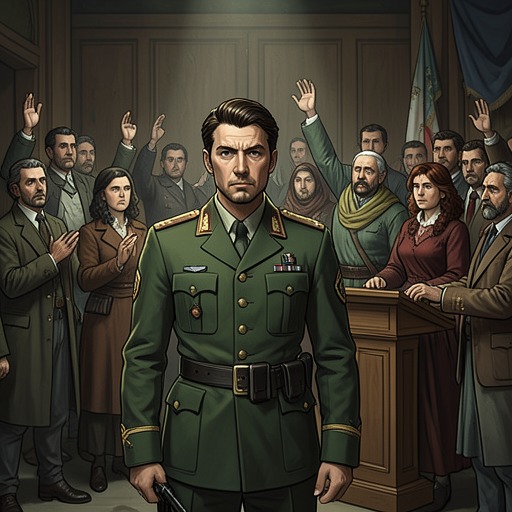
The national Socialist result was overwhelming: 1,834,792 votes and 156 elected parliamentarians. In the Milan district, with approximately 270,000 voters, the Fascist list received only 4,657 votes. Mussolini’s own preferential vote totaled 2,427. None of the Fascist candidates was elected. The scale of the defeat was especially sharp because Mussolini had already imagined himself as a deputy from Milan; the ballot did not merely exclude the movement but dashed his personal expectation of entering Parliament.
Ferrara offered another measure of the Socialist strength in the same election. There, the Socialist Party received 43,000 votes, and the book describes three out of four voters in the province as having voted for revolution. The result anticipated the intense political contest that would follow in the countryside, but the later reversal of local power should not be confused with the national election outcome: in November 1919, the Socialist vote in Ferrara was commanding.
Defeat and Its Immediate Aftermath
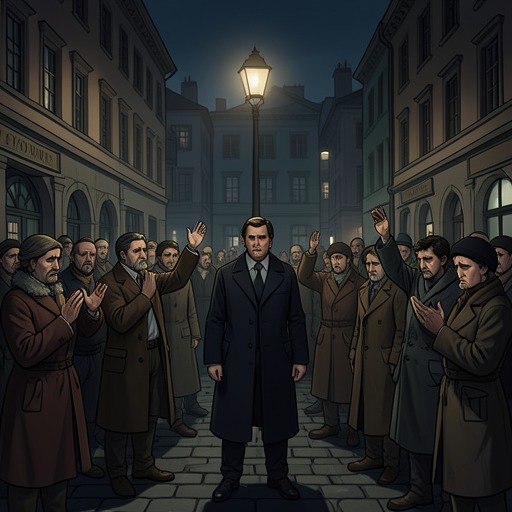
Mussolini privately acknowledged the result to Rachele, calling it a total defeat and admitting that not even one seat had been won. In Milan, the public response reached his household. A Socialist mock funeral procession stopped outside the family’s home in Foro Bonaparte, with people shouting that Mussolini’s body was there and striking the front door. Two additional empty coffins represented Marinetti and D’Annunzio. Rachele told her husband that she had taken refuge in the attic with the children; their daughter Edda suffered an anxiety attack.
At the newspaper offices, visitors arrived as if to pay their respects at a funeral. The image of a public burial of Mussolini’s political prospects was sharpened by the private scene around him: a stark workroom, a map of Italy marked with a tricolor flag at Fiume, a glass of milk, and an old pistol on the desk. The result had left the Fascists with no parliamentary representation, while the Socialist victory seemed to announce a new political ascendancy. For Mussolini, the election was therefore both a public repudiation and a personal humiliation. It established the distance between the movement’s militant presentation and its actual electoral reach at the end of 1919.