1920 Factory Occupations in Italy
M: Son of the CenturyThe 1920 Factory Occupations in Italy began with a dispute over wages and an employers’ lockout, then became a nationwide seizure of industrial workplaces by more than 500,000 workers. For about a month, workers ran factories without the usual financing, supplies, or technical direction; the occupations exposed both their capacity for collective organization and the political limits imposed on their movement. Their evacuation followed a compromise that granted economic improvements but postponed the revolution many expected.
Causes and Background
The crisis at the Alfa Romeo Portello plant in Milan brought the conflict into focus. The modern factory was preparing to produce the RL, a six-cylinder sports car intended to fill a gap in the company’s range. Executives and owners anticipated a new market for the red Torpedo, while workers sought higher wages. Negotiations broke down in mid-August. On August 30, despite an appeal from Milan’s prefect, engineer Nicola Romeo declared a lockout at his factory.
The dispute unfolded amid wider labor conflict. In the Po Valley, peasant leagues had recently won extensive concessions over agricultural employment and working conditions. Their control of hiring, work schedules, threshing, seed supplies, and crop planting made rural labor organization a powerful force in provincial life. For landowners, the struggle concerned control of property and production; for farmworkers, who might find work for only 120 days in a year, wages and employment were bound up with survival. The spread of conflict from agricultural agreements to industrial workplaces made the prospect of a wider social confrontation appear increasingly immediate.
The Occupations Spread
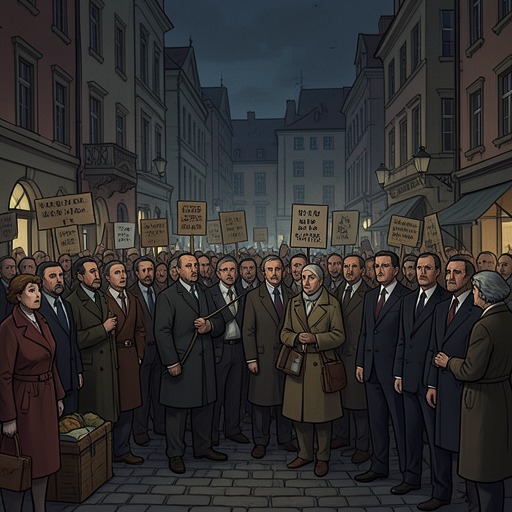
The Portello lockout was followed by FIOM’s announcement that workers would occupy the factory. Within hours, workers had entered factories across Milan, sometimes holding managers and owners inside. The following day, industrialists declared a nationwide lockout, and the General Confederation of Labour responded by extending the occupations across Italy. More than 500,000 workers took control of 600 manufacturing plants. The action moved so rapidly that prefects learned of it from newspapers rather than through official reports.
The occupation reached factories from Savigliano to Bagnoli and from Monfalcone to Castellammare del Golfo, as well as Turin and Bari. In Milan, the red flag flew over Alfa Romeo; at the Isotta Fraschini firm, its founders, Cesare Isotta and Vincenzo Fraschini, were confined to their offices. Factory courtyards and workshops became places where workers lived and organized themselves. The occupations were therefore not merely a stoppage: production sites passed into workers’ hands, while employers and public officials faced an abrupt challenge to their authority.
Work and Self-Organization
The occupied factories did not simply cease operating. Without bank financing, dependable supplies of raw materials, or the usual direction of engineers and technicians, workers attempted to keep production going. Wood-turners, milling-machine operators, pipe makers, and unskilled laborers sustained the industrial process through their own organization. They prohibited alcohol during shifts, established watches to prevent theft, and guarded machinery and materials. These practices supplied a working discipline where the ordinary structures of management and finance were absent.
For four weeks, workers demonstrated that industrial labor could involve more than operating machinery under an employer’s direction. Their effort joined production to an aspiration for control over economic life. Yet the experience also had limits: keeping factories running did not itself provide the banks, raw materials, or technical guidance on which industrial production depended. The occupations made the workers’ capacity visible, but the political decision about whether that capacity would become a broader struggle remained with the labor and Socialist leadership.
Negotiation and Withdrawal
The question of extending the occupations into a wider political confrontation was repeatedly deferred. Turin’s labor leaders feared that moving the struggle from the factories into the streets would leave workers exposed to overwhelming force. They believed their weapons could not withstand more than ten minutes of firing. The General Confederation of Labour referred the decision to the Socialist Party leadership, which did not authorize the next step. Giovanni Giolitti, the prime minister, consequently pursued a negotiated settlement rather than the bloody suppression demanded by industrialists.
At a meeting in Turin’s Hotel Bologna, Giolitti secured an agreement from Agnelli, De Benedetti, and Pirelli. The employers granted wage increases and regulatory improvements, along with promises of worker control and profit sharing. Giolitti intended the latter promises to remain promises. In return, workers agreed to give the factories back. The agreement thus separated immediate economic gains from the larger political objective: workers gained concessions, while the possibility of revolutionary change receded.
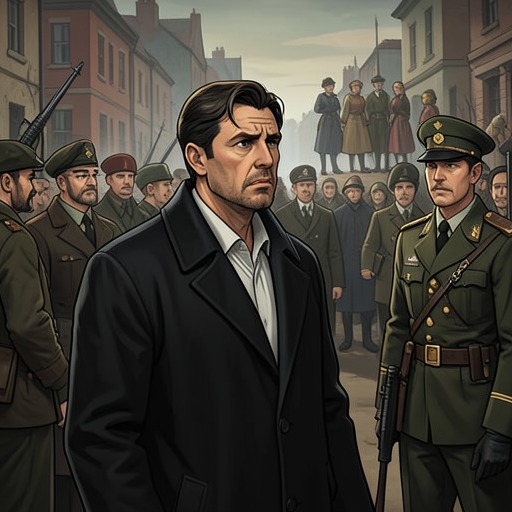
The occupations’ end was not uniformly calm. In Milan, 70 percent of workers approved evacuation in a referendum. In Turin, despair and violence accompanied the final phase, including seizures of owners, exchanges of gunfire with police, nighttime ambushes, and confrontations around workers’ funerals. After a Fiat employee who had opposed the occupation and a prison guard were seized at the Bevilacqua plant, an improvised popular court sentenced them to death. Their bodies were found three days later, at dawn on September 24. The evacuation of the factories followed as the working class became exhausted and disillusioned.
Political Meaning and Aftermath
The outcome combined an industrial achievement with a political retreat. Workers had run factories for a month and secured wage and regulatory improvements, but the Socialist leadership’s refusal to extend the struggle left the revolutionary expectation unresolved. The occupation was therefore a substantial economic victory and, in the narrative’s terms, a political defeat: the factories were returned without a transfer of political power.
The wider revolutionary horizon also narrowed. News arrived that Polish forces had halted the Red Army’s advance toward Warsaw, further undercutting expectations of an advancing European revolution. During the occupations, Benito Mussolini avoided committing himself to either side. He had earlier welcomed Giolitti’s return as a means of restoring social equilibrium, met secretly with metalworkers’ union leader Bruno Buozzi in Milan on September 16, and supported workers’ struggles so long as they did not become political. He later derided the prospect of communism in Italy at a rally in Trieste. His shifting position made the occupations a test not only of workers’ strength but also of the political opportunities created by a conflict whose opponents were exhausted and whose revolutionary outcome had again been postponed.