Amerigo Dumini
M: Son of the CenturyAmerigo Dumini emerges as a former Arditi fighter turned fascist squad organizer, a man whose military past gives him standing among comrades but cannot make a weak local organization formidable. In Montespertoli, his attempt to pull down a socialist victory flag becomes a humiliating encounter with the people the squad intended to intimidate: hundreds of villagers assemble, and Dumini’s men leave under police protection. The episode sets the language of militant resolve against the practical limits of fascist power in the countryside.
Identity and Background
Dumini’s wartime service is the clearest foundation for his place among fascists. Before the war, he had met Gennaro Abbatemaggio in the trenches; Abbatemaggio had fought on the Monte Grappa battlefield and risen to sergeant in the Arditi. The account presents the two men’s shared experience at the front as a bond between fighters, and Abbatemaggio’s return to Florence to reinforce the comrades as part of the effort to build a squad there.
The narrative also places Dumini within a circle of men whose reputations did not rest on military service alone. It recounts Abbatemaggio’s earlier involvement in a notorious criminal investigation, including his changing testimony, and notes that he was known in gangland circles by a nickname. That history belongs to Abbatemaggio rather than Dumini, but it helps define the company Dumini recruits: the fascist squad draws together veterans and men accustomed to violence, recasting their force as political action.
Organizing a Weak Local Fascio
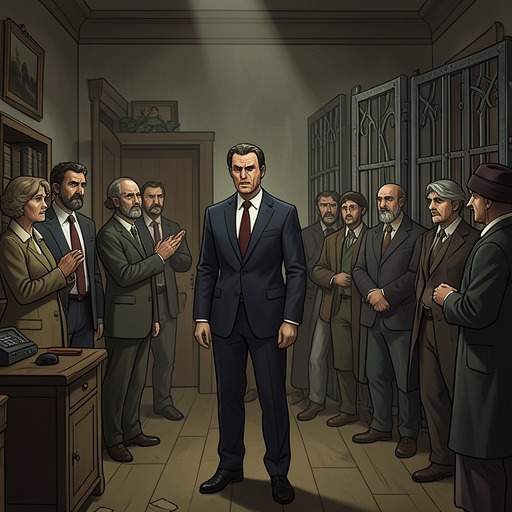
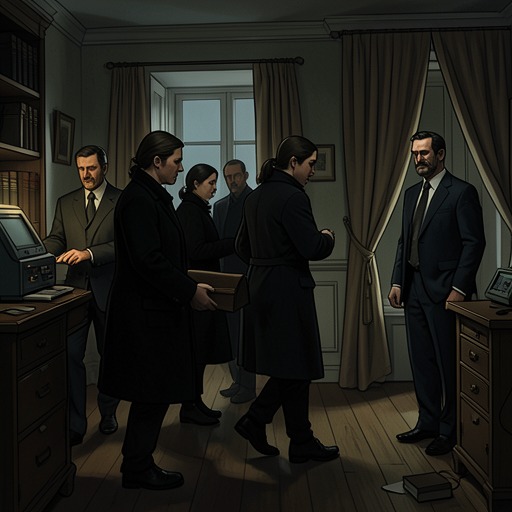
Dumini tries to turn the small Florentine fascio into a fighting organization. Its local strength is negligible: in Montespertoli, a town of ten thousand inhabitants, fascists number only four or five. Dumini nevertheless names a platoon La disperata, or the reckless team, and asks Frullini, a house painter, to design a pennant bearing a skull, dagger, and labarum. The headquarters in Florence is scarcely more than a rented room, furnished with a table and two chairs; a portrait of Lenin lies on the floor, used as a spittoon. The contrast between the squad’s martial symbols and its makeshift premises measures the distance between its ambitions and its resources.
For months, Milan has urged the Florentines to organize squads for street clashes with socialists, but money and weapons remain obstacles. The central organization refuses funds for guns, and Umberto Pasella returns a printing invoice rather than authorize payment, wary of setting a precedent. Dumini has already prepared a leaflet attacking socialists after a munitions-depot explosion and the criticism of the army that followed; the police chief prohibits its distribution. Deadly clashes elsewhere and the occupation of factories increase the sense that fascists have a role to play, but the local squad remains poorly armed and largely absent from the confrontations it hopes to influence. Only after the factory occupations do the industrialists and agrarians find someone willing to pay for guns.
The Montespertoli Expedition
With weapons newly funded, Dumini and his men go into the province to remove the red flag displayed at Montespertoli’s town hall. Their action belongs to a wider decision to make night raids in Florentine hill towns where socialist visibility is considered intolerable. The flag itself is conspicuous but motionless: a heavy banner, estimated at more than ten pounds, hangs beside the town hall’s clock towers. It had been carried into the building after a crushing socialist election victory. Yet Montespertoli has no socialist militants in the square when the fascists arrive.
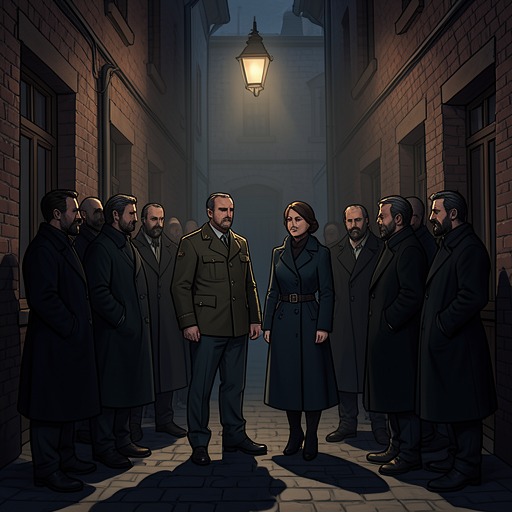
After supper at the home of the local fascist Lino Cigheri, the armed men enter the only open bar in compact formation and proclaim their support for Italy and Fiume. The villagers disappear. When the bar is shut, Frullini threatens to force the door, women call for help from a balcony, and the men kick a passerby and scatter a group of boys with gunfire. They dominate an empty square, but their display produces no confrontation with an organized socialist opposition. They spend the night on mattresses provided by Cigheri’s wife.
The balance changes in the morning. Dumini’s party wakes late to find hundreds of villagers gathered in front of the town hall, arranged in a semicircle and carrying the tools of their work: spades, scythes, hoes, and pitchforks. Cigheri’s wife arrives with the Carabinieri, who escort the fascists to a nearby barracks. The villagers remain armed and silent across the square. Dumini and his men wait for reinforcements from Florence, but none arrive. Instead, additional Carabinieri come in an armored car with local officials and socialist representatives. A socialist deputy cools the situation without calling for the flag to be removed.
Retreat and Narrative Significance
As the fascists cross the square again to board the armored car, Frullini sings an Arditi anthem. Dumini only murmurs its refrain. Their departure takes place through a corridor of Carabinieri protecting them from the villagers; a farmer complains that the morning’s work has been lost over a handful of drunks. The armed expedition has ended not in the removal of the flag but in a public escort out of town.
Dumini vows that the men will return, but the armored car’s engine swallows the promise. On the journey back toward Florence, Frullini embellishes how close they came to death. Dumini stops listening and withdraws into silence, concentrating on the engine’s roar. The narrative calls the episode a farce that quickly becomes epic in the retelling: a small defeat is already being converted into a story of danger and courage. Dumini’s silence, followed by the vow to return, captures both sides of the scene—his recognition of the squad’s failure and its refusal to let that failure stand as the final account.