Bologna Fascio
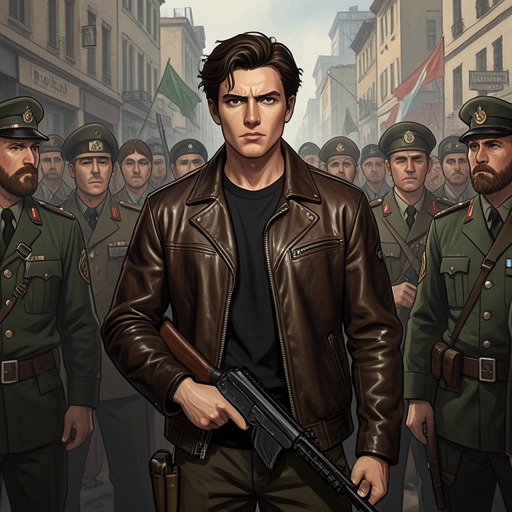
M: Son of the CenturyThe Bologna Fascio was a local Fascist organization that rose from near dissolution to become a disciplined street force under Leandro Arpinati. Its recovery was neither automatic nor simply ideological: republicans abandoned it, funds were scarce, and the city and its countryside were shaped by powerful Socialist organizations. The Fascio’s revival came through a combination of local militancy, outside political backing, and escalating conflict, culminating in its armed presence during the confrontation at Palazzo d’Accursio.
Founding and Near-Collapse
The Bologna Fascio was founded in April 1919 by Pietro Nenni and other republicans. By early 1920, however, the republicans were leaving one after another. Attorney Mario Bergamo reported that their departure had effectively killed the organization. Only six Fascists remained in Bologna, too poor even to rent an office. Leandro Arpinati received his mail at the trattoria on Via Marsala where he ate lunch.
Umberto Pasella, secretary of the fasci and familiar with Emilia-Romagna from his earlier union work, promised to cover the rent for the first six months but had not sent any money. Even so, Benito Mussolini insisted that Arpinati take charge of the group and assigned him responsibility for eastern Emilia. He advised a Milan-style strategy: organize civic defense militias against the strikes. Arpinati, a man of action who found speeches uncomfortable, asked instead for a speaker to help publicize the organization. These early circumstances left the Bologna Fascio dependent on leadership and resources it did not yet possess locally.
The city’s political environment made that weakness consequential. Two labor chambers competed in revolutionary extremism, and the Socialist mayor, Enio Gnudi, struggled to keep pace with popular demands. In the countryside, Socialist leagues, cooperatives, and local organizations exerted wide influence. During a Ferrara farm-labor dispute, the deaths of peasants in a clash with state forces were followed by a three-day general strike. In response, farmers, business owners, professionals, public employees, and homeowners organized the Bolognese Association of Social Defense, which told Prime Minister Francesco Saverio Nitti that it was prepared to act in the name of self-defense. This wider mobilization provided the context in which Arpinati was urged to build a Fascist force.
Arpinati’s Reorganization and the Turn to Action
Arpinati had not served in the war, but veterans joined him when he entered the conflict. His position was politically paradoxical: an anarchist railway worker and son of poor people, he came to serve agrarians and industrialists whom he despised. He nevertheless regarded Socialist strikes and revolutionary aims as destructive, while local landowners offered money to organize resistance. Within the Fascio, accepting agrarian support provoked argument. Arpinati treated debate as a distraction from the immediate task of action.
The group first tested the streets cautiously. Arpinati sent patrols through areas usually dominated by the workers’ movement, instructing them to sing Giovinezza. They returned without finding opponents, and he concluded that the Socialists would not make a revolution. The agrarians, meanwhile, feared they could not defend themselves. On September 20, Arpinati and his followers confronted Socialists commemorating Italian unification at the monument to Garibaldi on Via Indipendenza. The encounter caused numerous injuries, and one man later died. Recruitment to the Fascio surged.
On October 10, the members re-established their organization on Via Marsala. Disputes over money from the agrarians continued, but Arpinati insisted that the moment required action rather than extended debate. Benito Mussolini, acting through Cesare Rossi, gave him full authority to continue fighting without restraint. Four days later, anarchists associated with Ercole Bucco attacked the barracks on Via Cartoleria. An assailant, a Royal Guard of the Kingdom of Italy brigadier, and a deputy police inspector died in the violence. Fascists led the funeral procession. For the Bologna Fascio, the episode marked a shift from presenting itself chiefly as a civic-defense organization to taking the initiative in open confrontation.
Growth and Street Campaigns
The Fascio’s actions soon combined attacks on Socialist institutions with public displays of political symbolism. Arpinati personally led an attempt to place an Italian tricolor on the municipal building; when that was repelled, the Fascists fired at a Socialist Party newsstand beside the town hall. A farmer visiting the city for the market was killed. Within a week, the Bologna Fascio had more than a thousand members, and young people joined its swelling squads. Arpinati became the spokesman for the resentments that brought them together.
The organization’s methods extended into the towns around Bologna. On weekends, Arpinati and his followers attacked people’s houses, union headquarters, and Socialist town halls. They beat opponents, damaged property, seized enemy flags, and burned them at public bonfires in Piazza Maggiore. In some places, threats alone compelled league leaders to surrender their flags; elsewhere, clashes were more difficult. Arpinati had already been shot twice, once in Ferrara and once in Modena during the funeral of Fascist Mario Ruini. After the Modena violence, labor chambers in Modena and Bologna were set on fire in retaliation, while police did not intervene. These actions made the Bologna Fascio a source of organized pressure well beyond its original headquarters.
Palazzo d’Accursio and the Organization’s Political Role
The 1920 elections sharpened the conflict. The Socialists had won clearly, and their union decided on November 16 to resist Fascist violence with violence, arguing that they could not rely on state forces. It also called for a large demonstration at the inauguration of the new municipal council on November 21, with armed red guards assigned to security. On the evening of November 17, about four hundred members of the Bologna Fascio met on Via Marsala and resolved to remain ready and vigilant.
On the day of the inauguration, Fascists led by Arpinati left their headquarters in squads and marched toward the piazza. A small group entered through an opening made for cavalry and stood at the edge of the Socialist crowd singing its anthems. Inside Palazzo d’Accursio, the new mayor, Enio Gnudi, delivered his inaugural address. The meeting was followed by gunfire and a wider clash in which the crowd was caught between shots from different positions and scattered in panic. The Bologna Fascio’s march did not take place in isolation: it was the visible action of an organization that had rebuilt its membership, embraced street confrontation, and entered a contested civic space as the Socialists asserted their electoral victory.
Significance and Place in the Wider Movement
The Bologna Fascio’s trajectory contrasts starkly with its beginning. In early 1920, six members could not afford an office; by autumn, the group had more than a thousand members and could mobilize in squads. Arpinati’s personal authority helped bridge that transformation, while Benito Mussolini’s authorization connected the local organization to national Fascist leadership. Yet the Fascio also reflected unresolved tensions: its leader came from the working class, while its resistance to Socialist power drew support from agrarians and other property holders.
The group’s development also embodied a broader Fascist political claim: that a nation weakened by conflict and division could be remade through collective discipline, action, and renewal. The movement’s promise of national rebirth stood beside its practical use of intimidation and violence. In Bologna, the turn from defensive patrols to attacks, flag seizures, and armed presence at Palazzo d’Accursio gave that promise a local organizational form—and made the Fascio an active participant in the erosion of peaceful political competition.