Bolognese Association of Social Defense
M: Son of the CenturyThe Bolognese Association of Social Defense was established in Bologna in April 1920 as farmers, manufacturers, merchants, professionals, public employees, and homeowners organized for their own protection. Its creation followed a deadly confrontation in the province and a general strike; a week later, the association’s delegation told Prime Minister Francesco Saverio Nitti that the state had abdicated its responsibilities and that citizens were prepared to provide for their own defense. The episode made private organization a direct challenge to the state’s claim to maintain public order.
Formation amid labor conflict
Bologna’s political atmosphere had grown increasingly strained. Two labor chambers competed in revolutionary rhetoric, while the socialist mayor, though described as moderate in his own disposition, encouraged tenants to occupy elegant homes and claim them as their own. Union membership could determine access to bread, and employers faced such uncertainty that some preferred to sell their businesses. The conflict reached beyond the city: in the surrounding countryside, socialist organizations and leagues held extensive influence, and landowners faced rules governing employment and agricultural work.
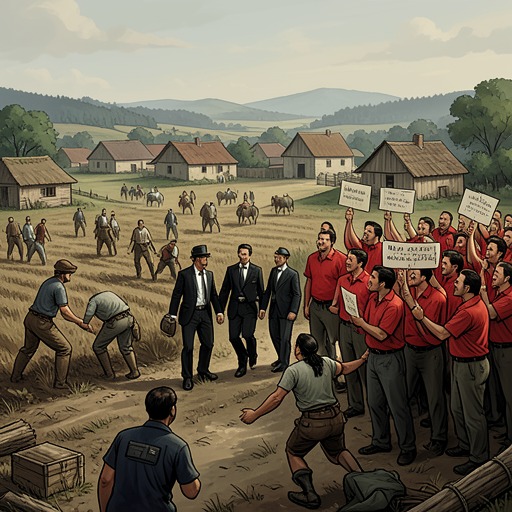
The immediate background to the association’s formation was a confrontation in the province that left eight people dead and about thirty injured. The Chamber of Labor responded by proclaiming a three-day general strike, suspending public and private services. The stoppage became a turning point for groups who had not previously organized together: farmers, manufacturers, merchants, professionals, public employees, and homeowners decided to act independently. At a meeting promoted by the Chamber of Commerce on April 8, they established the Bolognese Association of Social Defense.
Appeal to the government
On April 15, a delegation from the association presented Nitti with a brief. It denounced what it considered the state’s abdication in the face of socialist violence and declared the association prepared to replace the state in the name of self-defense. The appeal thus combined a complaint about public authority with a claim to act where that authority was thought to have failed.
The brief placed defense in practical, everyday terms: families and homes, the right to work, and the dignity of ordinary life. Its language of protection answered a period in which labor disputes and political mobilization had come to affect employment, property, and access to basic necessities. The association’s intervention was therefore not simply a protest against government inaction; it presented organized self-help as an alternative means of securing social order.
Arpinati and the question of support
The crisis also exposed the difficult position of Leandro Arpinati, an anarchist railwayman from a poor family whose political base included people drawn from the same social world as the striking workers. Wealthy landowners offered him 100,000 lire to defend them against the poor, an offer that forced into view the tension between his origins and the resources available for anti-socialist organization. Arpinati questioned whether the bourgeoisie’s late concern for its security and property was a reason to refuse money needed for the struggle.
His argument echoed the association’s stated case for self-defense, but the evidence does not establish that the offered money was given to the association or that Arpinati’s reflections were its formal policy. What the episode does show is how private defense could draw together groups with different interests: landowners seeking protection, a newly organized civic constituency, and local political actors who regarded unchecked labor conflict as a threat to work and social stability.
Significance in the wider conflict
The association emerged amid a rural economy in which labor leagues could influence hiring, work shifts, threshing, seed supplies, and planting. In Emilia, socialists controlled 223 of 280 municipalities; farmworkers, who on average found work for only 120 days a year, depended on high wages to get through idle months. These conditions help explain why arguments about order and property were inseparable from disputes over employment and survival.
The Bolognese Association of Social Defense represented an effort by organized social groups to assume protective functions they believed the state had failed to perform. Its brief to Nitti made that claim explicit, while the broader conflict revealed the competing social demands beneath it: workers’ control over labor conditions, landowners’ resistance, and the fears of a middle class caught between them. The episode marks a point at which civic self-defense became part of the political struggle over who could enforce order and whose interests that order would serve.