Cattle
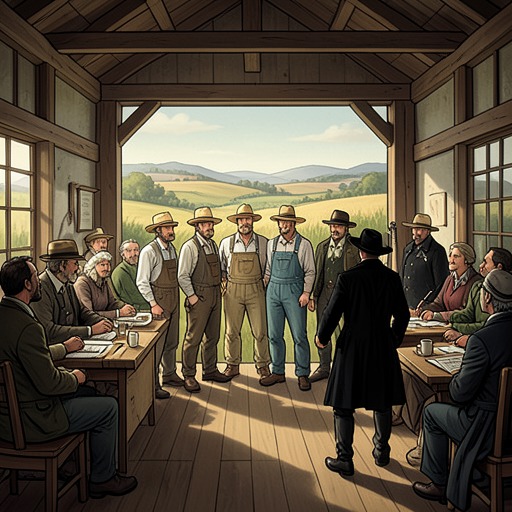
M: Son of the CenturyCattle are not merely background to the rural conflicts described in the book: their care, labor, and loss expose how political power reaches into everyday life. In the Po Valley, animals become entangled in disputes between landowners and peasant leagues; in Polesine, the memory of a cow’s death and the poverty surrounding it help explain Giacomo Matteotti’s allegiance to the rural poor. Their recurring presence connects material deprivation to the larger struggle over work and control of the countryside.
Animals within the rural economy
Across the Po Valley, cattle depend on the organization of farm labor and the ability of people to tend them. The farmhands who work the land are employed for only part of the year, while the leagues seek to regulate hiring, wages, threshing, seed supplies, and planting. Where those arrangements break down, crops and animals can be left without care. The animals’ vulnerability is therefore tied not only to individual choices but to the structure of work and the intense contest over who can direct it.
That contest is particularly stark in Ferrara. After a strike interrupted sowing of hemp and sugar beet, a settlement established wage increases, worker-managed hiring centers, and a compulsory labor quota for landowners. The quota required five workers for every thirty hectares during the months when agricultural work was scarce. These provisions were part of a broader effort to secure employment and subsistence; disputes over compliance could, in turn, affect farm operations and the care of livestock. The book presents cattle within this tightly connected world of labor, land, and survival rather than as separate from human economic arrangements.
The summer crisis in the Po Valley
In August 1920, the account turns to the effects of the countryside’s conflict on animals. Grain lies unthreshed in the fields during a spell of extreme heat, while cows go unmilked. The narrative describes this as one instance of the peasant leagues’ offensive against landowners, amid a wider struggle over control of work and property. The cows’ distress registers the consequences of a labor conflict that has extended beyond wages and hiring into the ordinary tasks on which both farms and animals depend.
The episode also sits beside evidence of the leagues’ extensive authority. In Emilia, socialists control 223 of 280 municipalities, while the leagues exercise influence over hiring, work shifts, threshing, seed, and planting. Farmhands average 120 days of work a year and need sufficient wages to survive the idle months. Rules intended to prevent undercutting can bring severe social penalties against those who violate them; landowners who breach labor agreements may face fines. In this setting, the cows are caught within the same system of discipline and confrontation. Their unmet needs make tangible the cost of a struggle otherwise described through agreements, employment rules, and control of production.
A remembered cow in Polesine
A different, earlier scene enters the narrative through Matteotti’s childhood memory in Fratta Polesine. A cow has died of anthrax, and a veterinarian orders its burial after the carcass is treated with kerosene. Once the municipal attendant leaves, hungry peasants retrieve the animal for food. The scene is related as a recollection Matteotti hears and revisits before a rally, but the memory itself is uncertain: he is no longer sure whether the cow truly died of anthrax. What remains certain to him is the poverty of the land.
The episode gives the animal a double place in the account. The cow is a source of food in a community experiencing severe deprivation, yet the circumstances make clear that its death is part of a much wider hardship. The surrounding description of Polesine emphasizes cramped living conditions, chronic illness, undernourishment, and the proximity of household life to farm animals. Cattle share the material conditions of this rural world, while the people depend on them for sustenance and work. The book does not treat the animal’s fate as an isolated incident: it becomes part of the evidence through which Matteotti understands the social conditions around him.
Conflict, hunger, and political meaning
Matteotti’s political choice gives the remembered cow a further significance. Though the son of a large landowner, he identifies his people with the peasants rather than with his father’s class. The account connects that choice to a landscape of poverty and to the formation of peasant leagues, which affirm the rights of poor people. Cattle do not cause or resolve this class conflict, but their place in food production and farm life helps show what is at stake in it: the ability to subsist, to work, and to make decisions about the countryside.
The connection persists in the later mobilization in Ferrara. In 1921, Italo Balbo proposes an occupation to force the government to provide public works for tens of thousands of unemployed farm laborers. The mass of hungry workers arriving in the city is presented as the human consequence of seasonal idleness and political competition over employment. Cattle are not the focus of that mobilization, but the earlier scenes establish how closely the lives of rural people and animals are bound to the same agricultural calendar. Across these episodes, cattle recur as vulnerable dependents, sources of food, and measures of a countryside in which political authority is exercised through control of labor and the means of survival.
Narrative significance
The cattle passages move between broad social explanation and sharply particular circumstances: an animal left without care amid a labor dispute, and a dead cow recalled as part of a childhood encounter with hunger. This change in scale prevents rural conflict from becoming only an argument about parties, landowners, or labor rules. It also keeps the consequences grounded in material life. The animals’ presence marks the point where political arrangements become practical questions of care, food, and survival, while the uncertainty surrounding Matteotti’s recollection underscores that the exact details may blur even when the underlying poverty does not.