Decima Massacre
M: Son of the CenturyThe Decima Massacre was a deadly confrontation between carabinieri and farmworkers at a rally in the Bologna countryside. Rooted in a wider contest over agricultural employment and the authority of socialist labor organizations, it turned a dispute over a collective farm agreement into a political crisis: eight people died, and the ensuing strike helped spur the organization of the Bolognese Association of Social Defense.
Background and Agricultural Conflict
The massacre took place in Decima, a rural district of San Giovanni in Persiceto, as the struggle over agricultural agreements spread through the Bologna area. The dispute concerned not only wages but also the rules governing who could be hired and when. In Ferrara, seasonal farmworkers and sharecroppers had already forced landowners to accept wage increases, worker-managed hiring centers, and a compulsory employment quota. That quota required landowners to hire five workers for every thirty hectares of arable land during the months when farm work was scarce. The conflict in Bologna began against this backdrop of organized labor action and landowners’ resistance.
The surrounding crisis had both urban and rural dimensions. Bologna’s two competing chambers of labor pressed revolutionary demands, while the countryside was dominated by socialist leagues that organized farmworkers and imposed collective rules on landowners. These arrangements could offer workers employment during otherwise idle periods, but they also intensified conflict when farmers or landowners challenged the agreements. By the time the dispute reached Decima, the agricultural concordat had become a test of authority between labor organizers, public-order officials, and the people gathered to demand its terms.
The Rally and Shooting
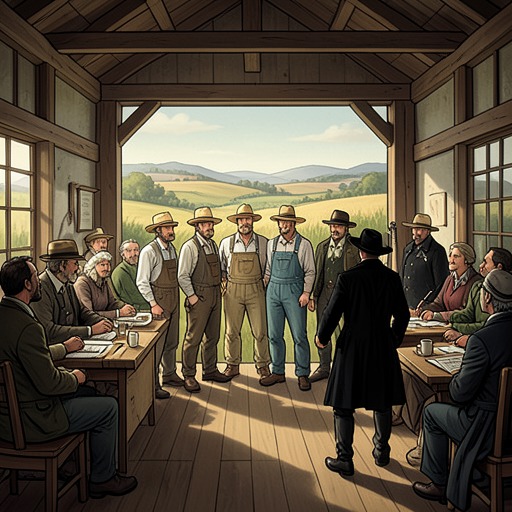
At a meeting in Decima about the collective farm agreement, Sigismondo Campagnoli, sent by the Bologna Chamber of Labor, addressed the crowd. After discussing agricultural questions, he denounced capitalists, priests, and the Carabinieri, then called for revolution. The brigadier responsible for public order intervened, and Pietro Comastri, another speaker from the labor chamber, took the platform. Although Comastri initially promised a more moderate address, he soon returned to the question of revolution. The brigadier pulled him down, but the officer’s small force could not control the large, angry gathering of farmworkers.
The confrontation escalated after a soda siphon struck the wall beside the Carabinieri, sending fragments outward and causing a minor injury to a deputy inspector. The crowd surged toward the officers, who had been lined up against the farmhouse wall. No formal order to fire was needed: the Carabinieri opened fire with pistols and machine guns. Raffaele Barile fired seven shots and Giuseppe Scimmia ten. Eight people were killed and about thirty injured. Although the soldiers were said to have acted in self-defense, almost all those killed had been shot in the back; Campagnoli was killed with a bayonet.
Strike, Self-Defense, and Political Consequences
The deaths transformed a local confrontation into a province-wide crisis. The Bologna Chamber of Labor called a three-day general strike, and for seventy-two hours public and private services stopped as workers withdrew their labor. The massacre thus widened the dispute beyond the farm agreement: the question became who could organize public life and claim the authority to defend it. For farmers, manufacturers, merchants, professionals, public employees, and homeowners, the stoppage was the final pressure that prompted them to organize independently.
On April 8, at a meeting promoted by the Chamber of Commerce, these groups established the Bolognese Association of Social Defense. A delegation carried its case to Prime Minister Francesco Saverio Nitti on April 15, denouncing what it described as the state’s failure to respond to socialist violence and declaring itself ready to act in the name of self-defense. The organization’s emergence did not settle the conflict; it showed how the massacre and strike helped turn fear of labor mobilization into a new political resource for those who felt threatened by it.
Leandro Arpinati stood at the crossing point between these forces. An anarchist railwayman from a poor family, he faced an offer of 100,000 liras from major landowners to defend them against the poor, while also judging that strikes and revolutionary expectations were damaging the country. His dilemma exposed the material bargain taking shape around the crisis: bourgeois supporters, previously reluctant to act, were now offering money and arms to the fascists, while fascist organizers could present themselves as a force capable of confronting labor unrest. The massacre’s aftermath therefore carried consequences beyond its immediate toll: it helped accelerate the organization of opposing camps and sharpened the struggle over who would exercise power in the countryside.
The Agrarian Conflict Beyond Decima
The Decima killings occurred within a dispute that continued well beyond the rally. By 1920, socialist leagues in Emilia controlled much of the agricultural labor system: they regulated hiring, work shifts, threshing, seed supplies, and crop planting. Farmhands, who could expect to work only about 120 days a year, depended on collective rules for employment and wages; league enforcement also meant that those who accepted lower wages or broke the agreements could face boycotts, fines, or pressure to leave. In Ferrara, 81,000 people had registered with the Leagues of Proletarian Unity by mid-May, including agricultural workers, tenants, sharecroppers, and small landowners. The scale of that organization helps explain why the dispute at Decima was more than a local clash: it formed part of a wider contest over who would govern work and rural life.
The conflict remained material as well as political. In August 1920, harvested grain lay unthreshed while landowners and farmworkers struggled over control of production. In Emilia, socialists controlled 223 of 280 municipalities, and the leagues’ reach extended from labor placement to the operation of threshing machines and the supply of seed. Farmworkers’ expectations of secure employment met landowners’ efforts to preserve control over their property; breaches of collective agreements could prompt sanctions, while the failure to find work could mean hardship during the long idle season. The book presents these pressures not as a simple aftermath of Decima, but as the continuing conditions in which the massacre’s political consequences took shape.
By 1921, fascist organizers were also acting on the countryside’s unemployment crisis. Italo Balbo proposed occupying Ferrara with a mass mobilization to compel the government to fund public works for tens of thousands of unemployed farmworkers, while demonstrating that fascists could provide for their followers. The plan used a grievance rooted in seasonal hunger and worklessness to build political authority. In this later development, the struggle over agricultural agreements had become part of a broader contest over who could organize the rural population and claim to defend it.