Fascist Militia
M: Son of the CenturyThe Fascist Militia is the armed organization through which fascism’s local squads acquired a more regular, nationwide structure. In the narrative, its legions and consuls embody a political force that could be mobilized in support of the government but also defy its leader: the militia’s commanders eventually confronted Benito Mussolini with an ultimatum of their own.
Origins in local defense and state cooperation
The militia’s background lies in a period when both revolutionary agitation and the weakness of public authority were presented as reasons for armed intervention. In Milan, Michele Bianchi arranged for the fascists to be made available to the prefect for maintaining public order. A confidential government circular urged fascist collaboration in repressing revolutionary attempts, including by force, on the condition that the formations obey the authorities. The liberal state thus accepted the assistance of a movement that would help lead opposition to a mass strike.
The appeal to defense also drew support from people who believed the state had abandoned them. After deaths in clashes in Ferrara prompted a three-day general strike, farmers, employers, merchants, professionals, public employees, and homeowners organized the Bolognese Association of Social Defense. Its delegation told Prime Minister Francesco Saverio Nitti that the state had failed to confront socialist violence and declared itself ready to act in the interest of self-defense. This was a civilian association, not the Fascist Militia, but the episode shows the political opening in which local fascist defense formations could present themselves as an answer to disorder.
In the countryside, those formations operated amid intense conflict over work and land. In Emilia, socialist organizations controlled 223 of 280 municipalities, while peasant leagues regulated hiring, work schedules, seeds, and crop planting. Against this background, the Ferrara fascists mounted a punitive expedition on January 23, 1921, targeting peasant leagues in six surrounding localities. They assembled a substantial armed force, planned simultaneous attacks, and used trucks supplied by the Agrarian Association. The episode belongs to the history of squadrist operations rather than being identified as a formal militia action; it nevertheless displays the organized, coordinated violence from which the later force took shape.
Methods, recruitment, and mass mobilization
Fascist organization combined local networks with the capacity to assemble people on a much larger scale. In a Ferrara mobilization, fascist leaders organized impoverished farmworkers from scattered rural settlements to travel on foot, by bicycle, in wagons, and on barges. Fifty thousand arrived in the city. The organizers cut telephone lines, requisitioned school buildings for lodging, and closed shops and businesses. The farmworkers were not identified as militia members: the account distinguishes the mobilized crowd from the fascist detachments that controlled it. The episode nonetheless shows how the movement could coordinate people, transport, accommodation, and a show of force across a whole province.
The narrative also emphasizes how the political meaning of this mobilization was framed. Fascist rhetoric promised to turn a population divided by region into Italians, and to make the nation an imperial power. It claimed both the state and the task of directing the masses, while insisting that those masses needed an interpreter and discipline. The vision of a vigorous new man set against the supposed decay of the old political class gave armed organization a place in a broader promise of national renewal. At a commemorative rally in Piazza Belgioioso, Benito Mussolini contrasted the few who had gathered there at his earlier fascist meeting with the legions assembled now, presenting their growth as a people becoming a nation and then a state.
Legions and renewed public presence
By the later political crisis, the militia appeared in public as a formation divided into numbered legions and arranged for display as well as action. After Benito Mussolini ordered provincial prefects to organize rallies in support of the government, they complied. Tullio Tamburini brought the militia’s 92nd Legion, known as the Iron Legion, into central Rome in battle formation. In the Po Valley, Leandro Arpinati, despite being bedridden after a car accident, gathered thousands of squadristi and brought fifty thousand blackshirts from across Emilia into the streets. These were distinct mobilizations: the account identifies the 92nd Legion as a militia unit, while describing Arpinati’s forces as squadristi and blackshirts.
The legion structure also connected armed organization to particular leaders and prior fascist activity. Enzo Galbiati, who led the Monza squad, commanded the militia’s 25th Iron Legion. He had also been assigned to defend Il Popolo d’Italia during the March on Rome. Aldo Tarabella, who joined Galbiati in leading the militia consuls’ delegation to Mussolini, was a decorated Arditi captain and a member of the original Milan fascio. The careers of both men joined the movement’s early local organization to its later militia hierarchy.
The consuls’ challenge to Mussolini
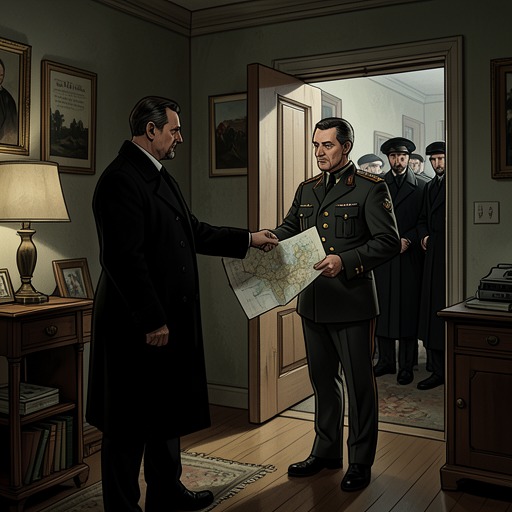
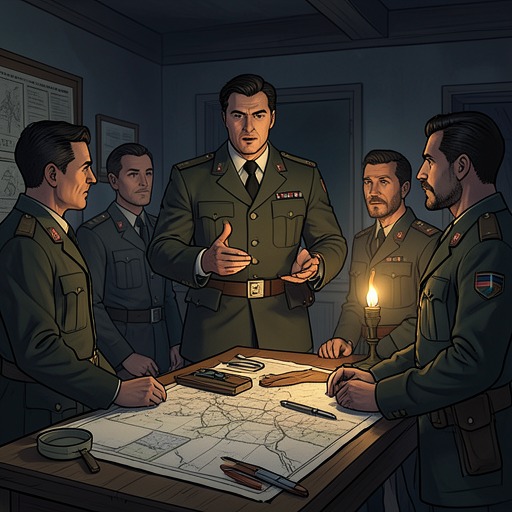
The clearest account of the militia’s political autonomy comes when thirty-three of its consuls arrived in Rome separately and incognito. They lodged at militia barracks belonging to the legion commanded by Mario Candelori, then gathered in small groups in Galleria Colonna, opposite Palazzo Chigi, to avoid notice. Led by Galbiati and Tarabella, they entered the prime minister’s office and formed a semicircle around Mussolini’s desk.
Tarabella told Mussolini that the prisons were full of fascists and that the movement was being put on trial while he refused to assume responsibility for a revolution. The consuls threatened to surrender themselves to the authorities that day, making their demand collective: either the fascists would remain imprisoned together, including Mussolini, or all would be released. Mussolini tried to rebuke Tarabella, but the consul persisted. He argued that Mussolini himself had incited their hostility toward the socialists and could not now expect them to accept pacification. The demand made the militia more than an instrument of government or a disciplined body of followers: its commanders claimed the right to decide whether the revolution should continue.
Significance
The militia’s development reveals an unstable relationship between armed organization and state authority. At one point, government officials invited fascist cooperation against revolutionary threats, provided the formations accepted official command. Later, militia legions paraded in support of Mussolini’s government, while the consuls confronted him over his willingness to restrain the movement. The organization’s presence could therefore reinforce a government under pressure and, at the same time, threaten its leader with action beyond his control.
That tension also qualifies fascism’s language of national unity and discipline. The movement promised to overcome divisions and restore order through a force organized in legions, yet its own armed leaders could turn discipline into leverage against Mussolini. In the narrative, the militia’s institutional form marks not the end of squad violence but its incorporation into a more durable political structure—and the continuing struggle over who would command it.