Ferrara Agrarian Association
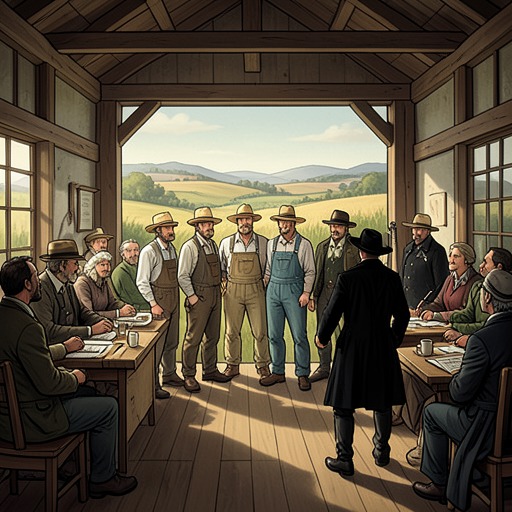
M: Son of the CenturyThe Ferrara Agrarian Association was a landowning interest whose money and practical assistance helped sustain fascist organizing and punitive action in the countryside. In the book’s account, its importance lies not in a detailed formal structure but in the resources it put behind squads opposing the socialist labor leagues: support that linked agrarian power to organized violence and exposed a tension between local patrons’ interests and Benito Mussolini’s public appeal to rural workers.
Position in Ferrara’s rural conflict
The Association’s role took shape amid a struggle over who would control employment, land use, and local authority. In the Po Valley, socialist leagues had built a dense rural network of unions, cooperatives, and other organizations. Ferrara was described as the most thoroughly organized socialist province: by mid-May 1920, the Leagues of Proletarian Unity counted 81,000 members, including agricultural laborers, tenants, sharecroppers, and small landowners. Their influence extended beyond wages to hiring, work schedules, seed supplies, threshing, and crop choices.
The conflict reflected material pressures as well as political loyalties. Farmhands averaged about 120 days of work a year, making employment arrangements and wages central to whether they could survive the idle months. The leagues enforced collective rules and penalized landowners who breached labor agreements. Their reach narrowed the room for individual bargaining and placed proprietors under pressure; the narrative presents this growth as the context in which agrarian interests sought a counterweight. It does not describe the Association as the sole landowner organization or assign it control over every response.
Patronage and resources for fascist organizing
The Association’s support was especially visible in the growth of fascist sections after the December 1920 clashes at the Estense Castle. An inspector sent by Benito Mussolini reported that many new provincial sections had little political or ideological content and existed chiefly to oppose the socialists. Agrarians supplied material support; prominent figures joined as supporting members and registered their children as squad members. From December 20, they had contributed 20,000 lire to the fascist funds. The account thus connects recruitment and organizational expansion to local money and social networks, rather than presenting the movement’s growth as a purely spontaneous expression of belief.
The Association also supplied trucks for the expedition that left Ferrara on January 23, 1921. The vehicles enabled squads to divide into groups and strike several rural targets at once. In the account, this logistical contribution is a concrete form of patronage: the Association did not merely express opposition to socialist influence but helped provide the means for a coordinated operation. Its backing strengthened the squads’ ability to act beyond the city and carry their campaign into the villages.
The January expedition and local cooperation
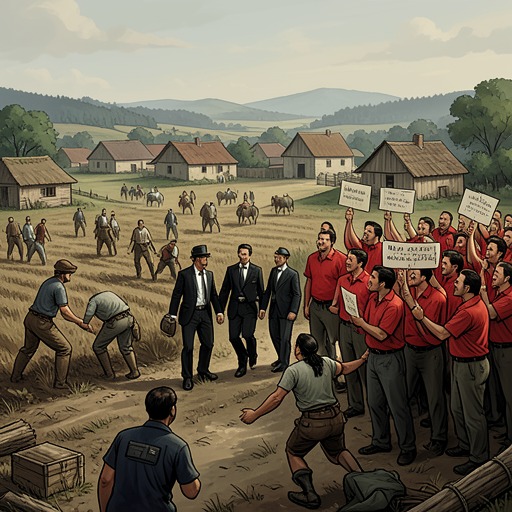
The expedition was directed against peasant league headquarters in several settlements, including San Martino, Aguscello, Cona, Fossanova San Biagio, Denore, and Fossanova San Marco. Its organizers planned for simultaneous action, surprise, and armed resistance. At Aguscello, local agrarians welcomed the arriving squad and escorted its members through the town. The league’s premises were entered and damaged; elsewhere, the reception was more resistant, and the fighting left casualties. These events show how support operated at more than one level: the Association furnished transport, while local agrarians could guide the squads through particular communities.
This cooperation should not be confused with the Association itself directing every action. The narrative identifies the squads as the armed actors and describes agrarian assistance as enabling and accompanying their operations. Leandro Arpinati’s position makes the political bargain behind that alliance especially visible. He came from a poor background and had to weigh the offer of substantial funds from major landowners against his own origins and his belief that revolutionary conflict was damaging Italy. The money was presented as necessary to the struggle, but accepting it also risked making fascism dependent on the proprietors whose interests it claimed not simply to serve.
Land reform, state policy, and the limits of the alliance
The dependence on agrarian resources sat uneasily beside Benito Mussolini’s attempt to prevent rural fascism from appearing subordinate to large landowners. He promoted a policy of transferring uncultivated land in small plots to settlers who would farm it themselves, with a fascist land office administering the transactions. The slogan of land to those who work it offered a distinct appeal to rural constituencies, while the Association’s funding and assistance tied local fascist action to established agrarian interests. The evidence presents this as a political tension, not as proof that the proposed land policy was implemented or that the Association accepted it.
The state’s approach added another complication. After the January expedition, Giovanni Giolitti ordered prefects to revoke arms licenses in the provinces of Bologna, Modena, and Ferrara. The prefect of Ferrara reported difficulties over agrarian objections: landowners argued that residents in rural areas, far from towns and Carabinieri stations, would be left without protection. The dispute illustrates how agrarian claims to security could collide with a central government’s attempt to restrict private possession of weapons, even as official policy had elsewhere opened a route for fascist assistance in maintaining public order.
Significance
The Ferrara Agrarian Association matters as a resource-bearing ally in the transformation of local class conflict into organized fascist power. Its contributions—funding, trucks, and the participation of local agrarians—helped convert opposition to the labor leagues into practical capacity for coordinated action. At the same time, the Association’s role reveals the fragility of the alliance: the squads needed landowner support, while fascist leaders sought a broader rural following and promoted a land program that could challenge large proprietors. The resulting movement was therefore shaped both by ideological appeals and by the material relationships that financed and enabled it.