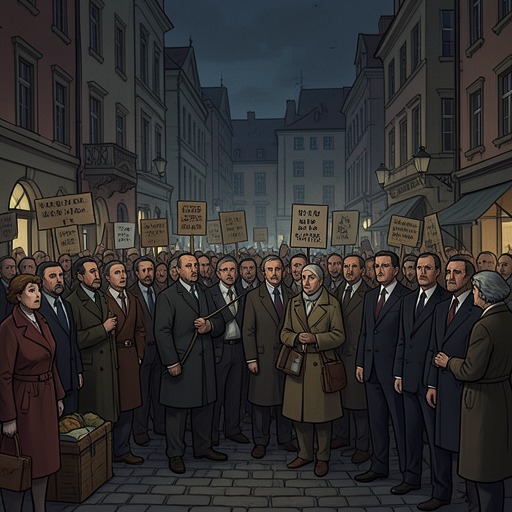
Giacomo Matteotti
M: Son of the CenturyGiacomo Matteotti was a socialist deputy whose break with his wealthy landowning family’s class interests shaped both his politics and his public reputation. A measured reformist rather than a maximalist revolutionary, he pursued the gradual emancipation of the poor while insisting on exacting parliamentary scrutiny. As secretary of the Unitary Socialist Party, he recorded Fascist violence in detail and continued to speak when colleagues retreated. His abduction and murder transformed that record of opposition into a national political crisis, while the discovery of his body closed one uncertainty without resolving the questions of responsibility and power that his case had raised.
Identity and Background
Matteotti came from a prosperous family in the Polesine. His grandfather Matteo had been an iron and copper merchant; his father, Girolamo, was a large landowner suspected of lending money at exorbitant interest. The family’s prosperity stood in sharp contrast to the poverty of the surrounding peasants, and the narrative presents that disparity as formative: from an early age, Giacomo took up the cause of people whose hardship was bound up with the landed order from which he had come.
A childhood recollection gives that divide a personal shape. In memory, his father hands the sickly boy binoculars on the balcony of the manor house so that he can see the misery behind the family’s wealth. Matteotti is no longer certain whether the story of a disinterred cow is a true memory, nor whether the animal died of anthrax. What remains certain to him is the poverty of the land. The uncertain detail matters less than the ethical direction of the memory: the boy is made to look at conditions that could otherwise remain outside the view of the household that benefits from them.
His political crossing was conspicuous to both sides. Opponents called him a landowner who had crossed over to the proletarians, a class renegade and a socialist in furs; his father accused him of deserting the place assigned to him by fate. The insults mark the contradiction that followed him: his background gave him access to the world he opposed, but also made his allegiance to the poor appear, to his class, as betrayal. Elected to Parliament in December 1919, he was revered by peasants in his region and loathed by members of his own class.
A Reformist Among the Poor
Matteotti did not share the maximalists’ expectation of an immediate revolution. He believed that the oppressed would be liberated through a long, difficult process requiring further sacrifice and struggle. He also rejected the idea that the coming proletarian revolution would be a simple or blissful triumph. In Parliament, this outlook took the form of moderation and close attention to argument, not accommodation with injustice. His gradualism was a strategy for sustained change, not a retreat from conflict.
The rural crisis that surrounded his politics was tangible. In the summer of 1920, harvested grain lay unthreshed and rotting in the heat of the Po Valley, while unmilked cows cried across the plain. The account describes peasants’ conflict with their employers and a labor system in which seasonal workers were expected to observe common rules. Those who accepted lower wages could be treated as strikebreakers; communities might deny them bread or avoid them, while landowners who violated compulsory labor agreements faced fines. The social order was not merely debated in Parliament: it governed work, food, and the ability of families to remain in their communities.
Against this background, Matteotti urged comrades to sell grain and buy a revolver. The stark appeal joined an immediate economic demand to the threat of political violence, but it did not make him a maximalist. His commitment remained a protracted struggle for the oppressed, even as the surrounding conflict made peaceful remedies increasingly uncertain. In Bologna, competing labor organizations and radical agitation deepened the sense of social breakdown; elsewhere, the threat of hunger and the pressure of organized labor gave class conflict its daily stakes. The evidence places Matteotti within that crisis without reducing his politics to a single slogan or episode.
Party Rupture and Political Isolation
The Italian Socialist Party’s congress in Rome ended in a split that Matteotti had regarded as disastrous but increasingly unavoidable. A proposal by party secretary Giacinto Menotti Serrati to expel the reformists passed by only a handful of votes. Matteotti and Filippo Turati were among those expelled, alongside other reformist leaders. The congress then resolved to join the Communist International and send a delegation to Moscow, while the expelled group established a separate party of the Italian left, the Unitary Socialist Party.
Matteotti became the new party’s secretary. He and his fellow reformists were no longer bound to the maximalists’ repeated announcements of a revolution that never arrived, but separation did not provide an easy program or a secure path forward. In a moment of discouragement, he told a correspondent that he thought he would soon resign as a deputy because action seemed useless and wasted. He also questioned the failure of his own party to do what it ought to do. The admission reveals not a change of allegiance but the pressure of working within a divided left as Fascist power expanded.
That isolation deepened as some socialists, especially union members, considered collaboration with the Fascists in hope of gaining benefits for workers. Others were accustomed to parliamentary compromise and misread the March on Rome as the end of conflict rather than the beginning of dictatorship. Matteotti warned that the danger had already arrived while his colleagues continued to expect it in the future. Even Turati urged him to abandon his documentation project, accusing him of hostility toward more moderate colleagues. Matteotti, however, believed that retreat would leave the violence unrecorded and the political shift unnamed.
Parliament, Documentation, and Opposition
Matteotti’s resistance was expressed through both public speech and painstaking record-keeping. When many scheduled speakers gave up their turns after the Chamber had granted the government a vote of confidence, he took the floor in the debate on extending the provisional budget for the 1922–1923 fiscal year. He understood the budget request as part of a dictatorial threat against Parliament, yet chose to address the detailed figures: tax equalization, floating debt, and forecasts for the railway deficit.
That attention to minutiae was political in itself. Matteotti treated errors and misrepresentations in the economic ministries’ figures as signs by which the condition of democratic government could be diagnosed. Instead of answering intimidation only with declarations, he contested individual calculations and forced the government’s claims into the open. His parliamentary method matched his longer reformist practice: patient, specific scrutiny directed against a system whose larger violence could otherwise be passed off as ordinary administration.
For months, he had also been compiling an account of Fascist violence intended for publication as A Year of Fascist Domination. His tally included 42 killings, 1,112 clubbings, beatings, and injuries, 184 destructions of buildings and homes, and 24 newspaper fires. Each entry was tied to a place, a name, and a date. The catalogue made dispersed provincial violence legible as a pattern, rather than allowing each attack to disappear as an isolated incident. When the book appeared, its exactness—down to each listed act—stood against the government’s presentation of itself as the nation’s paternal guardian.
His public challenge reached its most direct form when he objected to confirmation of the governing majority’s election list. He argued that the list, said to have received more than four million votes, had not obtained them freely. He further insisted that those who held power should observe the law and that the Italian people were capable of correcting their own errors if given liberty. In his argument, coercion did not demonstrate that the people were unfit to govern themselves; it was a means of pushing them backward after they had begun to educate and raise themselves. The speech made explicit the stakes already implicit in his budget scrutiny and his record of violence: whether government rested on consent and law or on force.
Family, Murder, and Legacy
Matteotti’s political life had long kept him apart from his loved ones. He was accustomed to hotel rooms, temporary shelters, and a semi-clandestine existence without a permanent home. In early October, as danger gathered around Rome, he looked for a house in the capital, apparently no longer willing to live at a distance from his wife and children. His letters to his wife preserve the private strain of those days alongside the public record of a deputy who refused to retreat. The search for a home gives his political vulnerability a domestic dimension: the man who insisted on confronting danger was also trying to bring his family closer.
His captors abducted and killed him. The account records that he resisted during the attack and continued to struggle as he was carried away, but the circumstances of his murder should not be mistaken for the measure of his political life. In its aftermath, rumors multiplied about what had happened to his body, with contradictory versions offering no reliable resolution. The uncertainty itself became part of the crisis, as the disappearance encouraged speculation and the authorities faced demands for an answer. A further possible motive is identified beyond politics alone: silencing Matteotti because he was determined to expose a scandal involving financial groups and their dealings with politicians. The account presents this as a motive to consider, not as a matter settled by the rumors.
When the body was eventually found, it was in a shallow, too-short pit, marked by a coarse metal file used to dig the grave. Its return put an end to the uncertainty over whether Matteotti was dead, but it did not erase the political questions raised by his disappearance. In Parliament, the opposition’s absence left the chamber nearly empty even as the Fascist deputies remained at their benches; Velia Matteotti’s presence in the gallery made the vacancy impossible to read as a routine division. The episode set absence, grief, and the machinery of government in the same frame.
Matteotti’s significance lies in the connection he made between the lives of the poor, the record of political violence, and the formal procedures of parliamentary government. His background exposed the class boundary he crossed; his reformism distinguished him from revolutionaries who promised an immediate transformation; and his method insisted that each act of violence and each distorted figure be named. His murder silenced the deputy, but the detailed record he left behind preserved the evidence that the attempt to isolate him had sought to suppress.