Leandro Arpinati
M: Son of the CenturyIdentity and Early Allegiance
Arpinati came from Civitella di Romagna, a remote Apennine village in the narrow valley of the Bidente. He was the last of six brothers and the son of Sante, a poor innkeeper. The book describes him as a young railwayman and former anarchist: tall and stocky, generous and loyal, with a natural authority over armed men. His later political position did not erase this background. It made his alliance with agrarians and industrialists a persistent contradiction in his story.
He and Mussolini had known each other since Arpinati was an outspoken teenager and Mussolini led Romagna’s socialists. In 1910, Arpinati and his black-clad companions waited for a confrontation at a meeting in Civitella di Romagna, where Mussolini was speaking at the opening of a covered market named for Andrea Costa. Mussolini’s brief appeal to follow Costa’s example did not produce a fight; after he stepped down, he and the young anarchists became friends. Years later, Arpinati and Mussolini recalled the episode together on a car journey. The shared past helps explain the force of their personal bond, even as their politics changed.
From a Fragile Fascio to a Local Leader
In April 1920, Arpinati was left to manage a collapsing Fascist organization in Bologna. The republicans who had helped found the local group departed one by one; only six Fascists remained, without enough money to rent an office. Arpinati received his mail at the trattoria on Via Marsala where he ate lunch. Umberto Pasella promised funds for six months’ rent, but they had not arrived. Mussolini nevertheless insisted that Arpinati take charge of the group and organize across eastern Emilia. The proposed method was to create civic-defense militias in response to the strikes.
The pressure around him was real, but so was the class conflict embedded in the proposed alliance. Socialist organizations and leagues held extensive influence in the countryside, while disputes over agricultural agreements and working conditions sharply constrained landowners. After a general strike in Bologna province, merchants, farmers, manufacturers, professionals, public employees, and homeowners organized the Bolognese Association of Social Defense. Large landowners offered Arpinati 100,000 lire to defend them against the poor. He recognized that the bourgeoisie had acted only when its safety and property were threatened, yet argued in a letter to Milan that the money and arms were necessary to the struggle. He presented independent defense as protection for families, homes, work, and daily life. The language of civic defense thus accompanied an alliance that placed a former anarchist in the service of agrarian interests.
Escalation in Bologna
After the summer of 1920, Arpinati returned to Bologna and entered the conflict directly. The new followers around him included demobilized officers, struggling civil servants, shopkeepers, tenant farmers, contractors, students, unemployed graduates, former revolutionary unionists, and young men who resented having missed the war. Arpinati himself had not served in it. Nonetheless, the crowd followed him into confrontations. He was drawn to fighting, and the movement’s recruits found in him a leader able to turn their resentment into organized street action.
The political struggle shifted from defensive language to offensive tactics. Arpinati’s patrols walked Bologna’s arcades singing Giovinezza; initially they returned without encountering opponents. The ten-month conflict over agricultural agreements ended in defeat for the agrarians and victory for the peasants, making a direct challenge to socialist power a dangerous undertaking. On September 20, Arpinati’s followers clashed with Socialists during a demonstration on Via Indipendenza. Membership in the Fascio surged. On October 10, the organization was re-established on Via Marsala, and Mussolini, acting through Cesare Rossi, gave Arpinati full authority to continue fighting without restraint. A deadly attack on a barracks by anarchists followed days later; Fascists then led the funeral procession, turning the deaths into a political opportunity.
Arpinati made symbols part of the escalation. He personally led an attempt to place the tricolor on the municipal building; after that effort was repelled, Fascists fired at a Socialist newsstand beside the town hall. By early November, the local Fascio had more than a thousand members, and Arpinati had become the spokesman for their grievances. On the second anniversary of Italy’s victory in the Great War, he entered Palazzo d’Accursio and displayed the flag. He and uniformed officers then climbed the tower of Palazzo del Podestà and rang its great bell. The procession that followed filled the streets with flags and the sound of bells, making civic space a stage for competing claims to represent the nation.
Palazzo d’Accursio and the Limits of Certainty
In November, Arpinati’s organization turned the prospect of confrontation into a public ultimatum. He instructed women and children to remain at home and asked them to display the tricolor from their windows, while insisting that the streets should contain only Fascists and Bolsheviks. Because the police chief refused permission to print the notice, Arpinati reproduced the posters at home with a cyclostyle and his men distributed them throughout Bologna. The threat was not confined to one city: the book places these declarations within a widening front of political hostility across the Po Valley.
When violence erupted at Palazzo d’Accursio, reports about Arpinati’s conduct diverged. Some claimed that he had urged the Fascists to attack while holding on to the statue of Neptune; others said they had seen him rush into the courtyard with a gun. The narrative distinguishes these rumors and legends from what it treats as certain: ten people died and fifty were wounded. In the aftermath, the Socialist Party’s credibility as an organized military force and its public reputation were gravely damaged. The elected municipal council resigned amid arrests and scandal, and a prefect-appointed commissioner took over the city. Arpinati’s precise actions at the scene remain unconfirmed, but the political result was unmistakable: Bologna entered a new period of Fascist ascendancy.
Power, Faction, and Public Acclaim
Arpinati’s dominance did not mean that he controlled every internal dispute. As secretary, he could not determine the votes at a January 3 assembly where the Fascio’s left wing, supported by Fiume legionnaires, accused the right of serving the old political order. Dino Grandi mediated the dispute and took over as editor of L’Assalto. Arpinati kept out of the argument and failed to influence the vote. In street confrontations, however, other men followed him, including Grandi. The contrast reveals the source and limits of his authority: he was an idol of the squads and a leader in action, but not an automatic master of factional debate.
His followers’ weekend expeditions carried that authority into the towns around Bologna. They attacked Socialist meeting places, union headquarters, and municipal buildings, ended boycotts, beat opponents, damaged property, and seized enemy flags for public burning in Piazza Maggiore. In some places, including Paderno, threats alone were enough to make local league leaders hand over their flags. A woman worker was mistakenly shot during an operation at Pieve di Cento, though Arpinati was not present there. His own fifth arrest, over alleged involvement in arranging trucks for that raid, prompted protests and expressions of solidarity. Released at night on March 17, he returned to Bologna to a reception reported as a tide of people, with a procession of approximately three thousand escorting him to Piazza Nettuno. Imprisonment and release had become part of the public drama of his leadership.
Loyalty During the Matteotti Crisis
In June 1924, while recovering in bed from a car accident, Arpinati mobilized support for Mussolini’s government. By June 19 he had assembled thousands of squadristi; three days later, fifty thousand Blackshirts from across Emilia marched in the streets. The scale of the demonstration made his continuing influence plain even when he could not lead in person. As accusations over Matteotti’s disappearance intensified and those implicated in the crime were arrested or surrendered, Arpinati remained among Mussolini’s most loyal allies.
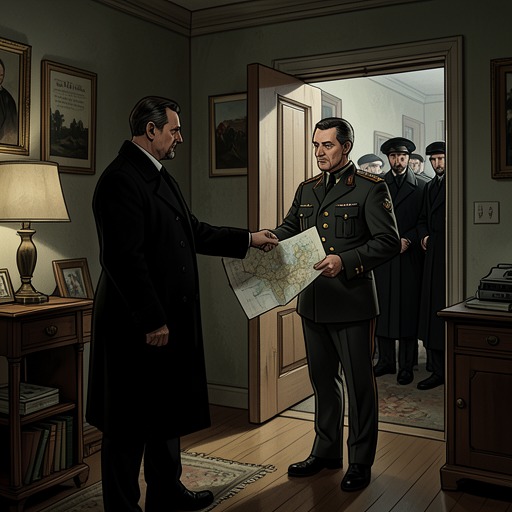
At the end of July, recovered enough to travel, he went to Rome with four comrades and entered Palazzo Chigi without waiting to be announced. Mussolini appeared haggard and said that governing with a dead man underfoot had become intolerable. Arpinati asked him plainly whether he had had Matteotti killed. Mussolini denied it. Arpinati responded that, if Mussolini had not ordered the crime, he should punish those responsible and stop thinking about it. The exchange shows both candor and allegiance: Arpinati did not avoid the central accusation, but his advice was directed toward preserving Mussolini’s position and ending the political paralysis.
Mussolini then confided that the silent, hostile crowds watching him leave each evening and the thought of Matteotti’s wife seeking her husband had become a nightmare. The account notes that the claim about her repeated visits was false: after coming once on June 13, Velia Matteotti did not return. Arpinati nevertheless saw Mussolini looking around as if she might reappear. Before returning to Emilia, he ordered his four squadristi to join the hostile crowd and applaud when Mussolini appeared at the door. The leader, who had gone weeks without applause, smiled faintly. The gesture briefly staged a return of popular warmth, but it could not make the scandal disappear. Arpinati’s career in these episodes ends not with a break from Mussolini but with an act of personal support, set against the unresolved public presence of Matteotti’s death.