Livorno Split
M: Son of the CenturyThe Livorno Split was the January 1921 rupture of the Italian Socialist Party, when its communist faction left the party congress and founded the Italian Communist Party. The division made a dispute over revolutionary strategy into an organizational break: Moscow demanded the expulsion of reformists, while the majority refused. The congress unfolded amid a growing political emergency, but its delegates spent two days debating party unity and doctrine even as fascist squads were attacking socialists elsewhere in Italy.
Background and stakes
The congress opened in Livorno on January 15, 1921, in the Teatro Goldoni. Interim president Giovanni Bacci began with a remembrance of the 1919 Spartacist insurrection. Francesco Frola then read an address from the Communist International’s Executive Committee, a severe attack on reformist socialists and on those unwilling to expel them. In the book’s account, that intervention marks the start of the Italian proletariat’s tragedy: the demand for unity was immediately entangled with the conditions imposed for belonging to the international communist movement.
Those conditions had been set out at the Communist International’s previous July congress in 21 theses. To remain in the International, Italian socialists were required to change their party’s name and reject as counterrevolutionaries comrades who believed in socialism but not revolution. The requirement placed Giacinto Menotti Serrati’s maximalist majority in a difficult position. It continued to use revolutionary language, but, after the failed factory occupations, many in that majority no longer believed a revolution was imminent. Nicola Bombacci and his supporters, by contrast, remained committed to it.
The party’s strength made the impending division more than a dispute among a small circle of theorists. In the November elections, socialists won majorities in 2,162 municipalities. The party had 156 parliamentarians and 216,000 members organized in 4,300 sections, a structure that had tripled in two years; Avanti! circulated more than 300,000 copies daily. The contrast was stark: outside the congress, the socialist movement remained extensive, while inside the theater, factional discord was already threatening to split it.
The congress and the walkout
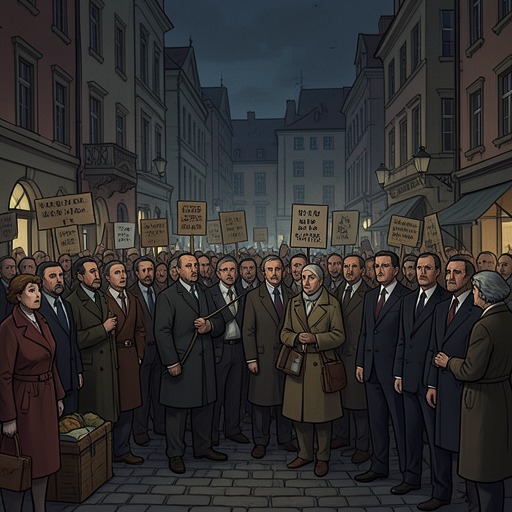
The seating arrangement gave the conflict a visible geography. Delegates of the communist fraction, representing 58,000 electors, occupied the upper left tiers. The centrist delegates, representing 100,000, sat in the orchestra, while the reformists, with 15,000 votes, occupied the right tiers. The arrangement did not settle the question before debate began, but it placed the competing constituencies in view of one another as the congress considered whether the party should meet Moscow’s conditions.
On January 16, Christo Kabakciev, the Bulgarian Communist International delegate, delivered a final warning: the situation was revolutionary, and siding with the reformists would obstruct it. He declared that Moscow would expel those who supported the maximalists’ motion to preserve party unity. Bombacci and the communists applauded. Other delegates answered with sarcastic cries rejecting the authority of outside emissaries. The exchange exposed the essential dilemma. For the communists, refusing Moscow’s demand risked abandoning the revolution; for their opponents, accepting it meant allowing an international directive to dictate whom the Italian party could retain.
The break came when Amadeo Bordiga went to the rostrum and instructed the communist delegates to leave. They walked out singing the Internationale and assembled at the Teatro San Marco, a few hundred yards away, where they founded the Italian Communist Party. The setting made the new party’s beginning markedly different from the formal congress they had left. The theater had uneven flooring, no seats or benches, tattered curtains, and a roof torn open to the rain. After certifying their party cards with the hammer and sickle, the founders remained standing for hours beneath the leaking roof.
Ferrara and the competing emergencies
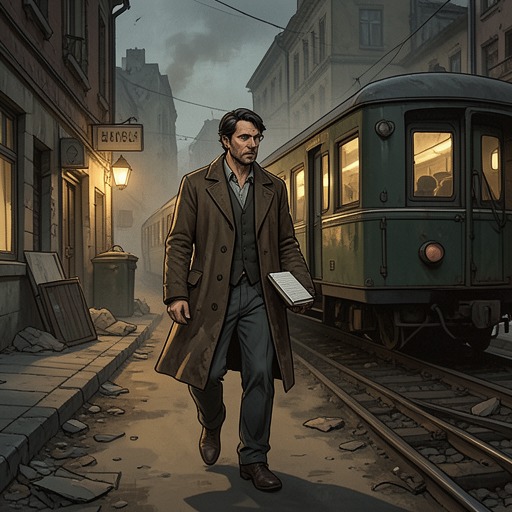
The congress’s argument over revolutionary unity took place alongside a different, immediate conflict. Giacomo Matteotti left Livorno before daybreak on a regional train to Florence, continuing by local and regional trains through Bologna to Ferrara. He had to forgo speaking at the congress because he was going to assume leadership of Ferrara’s Chamber of Labor. Its secretary and the mayor had been arrested following the December 20 incidents. His journey turned the congress’s abstract debate over political strategy into a contrast with the practical demands facing socialists outside the hall.
Matteotti arrived in Ferrara at noon and was taken to a planning meeting. Within an hour, disturbances and a crowd of demonstrators had gathered. He refused the protection of a car and walked toward the Chamber of Labor with a police patrol around him. The account describes him being attacked on the way and a fascist club striking him through the cordon. The following day, socialist baker Ettore Borghetti was killed by a gunshot as he left a meeting at the Chamber. Meanwhile, Matteotti asked the prefect to remove his police guard, insisting that his club-bearing comrades could protect him. The episode underscores what the congress’s speeches largely did not address: fascist action was already shaping the conditions in which socialists had to organize.
Aftermath and political significance
The split did not resolve the question of how socialists should resist fascism. By the time Nicola Bombacci went to Moscow with an Italian Communist Party delegation in October, that party itself had divided into two wings. Angelo Tasca led a minority prepared to meet with socialists if they expelled reformists; Bordiga’s majority opposed a united front. The Bolsheviks favored a merger to create a stronger proletarian bloc against fascism, but Bordiga maintained that democracy and fascism were effectively indistinguishable. Leon Trotsky emphasized the distinctiveness of Italian fascism, including its mobilization of the petite bourgeoisie against the proletariat, but Bordiga remained unmoved by the distinction.
Bombacci continued to support a united front and opposed the Bordiga faction’s doctrinal refusal to cooperate with socialists. At the Rome congress in February, he argued against that political purism. His position brought ostracism and mistrust from his own comrades, followed by his removal from the party’s central committee. He wrote to Grigori Zinoviev to lament what he called his political assassination. The consequence of Livorno was therefore not only the separation of communist and socialist organizations; the argument over whether to preserve unity by compromise continued within the new communist party.
The book later returns to Livorno as the point at which the tragedy of the Italian proletariat began. That judgment rests on the contrast between formidable organizational strength and political fragmentation, and between debate over revolutionary doctrine and violence already unfolding in Ferrara. The congress’s walkout created a new party, but it also left the socialist movement divided at a moment when fascism was expanding its capacity for organized action. The split is presented not as an isolated procedural disagreement, but as a decisive fracture whose consequences persisted in the struggle to form a common response.