Nicola Bombacci
M: Son of the CenturyNicola Bombacci’s political life was defined by a persistent effort to make revolution real in Italy—and by the widening gap between that ambition and the forces he hoped would fulfill it. A former seminarian turned teacher, trade unionist, and socialist leader, he became known as the Christ of the Workers and the Lenin of Romagna. Crowds received him with affection, but his faith in an imminent Italian revolution survived repeated setbacks: hesitation among socialist leaders, indifference from Soviet officials, division among Italian communists, and finally repudiation by his own party.
Identity and Formation
Born into a humble farming family in Civitella di Romagna, Bombacci followed an unconventional route into politics. He entered a seminary but did not become a priest; health reasons made him unfit for military service. He became an elementary-school teacher, then a trade unionist who helped organize farm laborers, industrial workers, and women employed in cotton mills. His movement from religious training to socialist leadership left a distinctive imprint on his public image: followers saw a gentle, self-denying champion of the poor, while his revolutionary language gave that image a harder political edge.
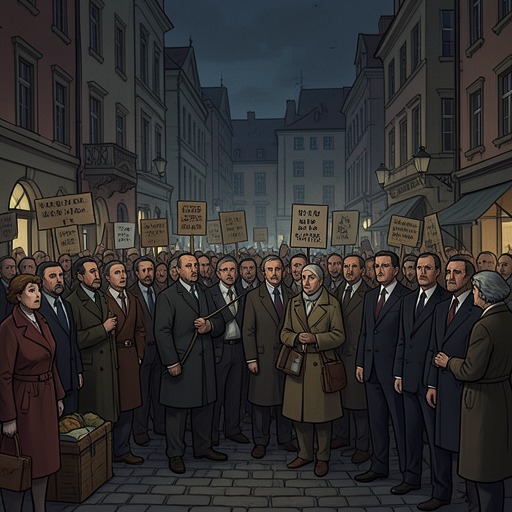
At a rally in Milan, the crowd’s attention centered on Bombacci even after Claudio Treves and Giacinto Menotti Serrati had spoken. The account presents him as physically slight, with a raw-linen black cassock, dark hair, a thick brown beard, and blue eyes. His appearance helped generate the devotional quality of his reputation. The workers’ affection was not merely a response to his political position: the crowd’s silence around him is described as protective and almost familial. His religiously inflected manner and his advocacy of class revolution thus reinforced one another, making the Christ of the Workers more than a decorative nickname.
His political formation was also rooted in a long friendship with Benito Mussolini. As young teachers in neighboring villages in Romagna, they shared both intellectual work and material hardship. They first met at a teachers’ conference in Santa Vittoria, nearly two decades before the later political crises that placed them on opposing sides. Mussolini regarded Bombacci’s hopes of transplanting the Russian Revolution to Italy as misguided, and mocked his attachment to Russian models. Yet the account also stresses personal affection: he felt sorry for Bombacci and believed him incapable of harming anyone. The contrast between that old intimacy and their later political enmity recurs when Bombacci addresses a government led by his former friend.
Revolutionary Leadership and Deferred Action
Bombacci’s rise reflected the strength of Italian socialism after the war. In the fifteen months described in the account, party membership increased tenfold and exceeded 200,000. He wanted this strength to become active and sought alliances broad enough to advance it, even considering cooperation with Gabriele D’Annunzio. Socialist leaders rejected that prospect amid reservations and objections. The episode captures a recurring difficulty in Bombacci’s politics: he pressed for a practical coalition in the name of revolutionary possibility, while ideological caution and internal disagreement narrowed the space for action.
The gap between expectation and outcome was especially visible at the July 1919 general strike rally in Milan. Bombacci spoke to workers who had been left without the support of French and British unions, whose leaders had withdrawn from the planned action. The gathering remained more festive than insurgent; mounted troops patrolled the surrounding streets without encountering an opposing force. Bombacci nevertheless began by presenting the Russian Revolution as an accomplished fact and called for Russia’s example to be realized in Italy. The scene gives his rhetoric its characteristic combination of simplicity and scale: a plain declaration of revolutionary success opened onto a demand for transformation at home.
In early November, his position as secretary of the Socialist Party’s maximalist leadership placed him before a vast gathering in Bologna. The party congress had adopted a platform inspired by the Bolshevik Revolution, revised its program, and appointed Bombacci secretary. The new program affirmed the prospect of proletarian rule, while the movement adopted the hammer and sickle surrounded by ears of corn. Yet even before a crowd estimated at one hundred thousand or more, Bombacci hesitated to pronounce the word revolution. His eventual challenge was framed as a personal wager: he predicted that within a month the king would be forced to leave and that Italy would have undergone a revolution. The confidence of that forecast stood in sharp contrast to the repeated postponement of the decisive action socialist leaders had debated.
The account links his urgency to the victims of political violence and to his belief that the postwar peace remained only a truce. The Socialist congress had declared violence necessary to defend workers, take power, and secure revolutionary gains; the question was not absent from party debate, but leaders differed over when action could be justified. Filippo Turati warned that the fascists were better armed, while other leaders demanded further preparation or certainty. Bombacci’s public certainty did not resolve these divisions. Instead, his prominence made their consequences more visible: he could announce an approaching revolution before enormous crowds, but could not make a divided movement act as one.
Copenhagen and the Limits of Moscow
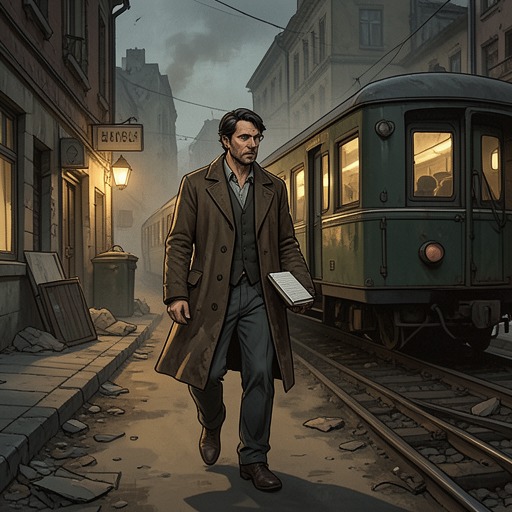
Bombacci’s international ambitions became concrete in 1920, when he traveled to Copenhagen. At forty, despite imagining a worldwide fraternity of workers, he had never previously left Italy. His visit brought him into contact with Soviet representatives, but not the response he expected. On April 7, Leonid Krasin told the Italian delegation that his mandate was to obtain official recognition of the Soviet government, not to promote an Italian proletarian revolution. Bombacci then placed his hopes in Maksim Litvinov. During their meeting, he argued passionately for the prospect of revolution in Italy; Litvinov instead judged the revolutionary faction weak and treated the prospect of an Italian socialist government as short-lived. His analysis emphasized the Soviet need to restore political and commercial relations with capitalist states.
The rebuff exposed a basic imbalance in Bombacci’s internationalism. He looked to Moscow as the source of revolutionary understanding, but Soviet priorities did not match his expectation that Russian leaders would help bring revolution to Italy. On returning, he faced mockery from both political opponents and socialist colleagues. Benito Mussolini taunted him for stopping in Copenhagen rather than continuing to Moscow. Bombacci, meanwhile, spoke at a socialist assembly in Milan with evident bitterness about his disappointment, before renewing his attack on parliamentary caution. He argued that revolution should proceed independently of parliament and that socialists could operate within parliamentary institutions without granting them political allegiance. The image he invoked was of priests living on earth while aspiring to heaven: participation in parliament need not mean faith in it.
His argument did not overcome the distance between revolutionary language and political organization. The account describes the councils he hoped to create as no more than a shadow of a shadow, and presents his attachment to revolutionary form as stronger than his grasp of the economic and social relations that would make it concrete. This judgment does not erase his sincerity or his standing among workers; it identifies the structural weakness of his project. Bombacci believed that proclamation, organization, and historical expectation could bring the revolution nearer, while the institutions and alliances needed to sustain it remained uncertain.
Isolation Within the Communist Movement
By 1922, Bombacci’s commitment to Moscow had placed him at odds with influential Italian communists. After the split from the Socialist Party in Livorno in January 1921, the Italian Communist Party itself divided over cooperation with socialists. The majority under Amadeo Bordiga opposed a united front; the Russian Bolsheviks urged a broader bloc capable of resisting fascism. Bombacci sided with Moscow and argued for unity. At the party congress in Rome in February, he openly challenged the purism of Bordiga’s faction, which sought to avoid political contamination through cooperation with socialists.
The outcome was isolation inside the party he had helped lead. His position brought mistrust and ostracism, and he was eventually expelled from the central committee. In a letter to Grigori Zinoviev, he described the experience as a political assassination. The language of martyrdom echoed the public identity that had once made him beloved, but this time it marked exclusion rather than popular devotion. His trajectory had turned sharply: the man who had stood before immense socialist crowds as their tribune now lacked secure standing within his own organization.
In Moscow late in October 1922, he attended the fourth congress of the Communist International as part of an Italian delegation weakened by defeat, party division, and internal fracture. The Soviet movement appeared ascendant, while its Western counterparts were retreating. Bombacci understood that the Italian delegation’s place was subordinate to the Russian leadership. He remained aligned with Moscow, even while recognizing the grief and terror attached to following the Russian Revolution from the position of the defeated. In the following year, he argued in parliament for Italy to reopen trade with Russia and recognize its government. Support for this campaign came even from industrial magnates such as Ettore Conti, an alliance that underscored how practical commercial interests could cross ideological boundaries.
Parliamentary Appeal and Political Defeat
Bombacci’s parliamentary position brought his personal and political histories into the same chamber. In the debate over trade with Soviet Russia, he was known both as Moscow’s trusted Italian intermediary and as Benito Mussolini’s old friend. Rumors claimed that Mussolini had ordered Bombacci spared during a recent wave of arrests of communist leaders, but the account identifies this as hearsay rather than established fact. The more certain connection was their shared youth as teachers in Romagna—a memory that remained present even after political allegiance had made them adversaries.
When Bombacci spoke, he sought to limit his case to economic relations between Italy and Russia. Mussolini interrupted with a sardonic acknowledgment that previous governments had done nothing; other deputies turned the exchange into partisan comedy. Bombacci continued to argue that Italian industrialists should be welcomed in Russia and appealed directly to Mussolini to set political prejudice aside. He proposed that the two revolutions might still lead to an alliance between their peoples. The appeal faltered under laughter from the right and center and disorder from the left. Its underlying contradiction was plain: Bombacci addressed an increasingly consolidated fascist government as if his former friend’s revolutionary language could still provide common ground.
The next day, the Communist newspaper Avanti! denounced the speech for equating the Russian Revolution with fascism, and Antonio Gramsci criticized Bombacci’s cordiality toward Mussolini. On December 5, the party executive committee called on him to resign as a deputy. Some members of the parliamentary group defended him, and working-class supporters who had revered him did not understand why he should be expelled for speaking on behalf of Russia and Lenin. Bombacci refused to resign, but resistance could not restore his standing. The party ultimately required him to leave parliament, even as news arrived that Vladimir Lenin, following another stroke, had become unable to communicate with the world.
Bombacci’s story therefore moves from mass expectation to political marginalization without losing its central tension. He remained devoted to a revolution whose Russian leaders prioritized state recognition and trade, whose Italian advocates could not agree on tactics, and whose proposed alliance with fascism was rejected by both communists and socialists. His old friendship with Mussolini survived as a human connection, not as a bridge between their politics. The former tribune ended this part of his public career not by converting the government or reconciling his party, but by persisting in an appeal that left him isolated from both.