Pianura Padana
M: Son of the CenturyPianura Padana is the fertile plain where the book’s agrarian conflicts become a struggle over who controls work, land, and public order. Its productive farms and dense rural networks sustain powerful labor leagues, but also make the region a crucial arena for landowners and Fascist organizers. In this landscape, disputes over wages and hiring move from fields and village institutions into the streets, drawing the liberal state into a contest it increasingly fails to contain.
Landscape and Agricultural Order
The Po Valley is described as the largest plain in southern Europe, made cultivable over centuries by peasants who reclaimed land from stagnant water and marsh. Drainage brought farms, roads, houses, and associated industries to a region whose fertile soil supported intensive cultivation and high yields. This productive landscape depended on a tightly organized labor force, but farmhands could find work for an average of only 120 days a year, making wages and employment during the idle months matters of survival.
That seasonal insecurity helped give the leagues their reach. By controlling hiring through placement offices, they could influence work shifts, threshing-machine operations, seed supplies, and crop planting. Their authority also rested on enforcing common rules: landowners who violated compulsory labor agreements faced fines, while workers who accepted lower wages risked social and economic exclusion. The system promised protection against hunger, but its comprehensive control could also punish dissent and narrow the choices of smallholders, tenants, and laborers alike.
The tension is especially pronounced in Ferrara, described as Italy’s reddest province. By mid-May, its Leagues of Proletarian Unity counted 81,000 members, including agricultural workers, tenants, sharecroppers, and small landowners. Their victories extended beyond wages to hiring arrangements and, in some cases, the choice of crops. Landowners increasingly supplied capital while the leagues shaped the terms on which production took place. The plain’s agricultural abundance therefore concealed an intense contest over ownership and authority.
Labor Conflict and Rural Polarization
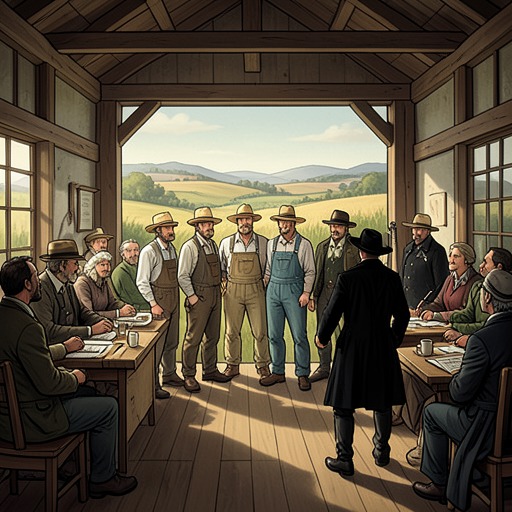
The conflict developed through both organized bargaining and coercion. In Ferrara, seasonal farmhands and sharecroppers struck on February 24 to demand renewal of the collective farm agreement; sowing of hemp and sugar beet was suspended. On March 6, landowners accepted wage increases, worker-managed hiring centers, and a compulsory quota requiring five workers for every thirty hectares between November and April, when agricultural employment was scarce. The struggle spread beyond Ferrara: in other districts, a forty-seven-day confrontation ended with landowners conceding on April 21.
By the summer of 1920, the dispute had reached into ordinary rural life. In Ferrara, the leagues’ influence was reinforced by a network of local organizations, while pressure against those who broke collective rules could extend to boycotts and forced departures. The account also describes crops left unharvested or unthreshed and livestock affected when farm conflicts halted routine care. Such episodes show how a labor system dependent on coordinated seasonal work could turn a local breach into a confrontation over the survival of the whole rural order.
The front then shifted toward Bologna, where farmhands had been contesting labor contracts for months. When seasonal workers refused to thresh crops, crowds assembled in public streets and moved into the fields to disrupt the machinery. On August 17, landowners from Bologna joined together to establish the General Confederation of Agriculture, building a national organization in response to the leagues’ strength. The countryside was not merely the setting of the conflict: it was where opposing groups built the organizations and alliances that would carry it into national politics.
Fascist Organization and the Countryside
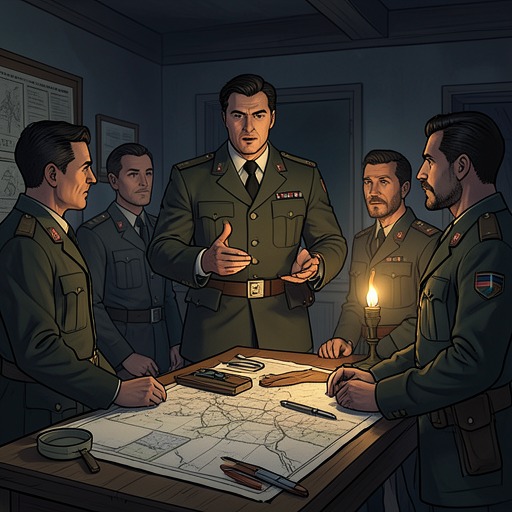
The same polarization created an opening for Fascist organization. In Bologna, an initially fragile local Fascist group was assigned to Leandro Arpinati, who was asked to organize civic-defense militias against strikes. At first, the organization had few members and lacked even the money to rent an office. But the rapid growth of socialist institutions in both town and countryside, and the distress of employers and middle-class residents, helped make anti-socialist mobilization seem urgent to those seeking protection.
After a provincial massacre and a three-day general strike, farmers, manufacturers, merchants, professionals, public employees, and homeowners organized the Bolognese Association of Social Defense. Its delegation told Francesco Saverio Nitti that the state had failed to confront socialist violence and declared itself ready to act in the name of self-defense. Arpinati, himself from a poor background, faced the contradiction of accepting money and arms from landowners whose interests were opposed to those of the rural poor among whom he had grown up. The episode exposes the dependence of local Fascist organizing on resources supplied by those seeking to defend property, even as Fascists presented themselves as a force of national renewal.
In Ferrara, that dependence became explicit. After the December violence at the Estense Castle, new Fascist sections appeared across the province; landowners and other rural groups provided financial support, with 20,000 lire paid into Fascist funds by December 20. Some early leaders objected that the organization was becoming a guardian of wealthy interests. Benito Mussolini tried to counter that impression with a land policy proposing that uncultivated property be divided into small plots for settlers who would farm them themselves. The proposal and its planned land office offered a political answer to the charge of dependence, but the local movement’s resources still came substantially from agrarian supporters.
Mass Mobilization and Political Consequences
On January 23, 1921, a Fascist punitive expedition set out from Ferrara toward the surrounding countryside. Organized along military lines, it used trucks supplied by the Agrarian Association and aimed to strike several rural leagues at once. Its scale and planning marked a shift from improvised local confrontation toward coordinated action against the networks that had organized farm labor.
The countryside could also be mobilized in the opposite direction. At midnight on May 11, thousands of impoverished farmworkers began converging on Ferrara from remote farms, travelling on foot, by bicycle, in wagons, and on barges. By the following morning, around 50,000 had entered the city. The occupation paralyzed ordinary business: telephone lines were cut, school buildings requisitioned for lodging, and shops and businesses ordered closed. The scale of the march demonstrated that rural workers could turn their numbers and organization into a force capable of confronting the provincial authorities in the urban center.
The region’s conflicts thus changed the meaning of political action. Agrarian leagues had built power through collective control of hiring and production; landowners answered by forming organizations and financing anti-socialist forces; Fascist squads converted those resources into coordinated expeditions and mass displays. The liberal state, rather than monopolizing public order, increasingly relied on Fascist collaboration or proved unable to enforce its own measures. Pianura Padana emerges as a place where the battle over agricultural life helped transform local class conflict into a wider crisis of political authority.