
Revolution as Spectacle
M: Son of the CenturyThis flow traces how parades, speeches, symbols, and staged crowds turn political power into a public performance.
increasing Bearing strength in each event
 decreasing
Bearing strength in each eventdecreasingThe Empty Founding Hall
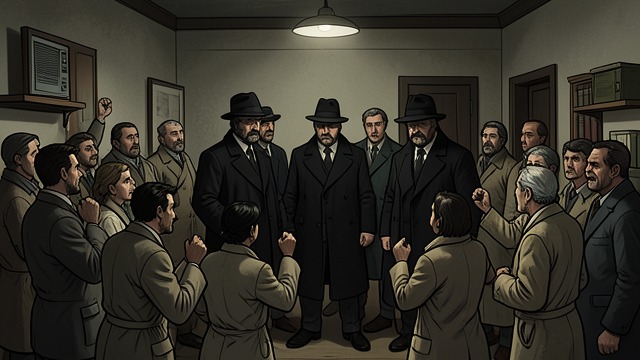
A Movement Staged
An Audience of Veterans
The founding meeting takes place in a modest room after a much larger theatre is abandoned. The small audience appears to contradict the newspaper’s grand claims about the event.
The Future Is Performed
Mussolini nevertheless imagines the crowd as a sign of historical change. The mismatch between actual numbers and projected destiny becomes a recurring feature of fascist politics.
The Very Rocket
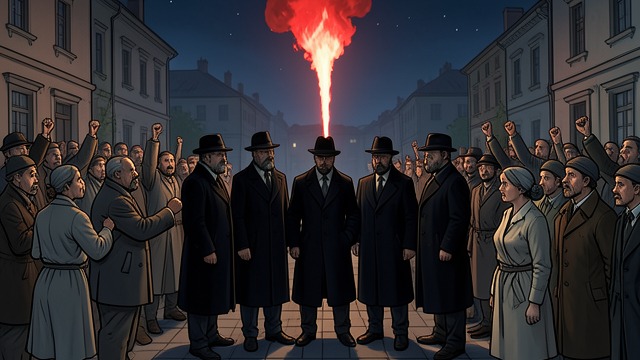
A Rally in War Light
The Flare Over Milan
At a fascist rally, a wartime signal rocket lights the night sky. The crowd follows its arc more intently than the speech delivered below it.
Emotion Outweighs Argument
The flare makes civilian politics feel like the trenches and supplies a shared sensation of danger and wonder. A symbol can gather attention more efficiently than a program.
The Fiume Balcony
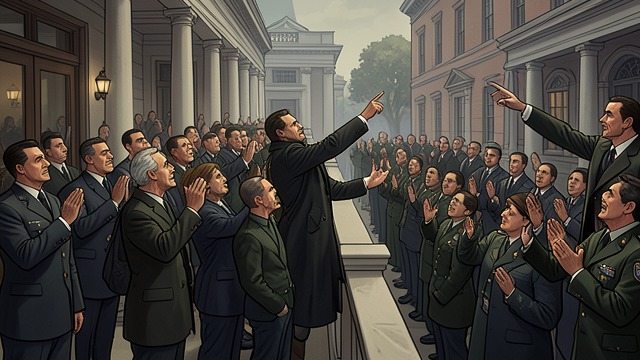
The People Enter the Scene
A City Watches Itself
D’Annunzio addresses crowds from the government building’s balcony and directly asks them to confirm their pledge to Italy. The people answer together, becoming participants in the political spectacle.
Leadership as Ritual
Flags, oaths, songs, and repeated appearances make the occupation feel like a collective epic. The staged unity masks the city’s isolation and uncertain practical future.
The Blackshirt Parade
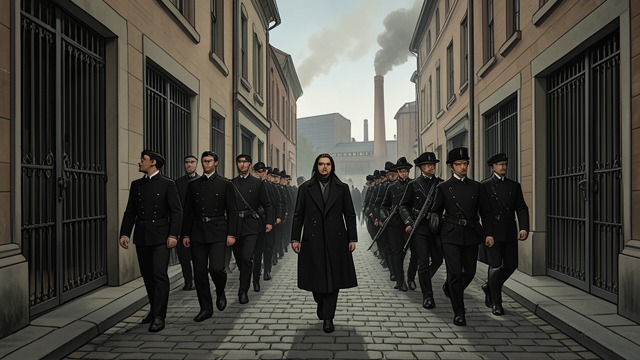
A Conqueror Enters Rome
A Ceremonial Arrival
After Mussolini’s appointment, fascist columns march through the capital. The parade gives the appearance of a military conquest even though the transfer of power occurred through royal appointment.
Spectacle Makes Reality
The armed crowd and the new prime minister reinforce one another’s authority. Performance does not merely represent the victory; it helps make the victory politically durable.
The Unknown Soldier’s Altar
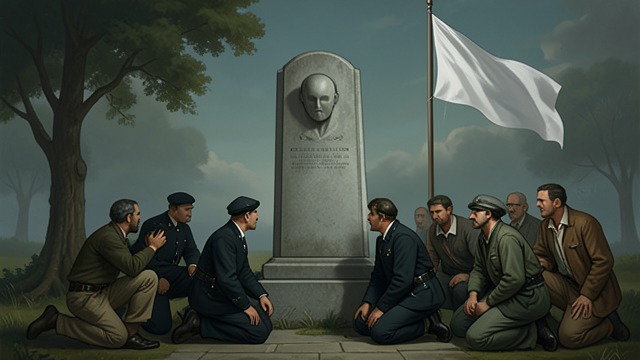
Politics Becomes Sacred
A National Ritual
Fascist leaders and squadristi kneel at the Tomb of the Unknown Soldier. The ceremony binds the movement to the dead of the Great War and gives political allegiance a religious form.
A New Civic Faith
The dead are not simply remembered; they are invoked as witnesses and guarantors of the movement. Fascist politics increasingly presents itself as a sacred community with its own rites and martyrs.
March 23, 1919
November 11, 1919
September–October 1919
October 31, 1922
November 1921
