
The Socialist Revolution That Never Arrives
M: Son of the CenturyThis flow follows the Italian socialist movement’s mass growth, repeated postponement of revolution, and fragmentation.
increasing Bearing strength in each event
 decreasing
Bearing strength in each eventdecreasingA Revolutionary Wave
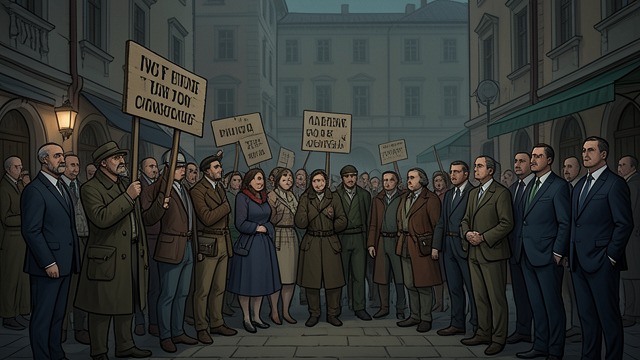
Revolution Appears Imminent
European Examples
Revolutionary governments and Soviet republics emerge across Europe, while Italian workers gather in enormous demonstrations. Socialist newspapers present the upheaval as the beginning of a continental transformation.
Expectation without Strategy
Workers’ hopes are real, but the party leadership cannot agree on how to convert them into power. The movement’s strength in the streets exceeds its ability to coordinate action.
The July Strike Recedes
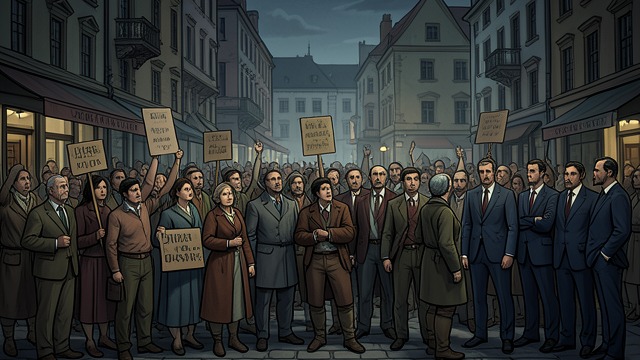
A Demonstration, Not an Insurrection
The Call to Action
Italian workers join an international strike in support of Soviet Russia. Bombacci tells the Milan crowd that revolution is near, then clarifies that the strike is only a demonstration.
Another Postponement
The crowd accepts that the decisive moment lies in the future. The repeated promise of a coming revolution preserves hope but further weakens confidence in leaders who never choose a moment to act.
The Occupied Factories
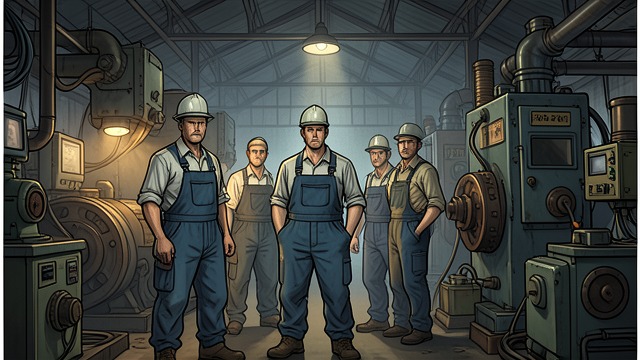
Workers Take Production
A Month of Control
Workers occupy factories across Italy and keep production running without owners. They establish discipline, protect machinery, and demonstrate practical competence in the workplaces.
Political Defeat
The socialist leadership accepts a compromise that returns the factories to their owners. Workers gain concessions but not control, and the movement loses another opportunity to transform economic leverage into political power.
The Livorno Split
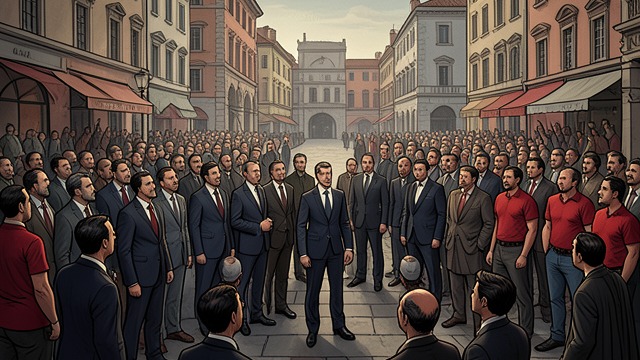
Unity Breaks Apart
Moscow’s Terms
At the Socialist Party congress in Livorno, communists demand alignment with the Communist International and the exclusion of reformists. Nicola Bombacci supports revolution but struggles to reconcile party unity with Moscow’s demands.
A New Communist Party
The communist faction leaves and establishes its own party. The split weakens the already divided left at a moment when fascist violence is expanding rapidly.
Matteotti Chooses Resistance

Opposition after Defeat
A Different Socialist Course
Giacomo Matteotti rejects the hope that the fascist threat will dissolve on its own. He argues for active resistance, parliamentary scrutiny, and a clear break with collaborators who expect moderation to protect them.
The Price of Isolation
His uncompromising position places him at odds with more cautious socialists and leaves him politically isolated. Even so, he continues documenting violence, convinced that precise evidence matters when institutions are failing.
Spring 1919
July 20, 1919
September 1920
January 1921
1922–1923
