Comintern
M: Son of the CenturyThe Comintern is presented as an international communist organization whose influence reaches into the strategic disputes and political setbacks of the Italian left. In the book, it is more than a distant symbol of revolution: its representatives assess Italian leaders, press for unity against fascism, and place the Italian movement within a widening imbalance of power between Russian and Western communists.
International horizon
In an early postwar scene, the Comintern’s meeting in Moscow is described as the gathering of a party of global civil war, one that the narrator associates with the mass politics reshaping Europe. The organization’s international scale gives the Italian crisis a wider frame: upheaval is not confined to national borders, and communist victory appears imminent to the movement’s opponents as well as its adherents. Yet the Italians gathered in Milan are fewer than a hundred. The contrast between a worldwide organization and a small local assembly makes international reach look powerful, but not equivalent to immediate strength on the ground.
The Comintern also provides a counterpoint to the veteran-centered politics developing among former soldiers. Where the Italian fascists imagine themselves as the people of a new era, communist hopes are attached to a revolutionary movement extending from Moscow across the world. The book sets these rival claims of historical succession against one another: both look beyond the exhausted political order, but they anticipate sharply opposed futures.
Assessing the Italian left
The organization’s intervention in Italian politics is represented through Vladimir Degott, its representative in Italy, who works behind the scenes at a socialist congress. He judges the party’s leading figures by their willingness and ability to initiate revolution. In his assessment, Giacinto Menotti Serrati is politically flexible but unwilling to call for a decisive uprising; Gennari has intellectual ability but lacks initiative; and Antonio Gramsci understands the Russian Revolution deeply but cannot sway the masses. These are Degott’s judgments, not neutral descriptions of the men, and they reveal the Comintern’s practical concern with leadership, popular influence, and the timing of revolutionary action.
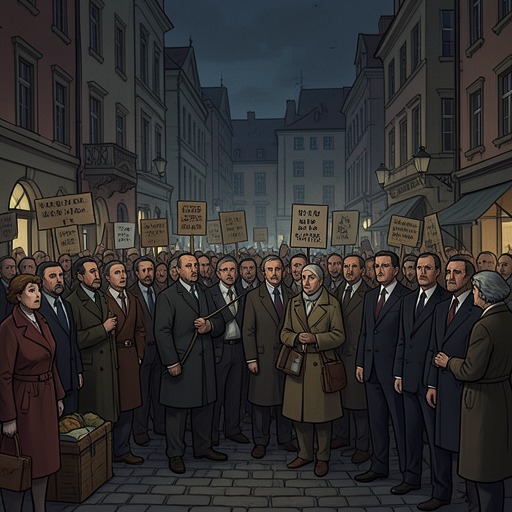
Degott and, through him, Vladimir Lenin place particular hope in Nicola Bombacci. They expect Bombacci to join the proletarian vanguard when the decisive moment arrives. But the expectation collides with Bombacci’s own hesitation: he had studied for the seminary, had been deemed unfit for military service on health grounds, and was described as incapable of harming even a fly. The crowd waiting for revolutionary leadership in Piazza del Nettuno is left without the action it anticipates. The episode shows the limits of international confidence when it rests on an Italian leader who does not act as his sponsors expect.
Unity, division, and retreat
By the time Bombacci travels to Moscow for the Comintern’s Fourth Congress, the Italian communist movement has already separated from the Socialist Party and divided internally. Its right wing, led by Angelo Tasca, favors meeting with the socialists after the expulsion of reformists; the majority left, led by Amadeo Bordiga, resists a united front. The Russian Bolsheviks push for a merger that would allow the proletariat to confront fascism as a solid bloc. Bordiga rejects the premise, reasoning that democracy is already fascism and that a fascist seizure of power would therefore make little difference.
The disagreement is not presented as a mere procedural quarrel. It concerns whether socialist forces can cooperate against a distinct fascist danger, or whether such cooperation would compromise a revolutionary position. Leon Trotsky stresses the distinctive character of Italian fascism, particularly its unprecedented mobilization of the petite bourgeoisie against the proletariat, but Bordiga remains deaf to that distinction. For him, democracy and fascism remain essentially alike; for Trotsky, treating them as identical misses a specific political threat.
Bombacci sides with Moscow’s call for renewed unity. At the party’s Rome congress in February, he argues against the Bordiga faction’s purism and its refusal of contact with the socialists. His position brings him into conflict with his own comrades: he is ostracized, isolated, mistrusted, and eventually expelled from the party’s central committee. In a letter to Grigori Zinoviev, he describes the result as his political assassination. His experience shows that the Comintern’s preferred strategy could find Italian advocates while still failing to overcome the movement’s internal resistance.
Russian authority and Italian dependence
The Italian delegation arrives in Moscow after defeats by fascists and successive splits within the left. The balance of power is stark. Russian communists appear ascendant after the Red Army’s victories in civil war, while Western communist parties retreat on every front. Within the Comintern, Russian leadership is approaching absolute hegemony; the other parties, with Bordiga’s faction among those facing defeat, can only support the Russian advance from a position of weakness.
Bombacci recognizes this hierarchy. He has long accepted that Italian communists will follow the light of the Russian Revolution, even at a cost in fear and grief. That allegiance is not limited to congress debates: the following year, he argues in parliament for Italy to reopen trade with Russia and recognize its government. The cause attracts unexpected support from industrial magnates such as Ettore Conti. The juxtaposition complicates any simple picture of fixed political camps: practical economic interests can align briefly with a communist initiative even as international communist authority remains centered in Russia.
Lenin’s test
When the Italian delegates meet Lenin in Moscow, Bordiga raises the question of relations with the Socialist Party. Lenin dismisses the dispute and redirects attention to the fascists in Italy. He then asks what Italian workers and peasants think of the events. Bordiga, the head of the Italian communists, cannot answer at once. The encounter turns the Comintern’s strategic priorities into a direct test of political knowledge: party leaders must understand not only their doctrines and internal alignments, but also the views of the people they claim to represent.
At the same time, the contrast between Moscow and Italy remains unresolved. While tens of thousands of blackshirts in Naples call for a march on Rome, leading socialists in Milan dismiss the threat and take a train to Moscow. The Comintern’s concern with fascism is clear, but the scene exposes the distance between that concern and the judgments of Italian leaders. Across the book, the organization thus stands for international coordination and Russian strategic authority, while the Italian episodes reveal how division, misreading, and political weakness restrict the reach of those ambitions.